Finishing a basement in West Allegheny or Eastern Beaver County means answering one question that outlasts paint colors and trim choices: what goes on the floor. This guide ranks the best basement flooring options for finished basements in 2026, weighing moisture resistance, comfort, and long-term durability for below-grade spaces.
- Luxury Vinyl Plank (LVP) is the best overall pick among basement flooring options for finished basements in 2026 — fully waterproof and stable over concrete.
- Tile wins for basements near sump pits, laundry hookups, or water heaters where standing water is a real risk.
- Epoxy or polished concrete holds up best in basement gyms and workshops that take heavy equipment.
- Carpet tile is the budget-friendly option for playrooms and media rooms, but only over a properly sealed slab.
- Engineered hardwood can work in a basement den, but only after a moisture test on the slab confirms it's dry.
Why this matters
A basement slab behaves differently than a main-floor subfloor — it sits against soil, groundwater, and shifting humidity year-round, and Western Pennsylvania's freeze-thaw winters make that worse. The wrong flooring choice buckles, mildews, or has to be torn out within a few years, which turns a finishing project into a redo. Innovative Contracting Services handles kitchen, bathroom, basement, flooring, and carpentry work under one contractor across Moon, Robinson, Findlay, Imperial, Hopewell, Center, Aliquippa, and Crescent — licensed and fully insured, with final payment collected only after the work is complete and satisfactory.
Choosing basement flooring isn't like choosing flooring for a bedroom. Moisture from below is the variable that decides whether a floor lasts five years or twenty-five.
What makes the best basement flooring
- Moisture and vapor resistance — how the material handles humidity and occasional seepage from the slab below
- Subfloor prep required — underlayment, vapor barriers, or sleepers needed before installation
- Comfort underfoot — how the surface feels for a finished living space versus a utility area
- Durability under load — resistance to foot traffic, gym equipment, or an occasional water event
- Repairability — whether a damaged section can be swapped without redoing the whole floor
- Fit for the room's use — a home gym has different needs than a media room or a den
Basement flooring options at a glance
| Flooring Option | Best For | Standout Feature | Key Limitation |
|---|---|---|---|
| Luxury Vinyl Plank (LVP) | Whole-basement remodels | Fully waterproof core | Feels harder underfoot without a pad |
| Tile | Basements near mechanicals or water | Impervious to standing water | Cold underfoot without radiant heat |
| Epoxy / Polished Concrete | Home gyms and workshops | Handles heavy equipment, wipes clean | Hard on feet and joints over time |
| Engineered Hardwood | Basement dens and living rooms | Matches main-floor hardwood look | Vulnerable if the vapor barrier fails |
| Carpet Tile | Playrooms and media rooms | Warm, soft, swappable squares | Holds moisture without a sealed slab |
1. Luxury Vinyl Plank (LVP): best basement flooring for finished basements overall
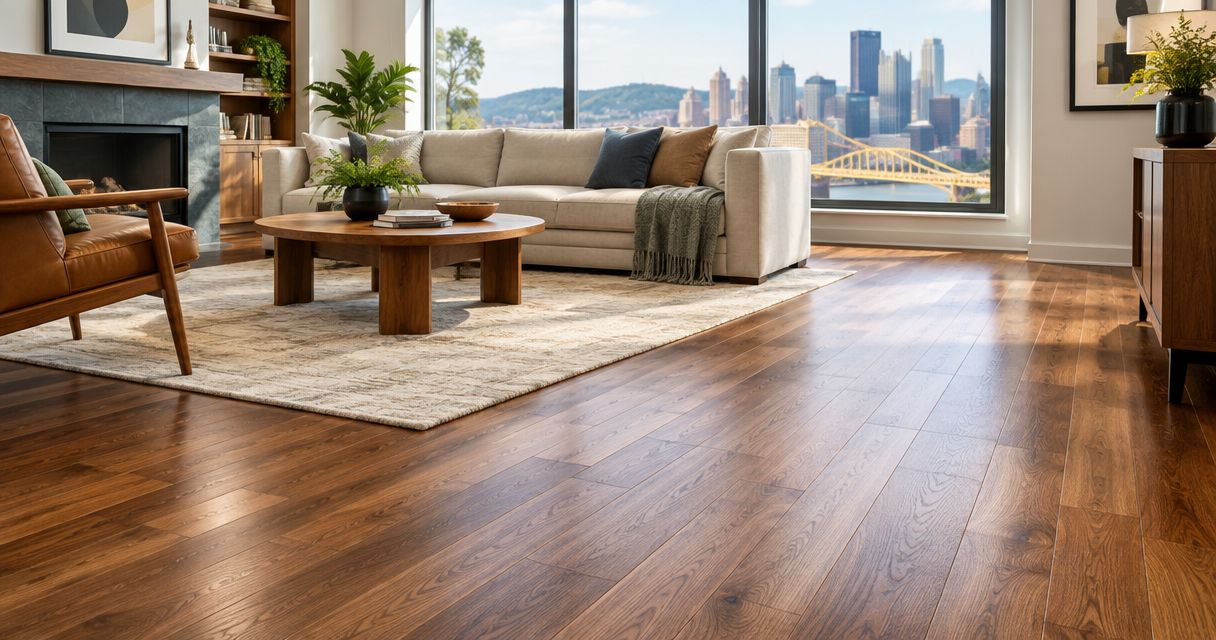
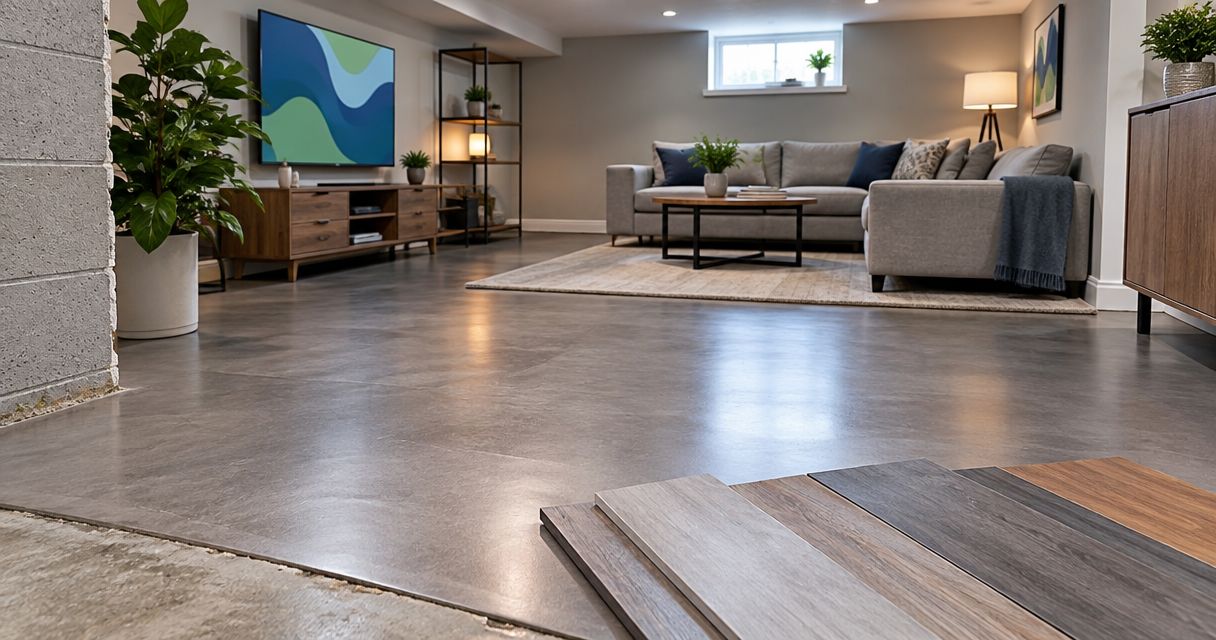
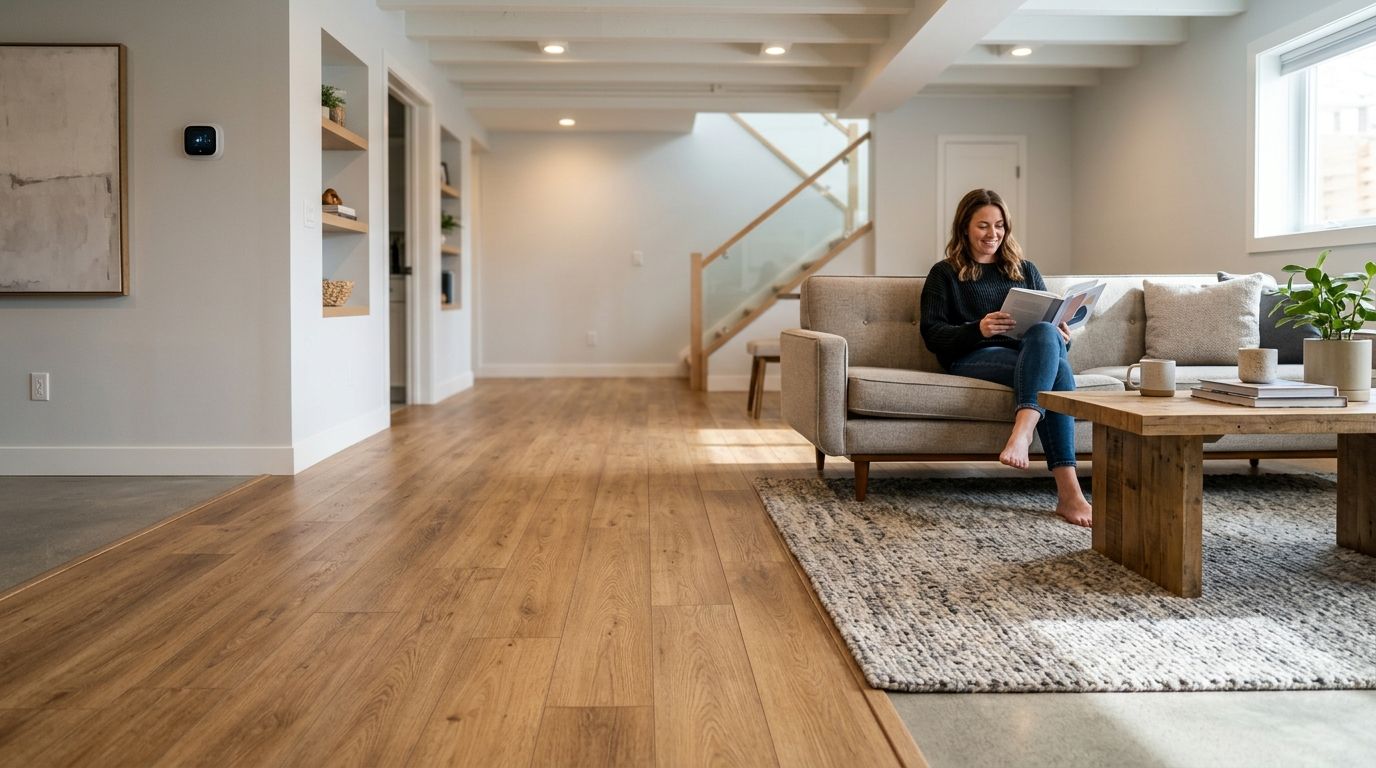
LVP is a click-lock or glue-down plank with a fully waterproof core, made to look like wood or stone while installing directly over concrete with a thin underlayment. It's the closest thing to a default-safe answer among basement flooring options for finished basements in 2026.
LVP pros:
- Waterproof core survives minor seepage without warping or swelling
- Installs over concrete slabs without major leveling work
- Wide range of wood-look and stone-look finishes
- Individual planks can be replaced without redoing the whole floor
LVP cons:
- Budget-grade planks feel harder and colder underfoot without a foam pad
- Cheaper cores can fade with years of direct sunlight exposure
- Waterproof doesn't mean waterproof-forever — it survives moisture, it doesn't stop active leaks
Best for: Whole-basement finishing projects, rec rooms, and home offices.
Verdict: Buy.
2. Tile: best basement flooring for basements near mechanicals and water exposure
Porcelain or ceramic tile sets directly over concrete with thinset mortar and shrugs off standing water better than any other option on this list. It's the right call anywhere plumbing, a sump pump, or a water heater lives.
Tile pros:
- Completely impervious to water when properly sealed and grouted
- Handles heavy foot traffic and equipment weight without denting
- Radiant heat mats can be added underneath for warmth
- Easiest surface to keep sanitary near plumbing fixtures
Tile cons:
- Cold and hard underfoot without in-floor heat
- Grout lines need periodic resealing to stay water-tight
- A cracked tile is harder to spot-replace than a vinyl plank
Best for: Basements with a sump pump, laundry area, or bathroom.
Verdict: Buy.
3. Epoxy or Polished Concrete: best basement flooring for gyms and workshops
This option skips a separate flooring layer entirely — an epoxy coating or a ground-and-polished finish goes straight onto the existing slab. It's built for rooms that take abuse, not rooms meant to feel cozy.
Epoxy/Polished Concrete pros:
- Handles dropped weights, rolling tool chests, and heavy foot traffic without denting
- Wipes clean of oil, chalk, or sweat with no seams to trap moisture
- Lowest long-term maintenance of any option on this list
- No grout lines or plank seams to fail over time
Epoxy/Polished Concrete cons:
- Hard on joints and feet during long workouts or standing work
- Concrete stays cool year-round, which some homeowners dislike in a living space
- Needs a properly cured, crack-free slab to bond correctly
Best for: Home gyms, workshops, and storage-heavy hobby spaces.
Verdict: Buy.
4. Engineered Hardwood: best basement flooring for a den or living room look
Engineered hardwood floats or glues over a vapor barrier instead of nailing into concrete, giving a basement the warmer, more residential feel that vinyl and tile can't quite match. It's the option most likely to disappoint if the slab hasn't been checked first.
Engineered Hardwood pros:
- Closest match to main-floor hardwood for a cohesive whole-house look
- Floats over a vapor barrier without penetrating the concrete
- Refinishable at least once if the top veneer layer is thick enough
- Adds resale appeal to a finished basement den or office
Engineered Hardwood cons:
- Swells or cups if the vapor barrier fails or humidity spikes
- Not recommended for any basement with a history of water intrusion
- Expensive to correct if the moisture problem shows up after installation
Best for: Dry, well-ventilated basements finished as a den, office, or media room away from plumbing.
Verdict: Hold — get a moisture test on the slab before committing.
5. Carpet Tile: best basement flooring for playrooms and budget-conscious remodels
Modular carpet squares lay over a moisture barrier and give a basement the softest, warmest surface on this list — the tradeoff is that carpet and moisture don't mix well below grade.
Carpet Tile pros:
- Warmest, softest option for kids' playrooms and media rooms
- Stained or damaged squares swap out individually instead of replacing the whole floor
- Installs faster than glue-down hard flooring
- Wide range of colors and patterns for a custom layout
Carpet Tile cons:
- Absorbs and holds moisture and odor if the slab below isn't sealed
- Not suitable near laundry areas, bathrooms, or sump equipment
- Lowest resale appeal among the options covered here
Best for: Basement playrooms, home theaters, and secondary living spaces with no direct water risk.
Verdict: Buy — but only with a sealed slab underneath.
How we ranked these basement flooring options
Moisture resistance carried the most weight given how often below-grade slabs in this region deal with groundwater and seasonal humidity swings. Durability under regular use came next, followed by comfort underfoot and how easily a damaged section could be repaired without tearing out the whole floor.
Which basement flooring should you choose in 2026?
For most finished basements, Luxury Vinyl Plank is the default choice — it tolerates moisture, installs over concrete without major prep, and works in almost any room use. Pick tile if the space sits near a sump pump, water heater, or laundry hookup. Choose epoxy or polished concrete for a gym or workshop that takes real abuse. Carpet tile works for playrooms once the slab is confirmed sealed, and engineered hardwood stays on the table only after a moisture test clears the slab.
Get a basement flooring estimate
Licensed, insured contractor serving Western Allegheny and Eastern Beaver counties.
FAQ
What is the best basement flooring option for a finished basement in 2026?
Luxury Vinyl Plank is the best overall basement flooring option for finished basements in 2026 because its waterproof core tolerates minor moisture without warping. Tile and epoxy are better fits for wetter or higher-traffic zones.
Is carpet a bad idea for a basement floor?
Carpet tile can work in a basement playroom or media room, but only over a slab that's properly sealed against moisture. Standard wall-to-wall carpet is a poor choice below grade because it holds moisture and odor.
Can you install engineered hardwood in a basement?
Yes, but only with a vapor barrier and after confirming the slab is dry. Engineered hardwood swells or cups if humidity or moisture gets past the barrier, so a moisture test before installation matters more than with any other option on this list.
Is tile or vinyl plank better for a basement?
Tile is better near plumbing, sump pumps, or water heaters because it's fully impervious to standing water. Vinyl plank is better for the rest of the basement because it's warmer underfoot and easier to install over a wide area.
Does epoxy flooring work in a basement gym?
Epoxy and polished concrete are strong choices for a basement gym because they handle dropped weights and heavy equipment without denting. The tradeoff is a harder, cooler surface than vinyl or carpet.
How do you know if a basement floor has a moisture problem?
A contractor can run a moisture test on the slab before installation to check humidity levels and vapor transmission. Skipping this step is the most common reason engineered hardwood or carpet fails in a finished basement.
What basement flooring holds up best near a sump pump?
Tile is the strongest choice near a sump pump or water heater because it's completely impervious to standing water when properly sealed. Epoxy-coated concrete is a close second for the same reason.
One last thing
The biggest point of failure in a basement floor usually isn't the material — it's skipping a moisture check on the slab before anything gets installed. A floor that's rated waterproof still fails if it's installed over an active vapor problem instead of a sealed one, so that test matters more than the brand of plank or tile chosen.