Best overall: warm white. Best for keeping existing finishes: warm greige. Best for muted color: sage green. This guide to kitchen cabinet color trends 2026 ranks six directions by room conditions and remodeling goals—not by a promise that one shade fits every home.
- Kitchen cabinet color trends 2026: choose warm white for a flexible starting point, then check samples against fixed finishes.
- Warm greige suits retained finishes; sage green adds muted color; navy works best as a deliberate focal point.
- Natural wood brings visible grain, while charcoal creates strong contrast and needs careful lighting review.
- Innovative Contracting Services, LLC handles kitchen remodeling for homeowners in Western Allegheny and Eastern Beaver counties.
Why this matters before you hire
Cabinet color covers a large part of your kitchen’s visible surface. A shade that looks right on a screen can conflict with your floor, countertop, or trim when you see the materials together.
For your 2026 remodel, settle the cabinet direction alongside the layout and finish selections—not after approving unrelated materials. Review the available remodeling services, then bring your existing-finish photos and cabinet preferences to the estimate discussion.
Choose the cabinet color that works with your room, not the photograph that first caught your attention. The ranking below gives you a starting point without treating a design preference as a measured popularity claim.
What makes the best kitchen cabinet color?
Use these five criteria before comparing shades:
- Fixed-finish compatibility: The color needs to work with every floor, countertop, backsplash, and trim finish you are keeping.
- Actual lighting: Compare samples in daylight and under the fixtures you use after dark.
- Visual balance: Decide whether cabinets should blend into the room or become its main contrast.
- Maintenance visibility: Dark and light finishes reveal different marks; inspect the actual finish rather than assuming a color hides everything.
- Scope clarity: A cabinet color decision does not establish whether existing doors are suitable for refinishing or replacement.
Ask your contractor to review 3 physical samples together: a cabinet finish, a countertop sample, and a flooring sample. This is a selection exercise, not an instruction to repaint cabinets yourself.
Kitchen cabinet colors at a glance
These 2026 recommendations assign each option a different job. The order matches the detailed sections below.
| Rank and option | Best for | Standout quality | Key limitation |
|---|---|---|---|
| 1. Warm white | A flexible starting palette | Light neutral backdrop | Cream undertones can clash with cool finishes |
| 2. Warm greige | Coordinating retained finishes | A middle ground between gray and beige | The wrong undertone can look muddy |
| 3. Sage green | Adding muted color | Color without a highly saturated look | Requires care beside existing wood tones |
| 4. Navy blue | Defining an island focal point | Clear contrast against lighter surroundings | Broad use can make the room feel darker |
| 5. Natural wood tones | Making grain part of the design | Visible texture and warmth | Wood samples vary in grain and color |
| 6. Charcoal | Creating a graphic palette | Strong contrast with light surfaces | Dust and handling marks can be conspicuous |
1. Warm white: best cabinet color for a flexible palette
Warm white gives you a light cabinet backdrop without the sharper appearance of a cool white. Start here when you want the countertop, backsplash, or wood floor to carry more of the room’s character.
The distinction is undertone. A cream-leaning cabinet door beside a cool white countertop can look more yellow than expected, so approve the pairing together rather than approving each sample separately.
Warm white pros:
- Gives patterned countertops a quieter backdrop.
- Works as a starting point for several hardware finishes.
- Supports a restrained, coordinated palette.
Warm white cons:
- Does not automatically match existing white trim.
- Shows colored spills and smudges.
Best for: Homeowners seeking a light kitchen without making cabinet color the focal point.
Verdict: Buy into warm white if the physical sample agrees with your countertop and trim. It is the default recommendation for an undecided homeowner, not a substitute for checking undertones.
2. Warm greige: best cabinet color for retained finishes
Warm greige sits between gray and beige. It deserves consideration when your remodel keeps flooring, tile, or stone that makes a bright white cabinet sample look disconnected.
Do not assume every greige coordinates with every neutral surface. Some samples lean green, pink, or violet when placed beside another material, and that relationship matters more than the color name.
Warm greige pros:
- Provides an alternative to white without strong saturation.
- Offers a starting point for mixed warm and cool finishes.
- Keeps the cabinet palette quieter than navy or charcoal.
Warm greige cons:
- Undertones are easy to misjudge from photographs.
- A weak match can make surrounding finishes look dull.
Best for: Homeowners retaining substantial existing finishes during a kitchen remodel.
Verdict: Buy into warm greige when the retained materials—not a showroom display—support it. For a 2026 partial remodel, compatibility is the reason to choose it.
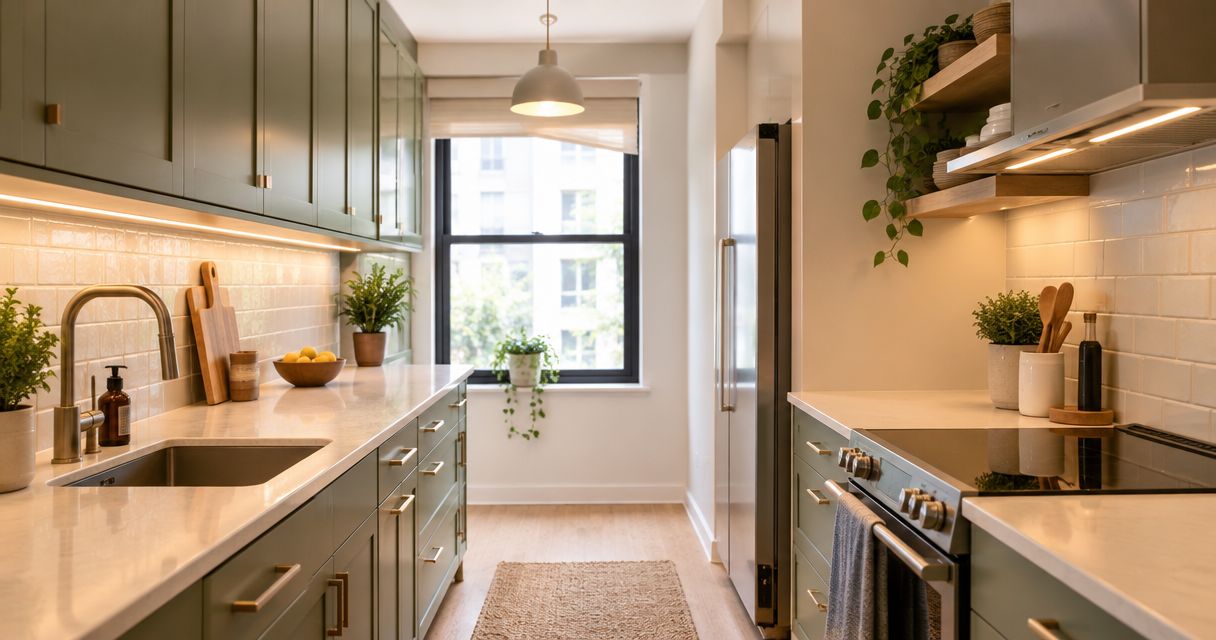
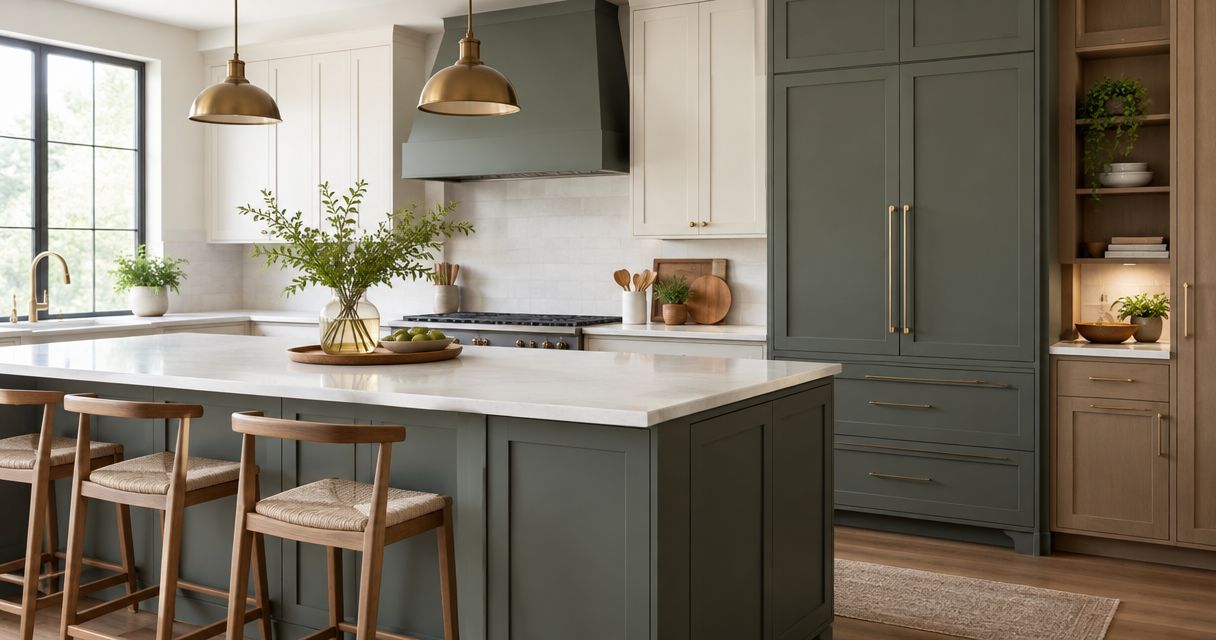
3. Sage green: best cabinet color for muted color
Sage green introduces color without the intensity of a saturated green. Use it when a neutral kitchen feels too plain but you still want a restrained palette.
Review sage beside any oak trim, wood floor, or wood cabinetry that will remain. Green changes the relationship between those surfaces; a pleasing cabinet sample alone does not establish a pleasing room.
Sage green pros:
- Adds a distinct color direction.
- Offers a softer contrast than navy or charcoal.
- Works as an accent or a whole-cabinet concept.
Sage green cons:
- Needs careful comparison with existing wood finishes.
- Different green undertones create noticeably different results.
Best for: Homeowners who want visible color without a highly saturated kitchen.
Verdict: Buy into sage green after viewing it beside the actual retained wood and countertop. Hold the decision if you have only seen a small online swatch.
4. Navy blue: best cabinet color for an island focal point
Navy creates a clear focal point when an island sits against lighter perimeter cabinets. That contrast gives the island a separate visual role without requiring every cabinet to be dark.
Use this option because your layout supports emphasis, not because every kitchen needs two colors. A kitchen without an island can still use navy, but the placement needs a different design justification.
Navy blue pros:
- Defines an island against lighter cabinetry.
- Gives pale countertops a strong contrast.
- Introduces color without relying on bright saturation.
Navy blue cons:
- Can make a broad cabinet wall feel visually heavy.
- Handling marks can stand out on dark finishes.
Best for: Homeowners with an island they want to emphasize.
Verdict: Buy into navy as a deliberate focal point; hold an all-navy scheme until you review the room’s lighting. A dramatic sample should not decide the entire kitchen.
5. Natural wood tones: best for visible texture
Natural wood is a finish direction rather than a single paint color. It belongs in this comparison because grain, stain, and clear finish all affect the cabinet palette you see.
Choose wood when texture is part of the goal. Ask to see representative finished material rather than treating a uniform digital image as a promise of identical doors.
Natural wood pros:
- Makes grain part of the design.
- Adds texture beside plain countertops and tile.
- Offers an alternative to fully painted cabinetry.
Natural wood cons:
- Grain and color variation require acceptance.
- Matching an existing wood floor is not automatic.
Best for: Homeowners who prefer material character over a uniform painted surface.
Verdict: Buy into natural wood if you appreciate variation; skip it if you expect identical grain across every door. In a 2026 selection meeting, review the finish and the variation together.
6. Charcoal: best cabinet color for strong contrast
Charcoal creates a graphic kitchen when paired with lighter walls, counters, or backsplash surfaces. Choose it when contrast is the objective—not as a default neutral for an already dim room.
Inspect the sheen as closely as the shade. Two charcoal samples can differ substantially in reflection and in how clearly they show fingerprints.
Charcoal pros:
- Establishes a strong visual anchor.
- Contrasts clearly with light countertops.
- Offers a less colorful dark option than navy.
Charcoal cons:
- Dust and handling marks can be visible.
- Extensive dark cabinetry needs a considered lighting plan.
Best for: Homeowners deliberately planning a high-contrast kitchen.
Verdict: Hold charcoal until the lighting and finish samples are resolved. Skip an all-charcoal scheme if your priority is a light, low-contrast room.
How the colors are ranked
Warm white ranks first as a flexible starting point; the remaining choices answer more specific needs. Greige addresses retained finishes, sage adds muted color, navy emphasizes an island, wood prioritizes texture, and charcoal prioritizes contrast.
This is a design-fit ranking, not a sales survey or a forecast of resale returns. The criteria are compatibility, lighting, visual balance, maintenance visibility, and remodeling scope.
Turn your shortlist into a contractor-ready decision
For a 2026 kitchen remodel in Moon, Robinson, Findlay, or Imperial, bring the room’s actual conditions into the conversation. The same applies in Hopewell, Center, Aliquippa, and Crescent: the community establishes service location, but the kitchen establishes the right palette.
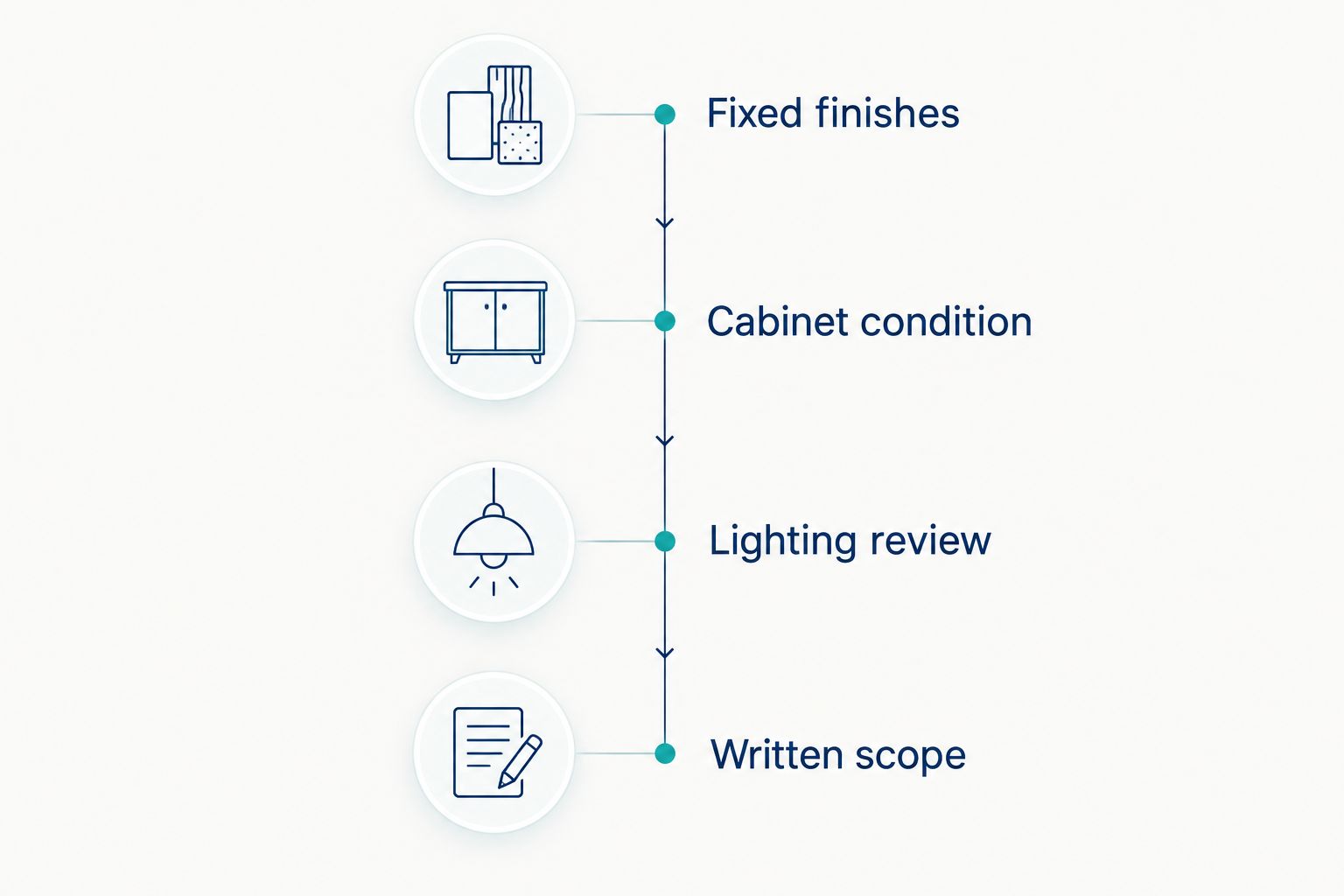
Organize the discussion around four decisions:
- Fixed finishes: Identify what stays and what changes.
- Cabinet condition: Request an assessment before choosing refinishing or replacement.
- Lighting review: Compare samples in 2 lighting conditions: daylight and your intended evening lighting.
- Written scope: Record the approved finish, cabinet work, and related installation responsibilities.
Ask who is responsible for coordinating cabinet work with flooring, trim, and the rest of the kitchen. A color selection becomes useful when it is connected to the work your contractor will actually perform.
Innovative Contracting Services, LLC is a kitchen remodeling option for homeowners who want kitchen, bathroom, basement, flooring, and carpentry services under one contractor. The company is licensed and fully insured, serves Western Allegheny and Eastern Beaver counties, and collects final payment only after the work is complete and satisfactory.
Request a kitchen remodeling estimate
Discuss your cabinet direction, retained finishes, and kitchen remodeling scope.
Which cabinet color should you choose?
Start with warm white if you want a clear default, then eliminate it if the fixed finishes disagree. Choose greige for coordination, sage for muted color, navy for an island focal point, wood for grain, or charcoal for intentional contrast.
Before requesting an estimate from Innovative Contracting Services, LLC, prepare 1 written list separating what stays from what changes. That list helps keep the cabinet discussion connected to your actual remodeling priorities.
FAQ
What's the best kitchen cabinet color for a 2026 remodel?
Warm white is this guide’s best overall starting point for a flexible kitchen palette. Approve it only after comparing the cabinet sample with your countertop, flooring, and trim.
Is sage green better than white for kitchen cabinets?
Sage green is better when you want muted color; warm white is better when you want a light neutral backdrop. Compare both beside the finishes you are keeping before choosing.
Should I choose navy cabinets for a small kitchen?
Choose navy when you want deliberate contrast, not simply because it appears in an inspiration photo. Review its placement and the room’s lighting before committing to every cabinet.
Can I mix wood cabinets with painted cabinets?
Yes, wood and painted cabinets can form a coordinated palette. Give each finish a clear role and review the wood tone beside the paint, countertop, and floor.
Does cabinet color determine whether I need new cabinets?
No, cabinet color does not determine whether existing cabinets are suitable for refinishing or replacement. Ask your contractor to assess cabinet condition and the intended scope before approving a finish.
How do I compare cabinet colors before hiring a contractor?
Bring a short color list, photos of the kitchen, and a written record of finishes you intend to keep. Ask to review physical samples together rather than selecting from separate screen images.
Who handles kitchen remodeling in Moon and Hopewell?
Innovative Contracting Services, LLC provides kitchen remodeling across Western Allegheny and Eastern Beaver counties, including Moon and Hopewell. The company also offers bathroom, basement, flooring, and carpentry services.
One last thing
A cabinet sample is usually viewed flat on a table, but a cabinet door lives upright. Ask to inspect the sample vertically beside the countertop and backsplash; the viewing position and reflected light are part of the decision.
For your 2026 remodel, make the final approval on the actual finish—not the name of the trend. Keep that approved sample available as the project’s reference.