Best overall: stainless steel. Best for a colored finish: granite composite. Best for a traditional farmhouse kitchen: fireclay. This 2026 guide compares kitchen sink materials by daily care, damage risks, and installation requirements so you can choose with your remodeling contractor.
- Stainless steel is the best default among kitchen sink materials for busy households that accept visible scratches.
- Granite composite suits coordinated kitchen finishes; fireclay suits traditional farmhouse designs.
- Enameled cast iron needs substantial support; solid surface suits an integrated countertop and sink.
- Innovative Contracting Services, LLC suits homeowners seeking coordinated kitchen remodeling across Western Allegheny and Eastern Beaver.
Why this matters
Your sink handles cookware, food preparation, and cleanup every day. A finish that looks right in a showroom still needs to suit how your household treats dishes, wipes surfaces, and uses the cabinet below.
For homeowners in Moon, Robinson, and Hopewell, sink selection belongs in the kitchen remodeling service scope, not on a last-minute shopping list. The material affects support, while the specific model determines the cabinet opening, countertop cutout, and plumbing clearances.
Innovative Contracting Services, LLC is best for homeowners who want kitchen remodeling coordinated under one contractor. The company also offers bathroom, basement, flooring, and carpentry services; compare those capabilities with the actual scope your home needs.
What makes the best kitchen sink materials?
Use these criteria to compare materials for your 2026 kitchen remodel:
- Daily care: Match the cleaning instructions to the routine you will actually maintain.
- Impact tolerance: Separate resistance to dents from resistance to chips. They are different failure modes.
- Surface appearance: Decide whether scratches, water marks, or a changing finish will bother you.
- Heat precautions: Check the selected model’s instructions rather than assuming every sink in a category behaves identically.
- Installation fit: Confirm cabinet support, mounting method, countertop compatibility, and disposal clearance before ordering.
These criteria favor stainless steel as the default, not as a flawless material. If visible scratching is unacceptable, another option deserves a closer look.
Kitchen sink materials at a glance
| Rank and material | Best for | Standout feature | Key limitation |
|---|---|---|---|
| 1. Stainless steel | Busy everyday cleanup | Uncoated metal surface that does not have an enamel layer to chip | Scratches and water marks remain visible |
| 2. Granite composite | Coordinated color schemes | Mineral-and-resin construction with colored finishes | Cleaning and heat restrictions depend on the product |
| 3. Fireclay | Traditional farmhouse kitchens | Glazed ceramic appearance | Heavy construction and chip risk from hard impacts |
| 4. Enameled cast iron | Classic glossy finishes | Cast-iron body with a glass-like enamel surface | Heavy; damaged enamel exposes the underlying material |
| 5. Solid surface | Integrated sink-and-countertop designs | Fabricated transitions between compatible sink and counter materials | Heat damage and scratching require consideration |
The table ranks material categories, not individual manufacturers. A well-specified lower-ranked material is a better choice than a poorly matched stainless steel sink.
1. Stainless steel: best kitchen sink material for daily cleanup
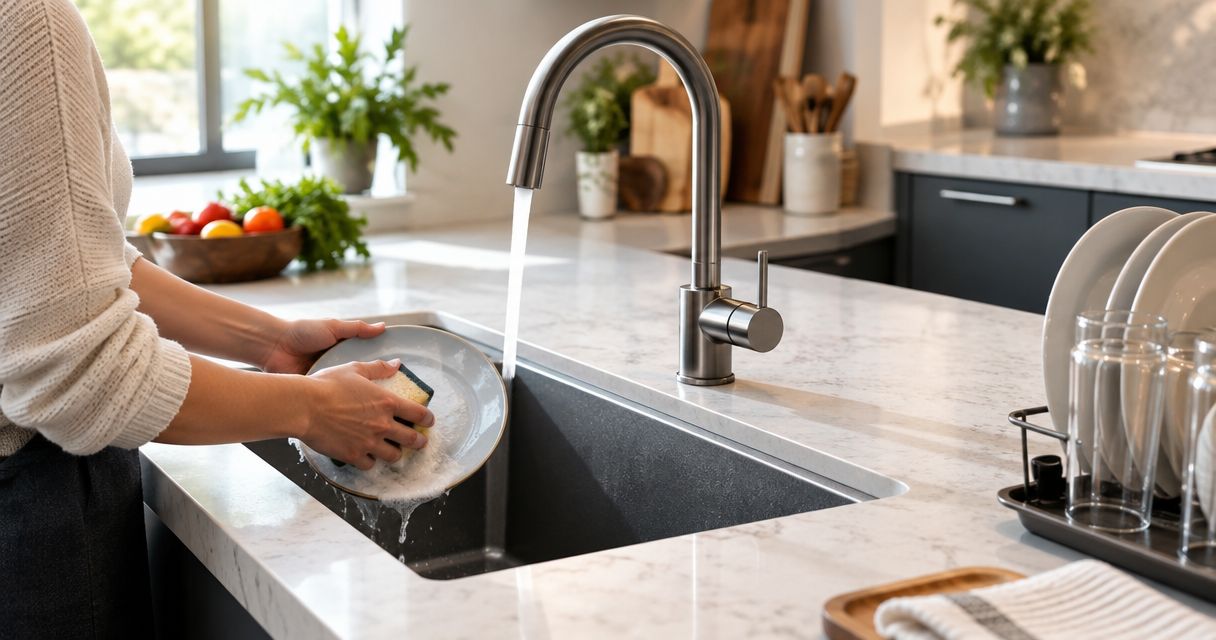
Stainless steel is the strongest default for a household that cooks frequently and treats the sink as a work area. Its uncoated metal surface avoids the chipped-enamel problem associated with coated sinks, although the metal itself can scratch or dent.
Compare the complete construction, not just the finish name. A 16-gauge stainless steel sink uses thicker sheet metal than an 18-gauge version, but sound treatment, basin shape, mounting, and fabrication also matter.
Stainless steel pros:
- No enamel coating to chip away.
- Available in different basin shapes and mounting configurations.
- Straightforward routine cleaning with suitable nonabrasive products.
Stainless steel cons:
- Scratches develop with normal use.
- Water spots and fingerprints show, particularly on polished finishes.
- Sound control varies with the sink’s construction and underside treatment.
Best for: Families who prioritize practical cleanup over a permanently unmarked surface.
Ask your contractor to compare bowl depth and cabinet fit alongside gauge. A deeper bowl changes the working position and the space available beneath the sink.
Verdict: Buy stainless steel if you want the best all-purpose starting point for a busy kitchen.
2. Granite composite: best kitchen sink material for color coordination
Granite composite combines mineral particles with resin. It gives you a colored alternative to exposed metal, making it relevant when the sink needs to coordinate with cabinetry and countertops.
The category does not have one universal care specification. Read the exact model’s instructions for cleaners, heat exposure, and residue removal before approving it for your 2026 remodel.
Granite composite pros:
- Colored finishes support a coordinated kitchen palette.
- The surface avoids the reflective appearance of polished metal.
- Different bowl configurations let you match the sink to your cleanup routine.
Granite composite cons:
- Mineral deposits remain visible, especially when they contrast with the finish.
- Cleaner restrictions vary by manufacturer.
- Hard impacts can damage edges or the basin.
Best for: Homeowners who want a colored sink and will follow product-specific care instructions.
Review a physical sample beside your countertop selection. A dark sink does not eliminate cleaning; pale residue can become more noticeable against it.
Verdict: Buy granite composite for color coordination, not because you expect a maintenance-free sink.
3. Fireclay: best kitchen sink material for a farmhouse focal point
Fireclay is a glazed ceramic material often used for apron-front sinks. Choose it when the exposed sink front is an intentional part of the kitchen design, rather than assuming farmhouse styling requires the same installation as a standard drop-in basin.
Its weight and dimensions need early attention. The cabinet, support arrangement, and countertop opening must match the selected sink.
Fireclay pros:
- Glazed finish suits traditional cabinetry and farmhouse styling.
- An apron-front design makes the sink a visible architectural feature.
- The ceramic body avoids metal denting.
Fireclay cons:
- Heavy construction requires appropriate support.
- Dropped cookware can chip or damage the surface.
- Manufacturer instructions still govern cleaning and thermal-shock precautions.
Best for: Homeowners building a traditional kitchen around an apron-front sink.
In an Imperial or Crescent kitchen remodel, have the contractor assess the existing cabinet before committing to an apron-front model. A sink swap and a cabinet modification are different scopes of work.
Verdict: Buy fireclay when the farmhouse appearance justifies the installation requirements and impact precautions.
4. Enameled cast iron: best kitchen sink material for classic gloss
Enameled cast iron pairs a heavy iron body with a hard, glass-like coating. It suits homeowners who want a traditional glossy surface rather than exposed stainless steel.
The coating is central to the decision. Cast iron provides the body, but damage to the enamel changes both the appearance and the protection of the underlying iron.
Enameled cast iron pros:
- Glossy enamel creates a classic kitchen finish.
- Color options offer an alternative to bare metal.
- The substantial body suits a permanent, carefully planned installation.
Enameled cast iron cons:
- Its weight requires a suitable support arrangement.
- Hard impacts can chip the enamel.
- Exposed iron at a damaged area can rust.
Best for: Homeowners who prioritize a classic glossy finish and accept careful handling of heavy cookware.
Ask how the selected model will be supported and how its rim meets the countertop. Do not treat the sink’s weight as a substitute for a properly designed installation.
Verdict: Buy enameled cast iron for its finish; skip it if chipped coatings are your main concern.
5. Solid surface: best kitchen sink material for integrated counters
Solid-surface sinks are relevant when you want a coordinated sink-and-countertop assembly. Compatible fabricated systems can create a smooth transition without the conventional rim of a drop-in sink.
That integration makes the fabricator’s role especially important. Confirm the approved sink, joining method, care requirements, and repair options for the specific countertop system.
Solid surface pros:
- Compatible systems support an integrated sink-and-countertop appearance.
- A smooth transition simplifies wiping around the sink opening.
- Some surface damage is repairable by a qualified fabricator.
Solid surface cons:
- Direct contact with very hot cookware can cause damage.
- Scratches require appropriate care or repair.
- Integration ties the sink decision closely to the countertop system.
Best for: Homeowners who prioritize a coordinated counter-and-basin design.
For a 2026 remodel, settle the countertop system before treating a solid-surface sink as an interchangeable accessory. Repairability does not mean every kind of damage has a simple fix.
Verdict: Buy solid surface when integration is the priority; skip it if you routinely place hot cookware in the basin.
Confirm the installation before choosing the finish
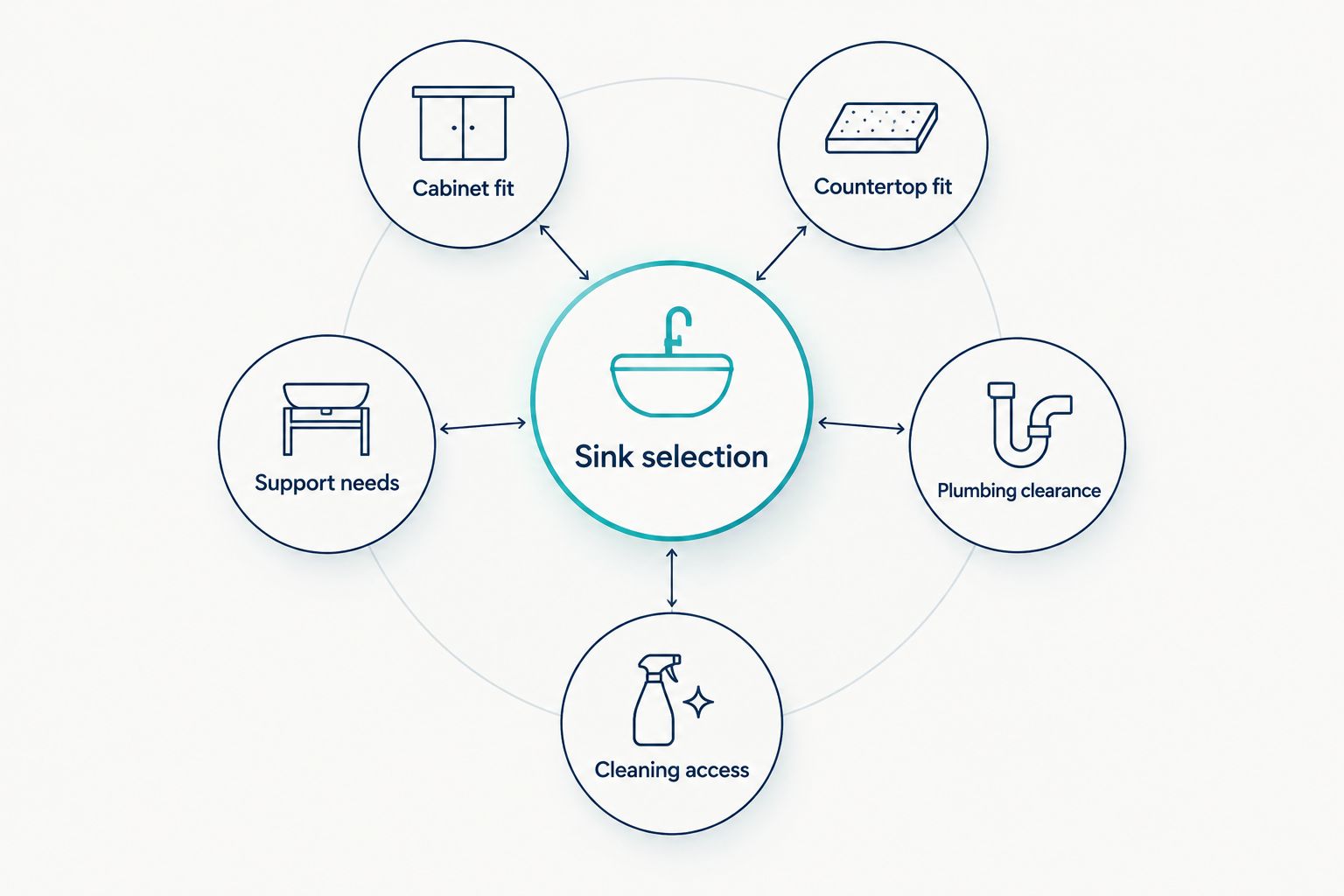
The best material still needs to work with your kitchen. Have your remodeling contractor resolve these details before approving a sink order:
- Cabinet fit: Check the selected model’s minimum cabinet requirements and actual interior clearances.
- Countertop fit: Confirm the mounting method, cutout, edge treatment, and faucet position.
- Support needs: Identify how the sink’s weight will be carried.
- Plumbing clearance: Account for the bowl, drain, disposal if included, and connections below.
- Cleaning access: Review corners, rims, and transitions you will wipe every day.
Countertop durability and sink suitability are separate decisions. Even when you compare durable kitchen countertop materials, the chosen counter still needs a compatible sink opening, mounting arrangement, and edge detail.
Also compare 1-bowl and 2-bowl configurations against the cookware you use. A large single basin accommodates bulky items differently from divided bowls; neither configuration automatically makes its material more durable.
Bring those priorities to the estimate discussion. You need a contractor to assess the assembly, not simply approve a finish from a photograph.
How the materials rank
This 2026 ranking gives priority to everyday care, damage modes, and installation fit. Stainless steel takes the default position because it avoids a brittle coating, while its main visible compromise is scratching.
Granite composite earns the color-coordination slot. Fireclay and enameled cast iron serve different traditional-design preferences, while solid surface belongs with a compatible countertop plan.
This is a material-selection guide, not a laboratory test or a comparison of named sink models. Final approval belongs at the model level, using the manufacturer’s specifications and your contractor’s assessment.
Which kitchen sink material should you choose?
Choose stainless steel unless another material solves a specific design priority you value more than its drawbacks. Pick granite composite for color, fireclay for a farmhouse focal point, enameled cast iron for classic gloss, or solid surface for countertop integration.
For a 2026 kitchen project in Findlay, Center, or Aliquippa, put the sink model, mounting method, support requirements, and countertop coordination into the written scope. That makes the estimate more useful than a general allowance for a kitchen sink.
Innovative Contracting Services, LLC is licensed and fully insured and serves Western Allegheny and Eastern Beaver. Final payment is collected only after the work is complete and satisfactory; review how completion and any remaining corrections will be documented for your project.
Request your kitchen remodeling estimate
Discuss sink selection, countertop coordination, and cabinet requirements for your kitchen.
FAQ
What are the best kitchen sink materials for busy families?
Stainless steel is the best default for busy families that accept visible scratches. Granite composite suits color coordination, while fireclay suits a traditional farmhouse design.
Is granite composite better than stainless steel?
Granite composite is better for a colored finish, not automatically better for everyday use. Stainless steel avoids chipped coatings but shows scratches; composite requires attention to the selected product’s cleaning and heat instructions.
Does stainless steel scratch easily?
Stainless steel develops visible scratches during normal kitchen use. Choose it because you accept that surface wear, not because you expect the finish to remain unmarked.
Is fireclay the same as enameled cast iron?
Fireclay and enameled cast iron are different materials. Fireclay has a glazed ceramic body, while enameled cast iron has an iron body beneath an enamel coating; both require suitable support and protection from hard impacts.
Should I choose a 16-gauge or 18-gauge stainless steel sink?
A 16-gauge stainless steel sink uses thicker sheet metal than an 18-gauge sink. Compare sound treatment, bowl shape, mounting, and fabrication as well, rather than selecting on gauge alone.
Can I replace my sink without replacing the countertop?
You can retain the countertop only if the replacement sink works with the existing opening, mounting arrangement, and surrounding material. Have your contractor inspect those conditions before ordering.
Who can coordinate a kitchen sink replacement during a local remodel?
Innovative Contracting Services, LLC offers kitchen remodeling for homeowners across Western Allegheny and Eastern Beaver. Ask for an estimate that identifies cabinet work, countertop coordination, support, and plumbing requirements for the selected sink.
One last thing
The sink’s outside dimensions do not tell you whether your largest pan will sit flat inside it. Bowl corners, sloped walls, and dividers affect usable space, so compare the interior dimensions with your actual cookware before approving the model.
For your 2026 selection, bring that information to the estimate meeting. It turns a preference for a “large sink” into a clear requirement your contractor can assess.