
Hire a general contractor in Pittsburgh by defining your remodeling scope, checking credentials and insurance, comparing written proposals, and signing a contract that explains payments, changes, and completion. Confirm that the contractor serves your municipality and takes responsibility for the work you need—not just the most visible part of the remodel. Choose the clearest documented scope, not an estimate that leaves essential work unexplained.
- How to hire a general contractor in Pittsburgh: verify credentials, compare matching scopes, and document payment terms before signing.
- Innovative Contracting Services, LLC serves homeowners remodeling kitchens, bathrooms, basements, flooring, and carpentry in Western Allegheny and Eastern Beaver.
- Pennsylvania contractor registration does not replace insurance verification or project-specific permit checks.
- Choose a contractor who explains exclusions, change approvals, and completion requirements in writing.
How do you hire a general contractor in Pittsburgh?
Use the following hiring sequence for your 2026 remodeling project. Each step should produce a clear answer or document before you move toward a signed agreement.
1. Define the work before requesting estimates
Tell contractors which rooms you want to remodel, what needs to change, and what you intend to keep. Separate required repairs from preferences so every proposal addresses the same starting point.
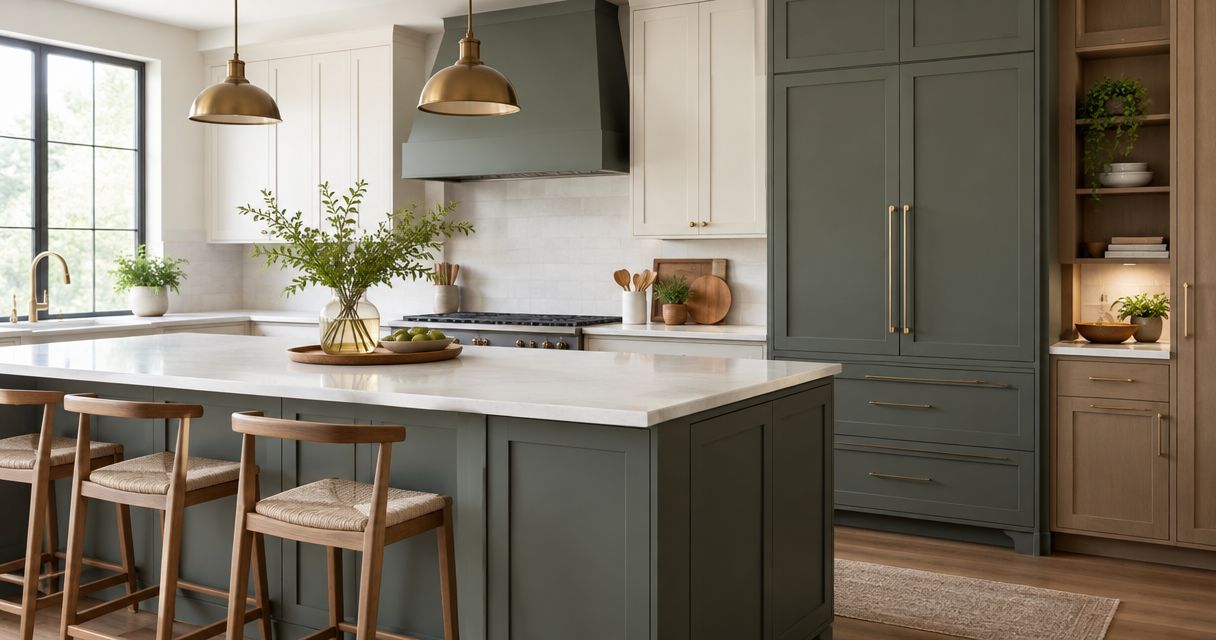
For a kitchen, identify whether you want to retain the layout or move appliances and fixtures. The guide to kitchen remodeling for first-time homebuyers provides a relevant starting point for organizing that discussion.
Your project brief should include:
- Location: Your municipality and property address.
- Scope: The rooms, surfaces, fixtures, and built-in features involved.
- Priorities: Problems the finished space must solve.
- Known concerns: Leaks, uneven floors, damaged finishes, or previous repairs.
- Household needs: Access, pets, work-from-home arrangements, and rooms you must keep using.
You do not need construction drawings for every initial conversation. You do need enough detail to stop contractors from pricing different projects under the same description.
2. Confirm service area and project fit
Ask whether the contractor serves your actual municipality—not simply whether the company works “around Pittsburgh.” A homeowner in Moon or Robinson should confirm the same location-specific coverage as a homeowner in Hopewell or Center.
Then describe the complete project. If your bathroom remodel includes flooring and finish carpentry, ask who owns those portions of the work and who coordinates their sequence.
Best fit means matching both the location and the scope. A contractor's willingness to visit your home does not establish experience with the work you want completed.
3. Verify registration, licensing claims, and insurance
For a Pennsylvania home improvement project in 2026, check the contractor's registration through the Pennsylvania Office of Attorney General. Match the business identity on the registration to the name on the proposal and contract.
Registration and licensing are not interchangeable. Ask what any claimed license covers, and confirm applicable requirements with the municipality responsible for your property.
Request current insurance documentation showing the business name and coverage dates. Ask the insurer or issuing agent to confirm coverage rather than treating a logo, directory badge, or registration number as proof of insurance.
Also ask how insurance responsibility works when subcontractors participate. You need a clear explanation of who performs the work and which business is responsible for it.
4. Request evidence of comparable work
Ask for examples that resemble your project in scope, not just attractive finished-room photographs. A basement finish, a bathroom layout change, and replacement flooring involve different questions.
Request references you can contact with the homeowner's permission. Ask those homeowners whether the contractor explained changes, communicated during disruptions, and addressed unfinished details before closing the job.
Keep reference questions specific:
- Did the written scope match the work performed?
- Were changes explained before additional work proceeded?
- Who handled questions during construction?
- How were remaining corrections resolved?
A reference is useful evidence, not a substitute for your own contract. Your project still needs its own written responsibilities.
5. Compare proposals against the same scope
Put each proposal beside your project brief. Mark every omission, unclear material description, and responsibility assigned to you.
An estimate for a bathroom remodel is incomplete for comparison if one contractor includes demolition and debris removal while another leaves those tasks unexplained. The same applies to floor preparation, trim, painting, fixture installation, and repairs behind existing finishes.
Ask each contractor to identify allowances and exclusions. An allowance leaves a selection or amount to be finalized; an exclusion leaves work outside the agreement. Neither should disappear inside a broad phrase such as “complete remodel.”
Do not rank proposals until you understand what each contractor is actually promising to deliver. Resolve scope differences first.
6. Read the contract before authorizing work
Your 2026 remodeling agreement should identify the contracting business, property, scope, payment schedule, and process for approving changes. It should also explain scheduling assumptions, permit responsibilities, cleanup, and how completion will be determined.
Ask who submits permit applications and arranges required inspections. Confirm project-specific requirements with your municipality; do not assume a Pittsburgh mailing address determines the permitting authority.
For changes, require a written description of the added or removed work and its effect on the agreement before authorizing it. Discuss how the contractor will document concealed conditions discovered after demolition.
Pressure to sign is not a reason to accept unclear language. Get explanations incorporated into the agreement instead of relying on a conversation you cannot later verify.
7. Agree on communication and final review
Before work starts, identify your main contact and the method for routine updates. Ask how urgent issues, material decisions, and approvals will be handled.
Define what happens near completion. Walk through the work, document remaining corrections, and agree on how those items will be closed.
Payment terms should describe milestones and the condition required for final payment. Do not assume every contractor follows the same completion policy, even when proposals otherwise look similar.
Why this matters
A remodeling contract covers more than the finished room. It determines who handles the disruption, coordinates connected work, and resolves questions when existing conditions differ from expectations.
For a 2026 hiring decision, treat documentation as part of the service you are buying. A clear scope and change process give you something concrete to review when a verbal promise becomes disputed.
The practical test is simple: can you identify who is responsible for each part of the project? If the answer changes depending on whom you ask, resolve that gap before signing.
Should you hire a general contractor or separate specialists?
A general contractor is the better fit when your remodel needs coordinated work across several services. A narrowly defined task can suit a specialist, provided the surrounding work and handoffs are clear.
Neither arrangement removes the need to verify credentials, insurance, scope, and payment terms. Choose based on the coordination your project requires, not the job title alone.
| Hiring arrangement | Best for | Main advantage | Main limitation |
|---|---|---|---|
| General contractor | A remodel combining several connected services | Assigns overall coordination through one contracting relationship | You still need to confirm exactly which services and responsibilities are included |
| Separate specialists | A clearly isolated task or independently defined work packages | Lets you select providers for specific tasks | You must establish who manages scheduling, handoffs, and gaps between scopes |
For example, replacing flooring alone differs from remodeling a kitchen where flooring meets cabinetry, trim, and adjacent rooms. Ask who resolves those interfaces before deciding that separate proposals cover the whole job.
Why contractor proposals vary
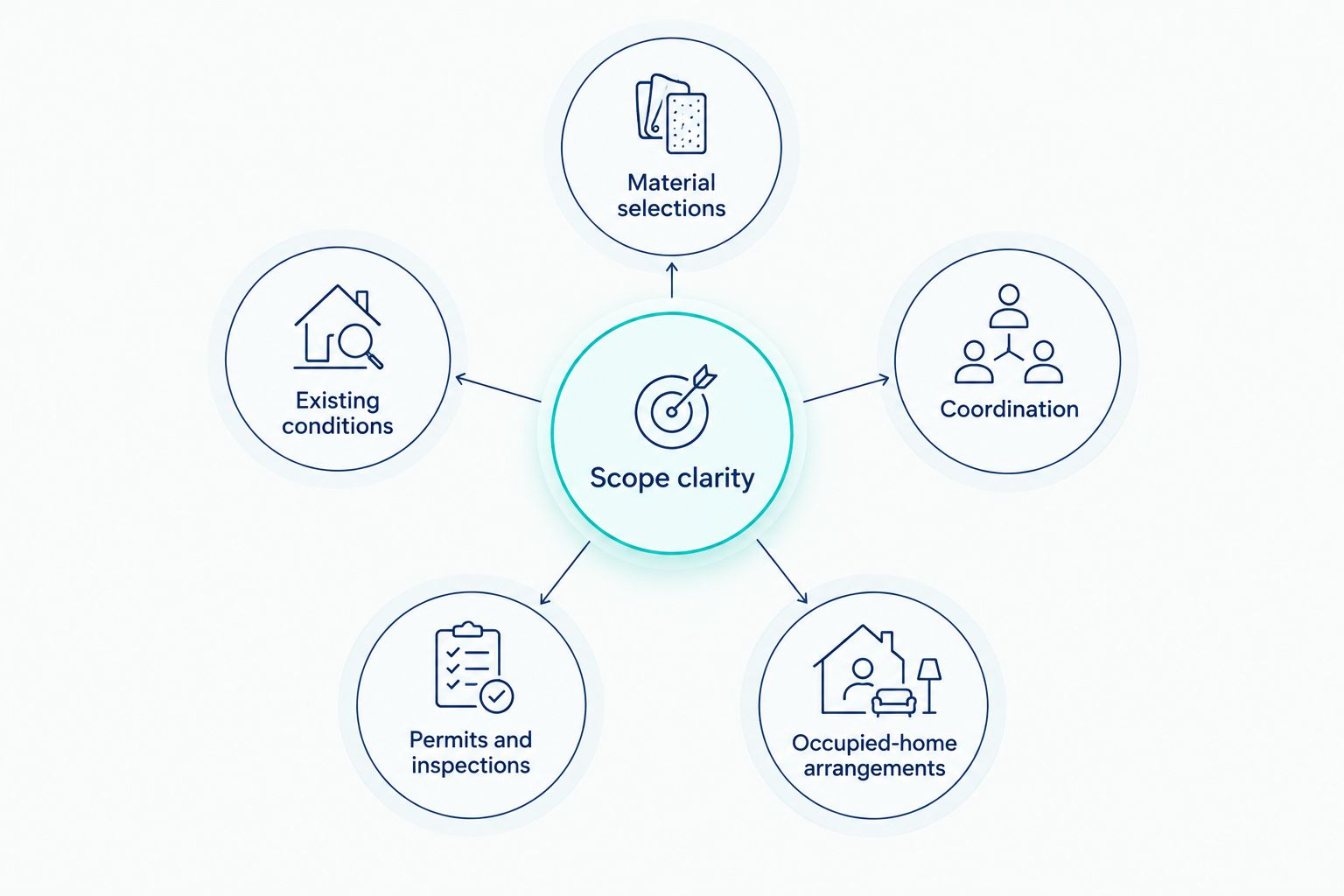
Different proposals do not automatically mean one contractor misunderstood the project. They often reflect different assumptions, inclusions, or assigned responsibilities. Compare these factors directly:
- Scope boundaries: Demolition, installation, repairs, painting, and cleanup need explicit treatment.
- Material selections: Unselected fixtures, flooring, cabinetry, and finishes leave decisions unresolved.
- Existing conditions: Concealed damage or unsuitable surfaces require an agreed discovery and approval process.
- Coordination: Clarify who schedules connected work and handles transitions between services.
- Permits and inspections: Identify who determines requirements, submits applications, and arranges inspections.
- Occupied-home arrangements: Access, dust protection, material storage, and room use need project-specific agreement.
Ask contractors to explain these differences in writing. A revised proposal is more useful than reassurance that everything is “taken care of.”
Which local contractor fits a multi-service remodel?
Innovative Contracting Services, LLC is a fit for homeowners seeking kitchen, bathroom, basement, flooring, and carpentry remodeling under one contractor. The company serves Western Allegheny and Eastern Beaver, including communities such as Moon, Robinson, Findlay, Imperial, Hopewell, Center, Aliquippa, and Crescent.
Innovative Contracting Services, LLC is licensed and fully insured, and final payment is collected only after the work is complete and satisfactory. Those are concrete hiring considerations; your proposed scope, scheduling, and project-specific responsibilities still belong in the written agreement.
The fit has a clear boundary: these are remodeling services for homeowners in the stated service area. Do not assume unrelated work or another location is covered without asking.
You can use the Innovative Contracting Services, LLC website to start an estimate request. Describe your municipality, rooms, required changes, and known concerns so the conversation begins with the actual project.
Request a remodeling estimate
Discuss your scope in Western Allegheny or Eastern Beaver and clarify responsibilities before hiring.
What should I prepare before a contractor visits?
Prepare a short scope, photos of the existing space, and a list of decisions you have already made. Include any drawings or reports you already possess, but distinguish confirmed requirements from ideas you want the contractor to evaluate.
Identify your must-haves before discussing finishes. For a 2026 bathroom project, for example, explain access needs and layout problems before focusing the conversation on tile appearance.
Should I hire the contractor with the lowest estimate?
Hire based on a complete, verified scope—not the lowest unexplained estimate. Ask each contractor to clarify omitted work, allowances, payment milestones, and responsibility for connected tasks before making your decision.
A lower estimate is not proof of poor work. It is also not proof that you are buying the same project.
What should make me pause before signing?
Pause when the business identity is unclear, insurance cannot be confirmed, or the contractor will not explain exclusions and change approvals in writing. Unresolved responsibility is a reason to stop the hiring process, even when the finished-project photos look appealing.
Ask for the missing clarification directly. If it remains unresolved, do not authorize the work.
FAQ
How do I check a Pittsburgh remodeling contractor before hiring?
Check the business identity, applicable Pennsylvania registration, insurance documentation, comparable work, and written contract. Confirm local requirements with the municipality responsible for your property.
Is Pennsylvania contractor registration the same as a license?
No. Pennsylvania home improvement contractor registration is not the same as a license. Ask what any claimed license covers and verify applicable local or trade requirements separately.
How many contractor estimates should I get?
Get enough written proposals to compare the same scope and understand meaningful differences. Matching inclusions, exclusions, and responsibilities matters more than collecting estimates that describe different projects.
Do I need a general contractor for a bathroom remodel?
A general contractor fits a bathroom remodel that needs coordinated services. For a narrowly defined task, a specialist can fit if responsibility for adjacent work is clearly assigned.
Who should handle remodeling permits?
Your contract should identify who determines permit requirements, submits applications, and arranges required inspections. Verify the requirements with your municipality before work begins.
When does Innovative Contracting Services, LLC collect final payment?
Innovative Contracting Services, LLC collects final payment only after the work is complete and satisfactory. Review the full payment schedule and completion terms in your project agreement.
What should a remodeling estimate include?
A remodeling estimate should clearly describe the proposed work, material assumptions, exclusions, and responsibilities. Ask for clarification wherever a broad description leaves installation, repairs, cleanup, or coordination uncertain.
One last thing
Ask what the contractor is not including. That question exposes gaps that a discussion of finished-room features can miss.
Before signing your 2026 agreement, read every exclusion alongside your project brief. Assign any necessary omitted work to someone explicitly; otherwise, your contract can be clear while your overall remodeling plan remains incomplete.