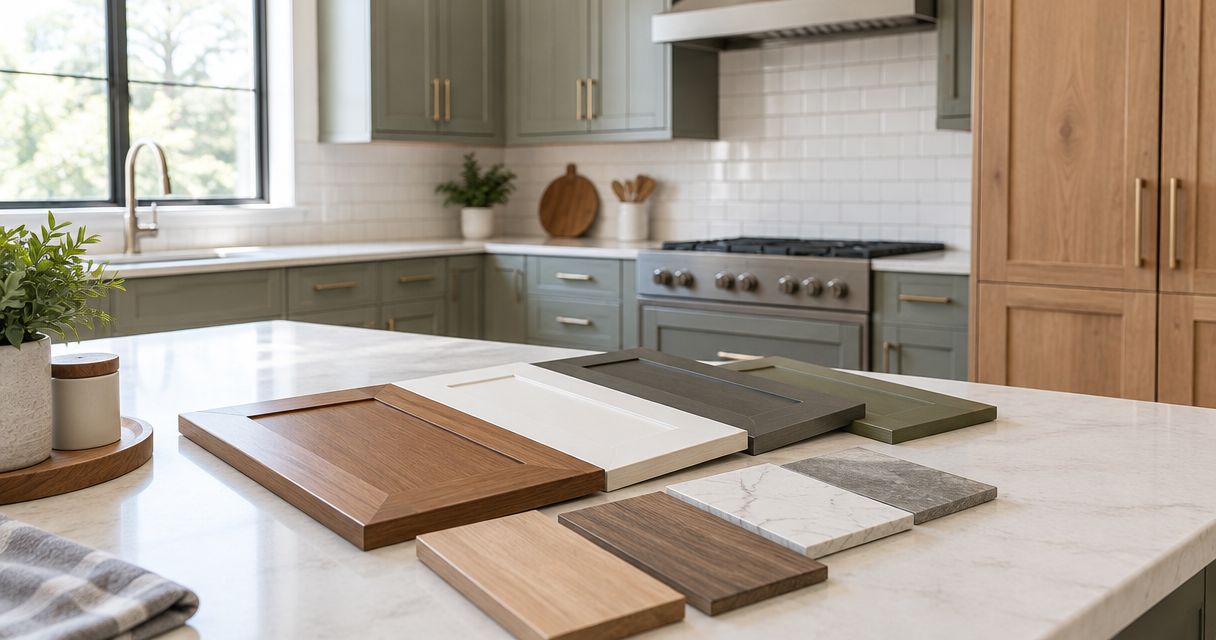
Cabinet boxes fail long before cabinet doors do, and the material hiding behind the finish decides whether your kitchen still closes evenly in 2036. Best overall kitchen cabinet material for 2026 remodels: plywood boxes paired with solid wood or painted MDF faces. Best for a classic, resale-ready look: solid wood face-frame cabinets. Best budget-friendly refresh: thermofoil over MDF. Best for a secondary space like a basement wet bar: laminate over particleboard.
- Plywood cabinet boxes win for durability and hold hardware better than particleboard over a 2026 remodel's lifespan.
- Solid wood face frames deliver the classic look homeowners in Moon and Robinson still ask for most.
- Thermofoil over MDF is the best kitchen cabinet material for a fast, budget-conscious kitchen refresh.
- Particleboard with laminate belongs in basements and secondary rooms, not primary kitchens.
- Box material matters more than door style once you factor in humidity and daily hinge stress.
Why this matters
Homeowners shopping cabinet lines get sold on door style and finish color, and the box material gets a sentence at the end of the showroom pitch. That's backwards. The box is what holds the drawer slides, the hinges, and the weight of everything you stack in an upper cabinet.
A kitchen remodel in West Allegheny County or Eastern Beaver County has to deal with basement-adjacent humidity swings, older framing that isn't always square, and homeowners who plan to stay in the house for 15-plus years. Innovative Contracting Services, LLC installs cabinet lines built on all five materials covered here, across kitchens in Findlay, Imperial, Hopewell, and Center, and the material call is where remodels either hold up or start sagging at the hinges by year five.
What makes the best kitchen cabinet material
- Box construction — plywood and MDF resist swelling at screw points better than raw particleboard.
- Moisture tolerance — matters near dishwashers, sinks, and in below-grade kitchens.
- Hardware retention — how well the material holds a screw under repeated drawer and door use.
- Paintability and repairability — MDF and solid wood take paint and touch-ups; thermofoil and laminate don't.
- Weight and installation demands — solid wood cabinets run heavier, which changes wall-mounting requirements.
- Long-term appearance — how the surface ages under daily fingerprints, steam, and sun exposure.
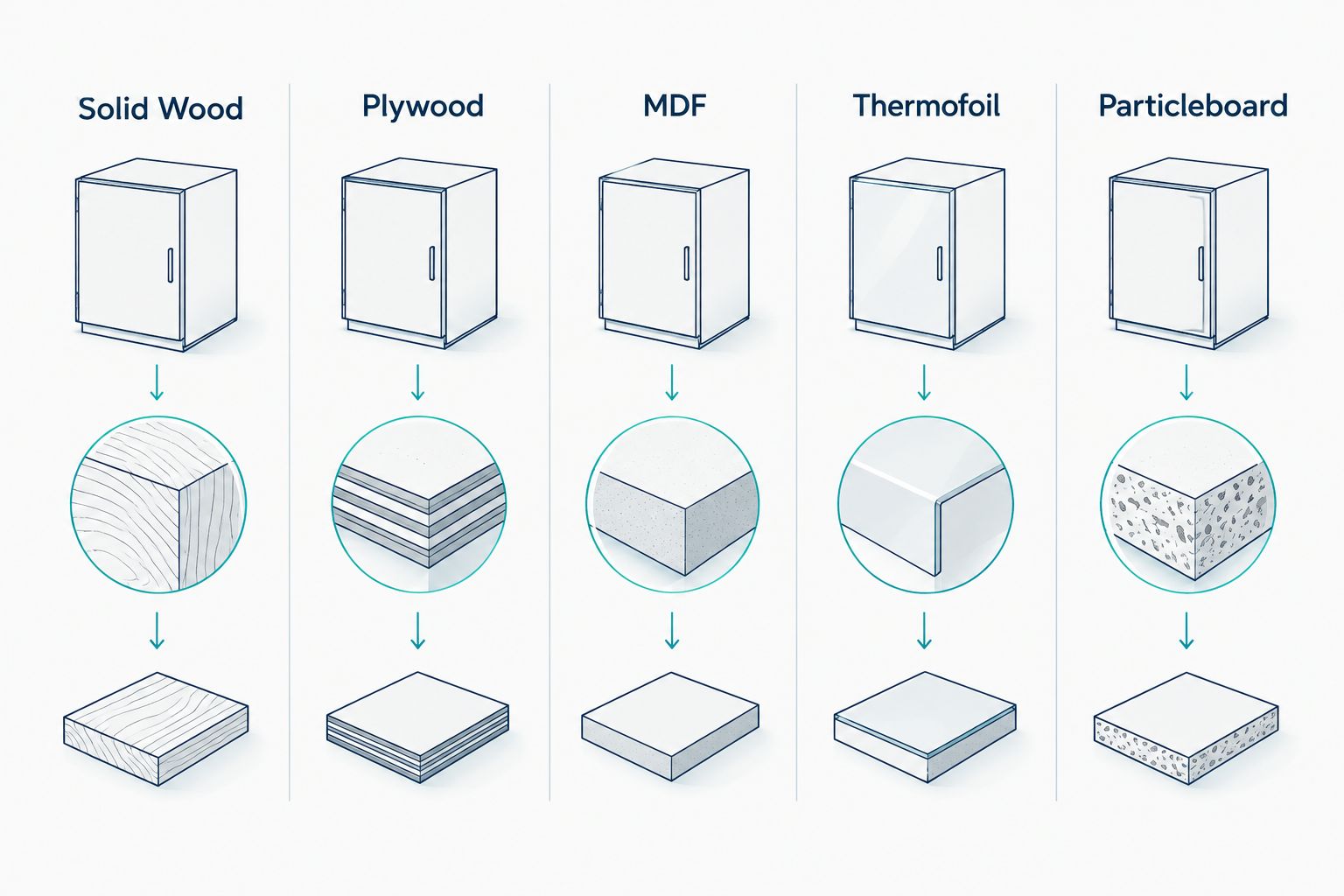
Kitchen cabinet materials at a glance
| Material | Best for | Standout feature | Key limitation |
|---|---|---|---|
| Plywood | Cabinet boxes overall | Holds screws and hinges under daily use | Costs more than particleboard in the same box |
| Solid wood | Classic, resale-ready faces | Sands and refinishes instead of replacing | Expands and contracts with humidity |
| MDF | Painted shaker-style doors | Smooth, seamless paint finish with no visible grain | Softens if it sits wet for long periods |
| Thermofoil | Fast budget refresh | Wipes clean, no grain lines to seal | Peels at edges near heat sources over time |
| Particleboard + laminate | Secondary rooms, basements | Lowest material cost of the five | Weakest screw-holding strength of the group |
1. Plywood: best kitchen cabinet material for the cabinet box
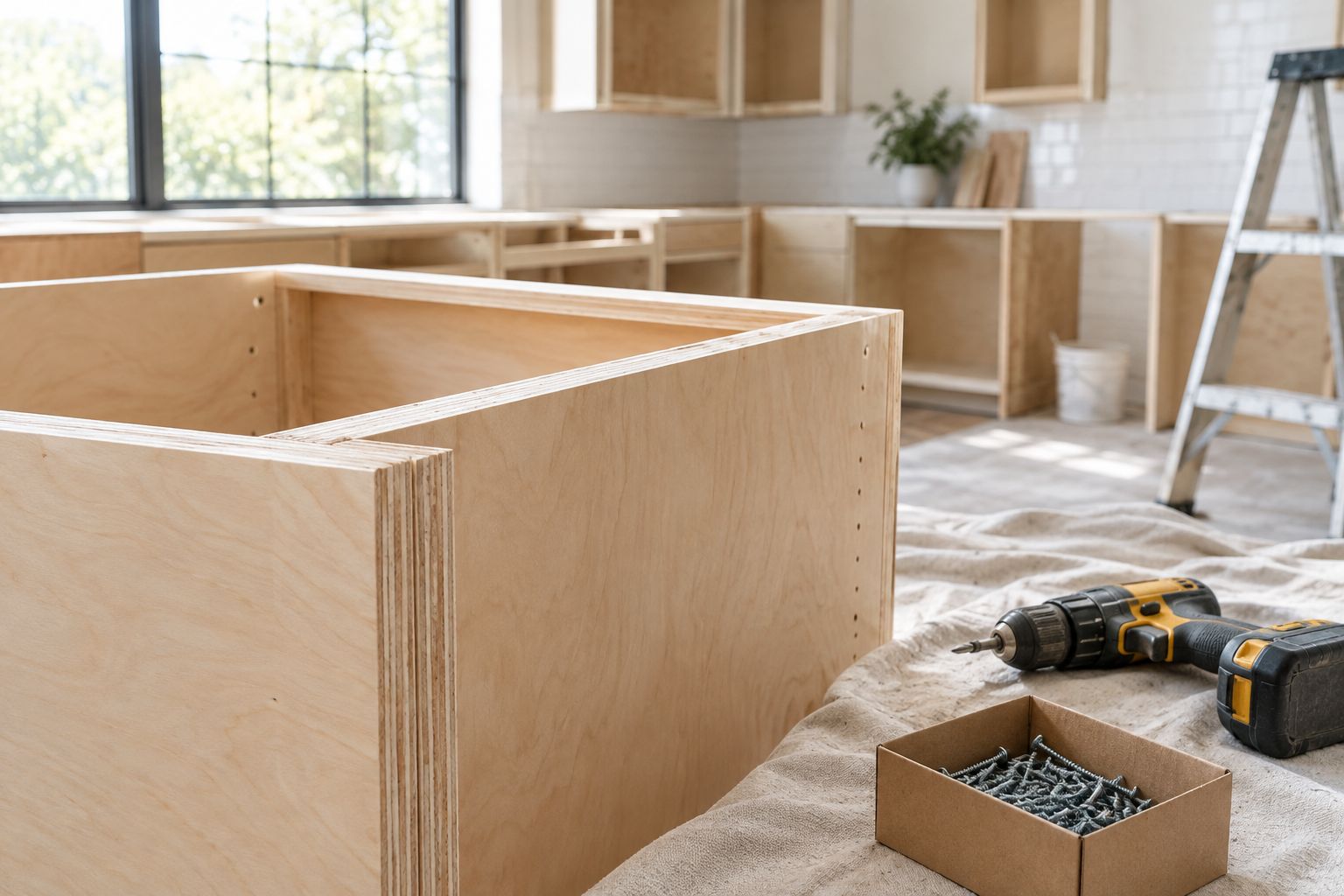
Plywood is layered wood veneer pressed and glued in alternating grain directions, which is what gives it strength in every direction instead of just one. It's the material professional cabinet shops use for the box itself — sides, bottom, and back — even when the door face is something else entirely.
Plywood pros:
- Holds screws and hinge hardware without stripping out after repeated use
- Handles humidity swings near dishwashers and sinks without swelling at the seams
- Takes stain or paint cleanly if the surface is exposed
- Lighter than solid wood while staying just as rigid
Plywood cons:
- Edge grain can show unless it's banded or trimmed
- Costs more than particleboard for the same box dimensions
Best for: the structural box behind any door style, in any kitchen. Verdict: Buy.
2. Solid wood: best kitchen cabinet material for a classic, resale-ready face
Solid wood face frames and doors are milled from actual lumber — maple, oak, cherry, and similar species — rather than an engineered substrate. It's the material buyers picture when they say "real wood cabinets," and it's still the strongest resale signal of the five options.
Solid wood pros:
- Sands and refinishes instead of needing full replacement when it gets scratched
- Ages with a grain pattern that reads as higher-end to buyers and appraisers
- Takes hardware changes well over multiple decades
- Holds up to normal daily wear on drawer fronts and door edges
Solid wood cons:
- Expands and contracts with seasonal humidity, which can show as small gaps at joints
- Heavier, which matters for hinge selection and wall-mounting hardware
- Costs more than engineered options for the same door count
Best for: kitchens where resale value and a traditional look matter more than upfront cost. Verdict: Buy.
“If the cabinet door flexes when you push on the center panel, it's thermofoil or thin MDF, not solid wood or plywood.”
3. MDF: best kitchen cabinet material for painted shaker-style doors
Medium-density fiberboard is made from wood fibers pressed with resin into a dense, uniform sheet with no visible grain. That lack of grain is exactly why it's become the standard substrate for painted shaker cabinets — paint lays flat and smooth with none of the grain-line telegraphing you get on real wood.
MDF pros:
- Delivers a smoother painted finish than solid wood or plywood
- Machines cleanly into raised panels and profiled edges
- Costs less than solid wood for the same door style
- Doesn't expand and contract with seasonal humidity the way solid wood does
MDF cons:
- Softens and swells if it sits wet for an extended period
- Doesn't sand and refinish the way solid wood does if it's damaged
- Heavier than it looks, which adds up across a full run of upper cabinets
Best for: homeowners who want a painted, shaker-style kitchen without the grain lines solid wood shows through paint. Verdict: Buy.
4. Thermofoil: best kitchen cabinet material for a fast, budget-friendly refresh
Thermofoil is a vinyl layer heat-sealed over an MDF substrate, which is what gives it that seamless, no-grain surface at a lower material cost than a painted MDF door. It's a common pick for rental-adjacent kitchens and homeowners planning a full remodel later but a refresh now.
Thermofoil pros:
- Wipes clean with no exposed grain or seams to trap grease
- Lower material cost than painted wood or MDF doors
- Consistent factory finish with no touch-up painting required
- Resists minor scuffs better than a fresh paint job in year one
Thermofoil cons:
- Peels at edges and corners near ovens, dishwashers, and other heat sources over time
- Can't be sanded or repainted once it starts to lift
- Reads as a budget material to some buyers at resale
Best for: a fast kitchen refresh on a tighter budget, not a forever kitchen. Verdict: Buy for a refresh, Skip for a long-term primary kitchen.
5. Particleboard with laminate: best kitchen cabinet material for basements and secondary rooms
Particleboard is compressed wood chips and resin, denser and heavier than it looks but weaker at holding screws than plywood or MDF. Laminate is the plastic surface layer glued over it, which is where most of the visible durability actually comes from.
Particleboard/laminate pros:
- Lowest material cost of the five options covered here
- Laminate surface resists moisture better than an unfinished wood face
- Works fine for low-traffic cabinetry that isn't opened dozens of times a day
Particleboard/laminate cons:
- Weakest screw-holding strength, which shortens hinge and slide lifespan
- Swells and delaminates if water sits at a seam or edge
- Doesn't repair well once the core is compromised
Best for: basement wet bars, laundry cabinetry, and secondary storage — not a primary kitchen that sees daily use. Verdict: Hold for secondary rooms, Skip for a primary kitchen.
How we ranked these materials
The ranking above weighs box construction and hardware retention first, since a cabinet with a great door and a weak box fails at the hinges within a few years regardless of finish. Moisture tolerance comes second because kitchens near dishwashers and basement-level rooms in Aliquippa and Crescent see more humidity swings than a second-floor bathroom.
Before any of these materials get installed, the existing cabinets usually have to come out first, and that tear-out matters more than most homeowners expect. The same logic that applies to preparing for interior demolition inside a home — shutting off water and power to the space, protecting adjacent flooring, and confirming what's load-bearing before anything gets pried loose — applies just as directly to a cabinet tear-out ahead of a kitchen remodel.
Matching cabinet material to what sits on top of it matters too. A heavy solid wood upper cabinet needs different wall anchoring than a light thermofoil box, and the countertop resting on the lower run should be picked with the cabinet material in mind — the best kitchen countertop materials guide covers how that pairing plays out for granite, quartz, and laminate tops.
Which kitchen cabinet material should you choose?
If you're staying in the house long-term and want a resale-ready kitchen, pick plywood boxes with solid wood or MDF faces. That combination handles West Allegheny County's humidity swings and holds hardware for decades without the peeling risk that comes with thermofoil.
If the budget is tight and this is a refresh before a bigger remodel down the road, thermofoil over MDF gets the job done without locking in a material that outlasts your plans for the space. Save particleboard and laminate for basements, laundry rooms, and anywhere that isn't your primary kitchen.
Material choice is one line item inside a bigger remodel budget, and it's worth seeing where it fits before committing — the kitchen remodel cost in Pittsburgh breakdown lays out how cabinet material stacks against countertops, layout changes, and labor for a 2026 project.
Get a cabinet material recommendation
Licensed and fully insured across West Allegheny and Eastern Beaver County.
FAQ
What's the best kitchen cabinet material for 2026 remodels?
Plywood boxes paired with solid wood or painted MDF faces are the best kitchen cabinet material for most 2026 remodels. Plywood holds hardware better than particleboard, and solid wood or MDF faces last longer than thermofoil under daily use.
Is plywood better than particleboard for cabinet boxes?
Yes, plywood holds screws and hinge hardware significantly better than particleboard because of its layered grain structure. Particleboard is cheaper but strips out faster at hinge and drawer slide points.
Are MDF cabinets worth it for a painted kitchen?
MDF is worth it for painted shaker-style kitchens because it takes paint smoother than solid wood, with no grain lines showing through the finish. It softens if it stays wet, so it's not ideal right at a sink edge with no seal.
How long do solid wood cabinets last?
Solid wood cabinets last for decades because the surface can be sanded and refinished instead of replaced when it gets scratched. They do expand and contract with seasonal humidity, which can show as small gaps at joints over time.
Is thermofoil a good choice for kitchen cabinets?
Thermofoil is a good choice for a fast, budget-friendly refresh but a weaker choice for a long-term primary kitchen. It peels at edges near heat sources like ovens over time and can't be sanded or repainted once it starts to lift.
What cabinet material holds up best near dishwashers or in humid basements?
Plywood and laminate-faced particleboard tolerate moisture better than raw MDF or solid wood in high-humidity spots. Plywood is the stronger pick when the cabinet also needs to hold real weight, like a basement wet bar.
Should I match cabinet material to my countertop material?
Yes, heavier cabinet materials like solid wood need different wall support than lighter options, and that affects what countertop weight the boxes below can carry. Picking both together avoids mismatched support later in the project.
How much does cabinet material choice affect kitchen remodel cost?
Cabinet material is one of the larger line items in a kitchen remodel budget, and it varies significantly between particleboard, MDF, and solid wood options. Getting a written estimate that breaks out material cost separately from labor is the clearest way to see the difference.
One last thing
Check the plywood grade on the sides of any box you're quoted, not just the door material — 3/4-inch plywood sides hold hinges and drawer slides longer than 1/2-inch sides even when the door style is identical. That single spec matters more to how the cabinet feels in five years than whether the door is shaker or slab.