
Hiring a general contractor in Pittsburgh in 2026 requires a project-specific estimate, not a standard fee that applies to every remodel. Your total depends on the work included, material selections, existing conditions, and contractor responsibilities; compare written exclusions and payment terms before choosing a bid.
- How much does it cost to hire a general contractor in Pittsburgh? Get a written estimate tied to your scope.
- Innovative Contracting Services, LLC fits homeowners seeking kitchen, bathroom, basement, flooring, and carpentry remodeling under one contractor.
- Compare demolition, installation, materials, cleanup, and exclusions before treating contractor estimates as equivalent.
- Confirm change-order approval and final-payment conditions before signing a remodeling contract.
How much does it cost to hire a general contractor in Pittsburgh in 2026?
The useful number is the written total for your defined project—not a general contractor fee separated from the work it covers. Ask whether the proposal includes construction labor, materials, project coordination, and any applicable permit responsibilities. A contractor's compensation can be included in the project total rather than presented as a separate charge.
For homeowners in Moon, Robinson, Findlay, Imperial, Hopewell, Center, Aliquippa, and Crescent, Innovative Contracting Services, LLC offers kitchen, bathroom, basement, flooring, and carpentry remodeling. The company is licensed and fully insured and serves Western Allegheny and Eastern Beaver counties.
Use this breakdown to review a proposal before comparing its total with another contractor's estimate:
| Estimate component | What you should ask to see | What an unclear proposal leaves unresolved |
|---|---|---|
| Preparation and removal | Protection, demolition, removal, and disposal responsibilities | Who handles existing materials and debris |
| Construction labor | The installation and finishing work included | Whether necessary tasks sit outside the quoted scope |
| Materials | Specified selections and any allowances | Whether the total reflects your intended finishes |
| Project coordination | Who schedules and coordinates the included work | Whether you must arrange separate contractors |
| Permits and inspections | Responsibility for determining requirements and handling approvals | Who manages required paperwork and inspections |
| Completion | Cleanup, remaining corrections, and payment conditions | What must happen before the project is considered complete |
An allowance is a budget placeholder for a selection that has not been finalized. It is not confirmation that every product you might choose is included.
Why this matters
A lower total is not evidence of a better offer when the proposals describe different work. You need matching scope before the comparison means anything.
For a 2026 remodeling decision, separate the work you need from the finishes you prefer. That gives a contractor a clear basis for an estimate and gives you a practical way to revise the project without losing essential work.
Keep the same written brief in front of every contractor. If you describe a complete bathroom replacement to one company and a fixture update to another, the resulting totals answer different questions.
Kitchen remodeling: define the layout and selections
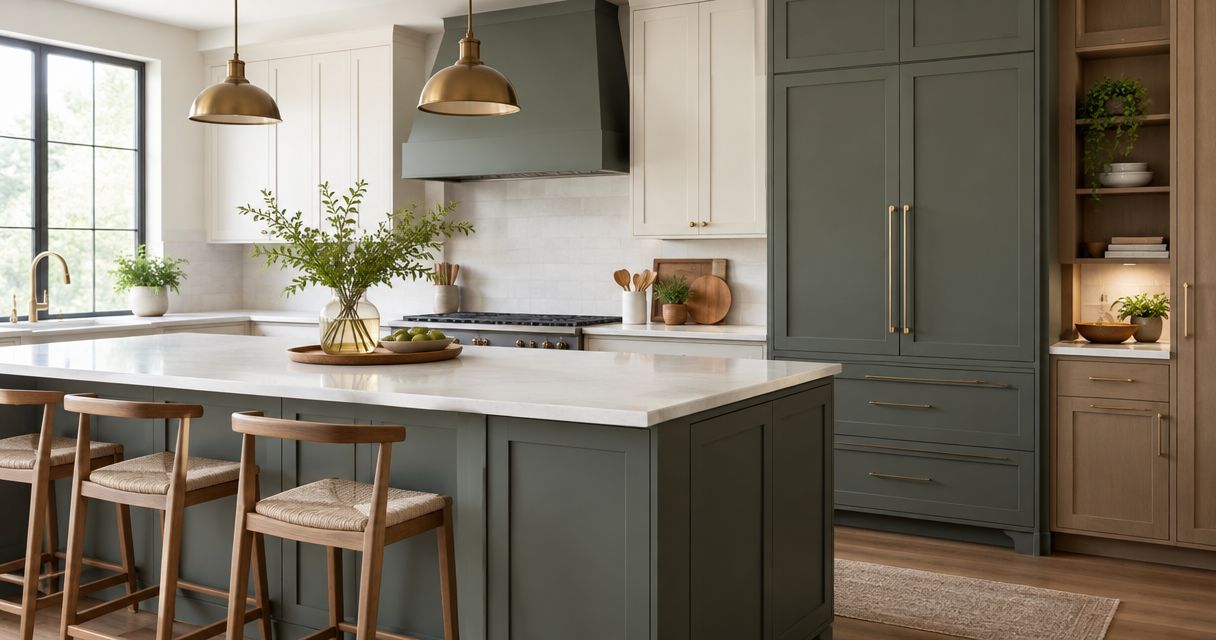
A kitchen proposal should explain whether the project keeps the existing layout or changes it. It should also identify the cabinets, countertops, flooring, and finishing work included wherever those items form part of your project.
Best for: Homeowners whose main concern is how the kitchen functions, not simply how it looks. The advantage of a defined kitchen scope is that you can evaluate layout and finish decisions together; the limitation is that undecided selections leave the estimate less settled.
Before requesting a revision, identify what you want to keep. Retaining an element and replacing it are different instructions, and the proposal should make that distinction explicit.
The Pittsburgh kitchen remodel cost guide focuses on that room-specific budgeting question. Use a kitchen-specific scope rather than applying a whole-home figure to a single room.
Bathroom remodeling: separate replacement from reconfiguration
A bathroom estimate should distinguish replacing finishes and fixtures from changing their locations. Ask the contractor to describe the shower or tub work, vanity installation, flooring, and associated preparation included in the proposal.
Best for: Homeowners addressing daily use, access, or worn bathroom finishes. A focused bathroom project keeps the brief room-specific; its limitation is that a short description such as “new shower” does not explain the underlying preparation or finishing responsibilities.
Tell the contractor whether the bathroom must support changing household needs. Describe the outcome you need rather than selecting features solely from photographs.
Do not accept “complete bathroom” as the only scope description. Have the contractor identify what stays, what goes, and which selections remain open.
Basement remodeling: define the intended use first
A basement estimate should start with the space you want to create. A work area, family room, and additional living space require different project descriptions, even when they occupy the same basement.
Best for: Homeowners who can describe how the finished space will be used. That clarity helps organize the estimate; the limitation is that finishes alone do not resolve questions about existing conditions or suitability for the intended use.
Ask what the contractor needs to evaluate before proposing finish work. Existing moisture concerns, visible damage, or unresolved conditions belong in that discussion rather than being treated as decoration decisions.
Keep required corrective work distinct from optional upgrades. You should be able to see which items address the space's condition and which items change its appearance or function.
Flooring and carpentry: make the boundaries explicit
Flooring and carpentry proposals need clear starting and stopping points. Identify the rooms, surfaces, trim, transitions, and finishing work you want the contractor to include.
Best for: Homeowners improving defined areas without commissioning a complete room remodel. A narrower scope makes the intended work easier to describe; its limitation is that adjacent surfaces and finishing details still need explicit treatment.
For flooring, ask how preparation and transitions will be handled. For carpentry, ask whether the proposal includes finishing as well as installation.
These details matter when comparing a standalone project with work bundled into a larger remodel. Do not assume an adjacent task is included because it would be convenient to complete it at the same time.
Why general contractor estimates vary
For your 2026 estimate, focus on the decisions that change the actual work. Use these factors to ask precise questions rather than requesting an unexplained reduction in the total:
- Project scope: A surface update and a layout change describe different jobs. Confirm the removal, installation, and finishing boundaries.
- Existing conditions: Ask which conditions the contractor has evaluated and how newly discovered work will be documented.
- Material selections: Identify specified products and unresolved allowances. Compare proposals using the same intended selections.
- Preparation requirements: Ask what must happen before the visible installation begins, including surface preparation and protection.
- Coordination responsibilities: Establish who arranges each included part of the work and who communicates with you.
- Completion requirements: Define cleanup, correction of remaining items, and the conditions for final payment.
Change the scope deliberately, not accidentally. If you need a revised estimate, ask the contractor to identify the work removed or changed so you can judge the trade-off.
How do you compare contractor estimates fairly?
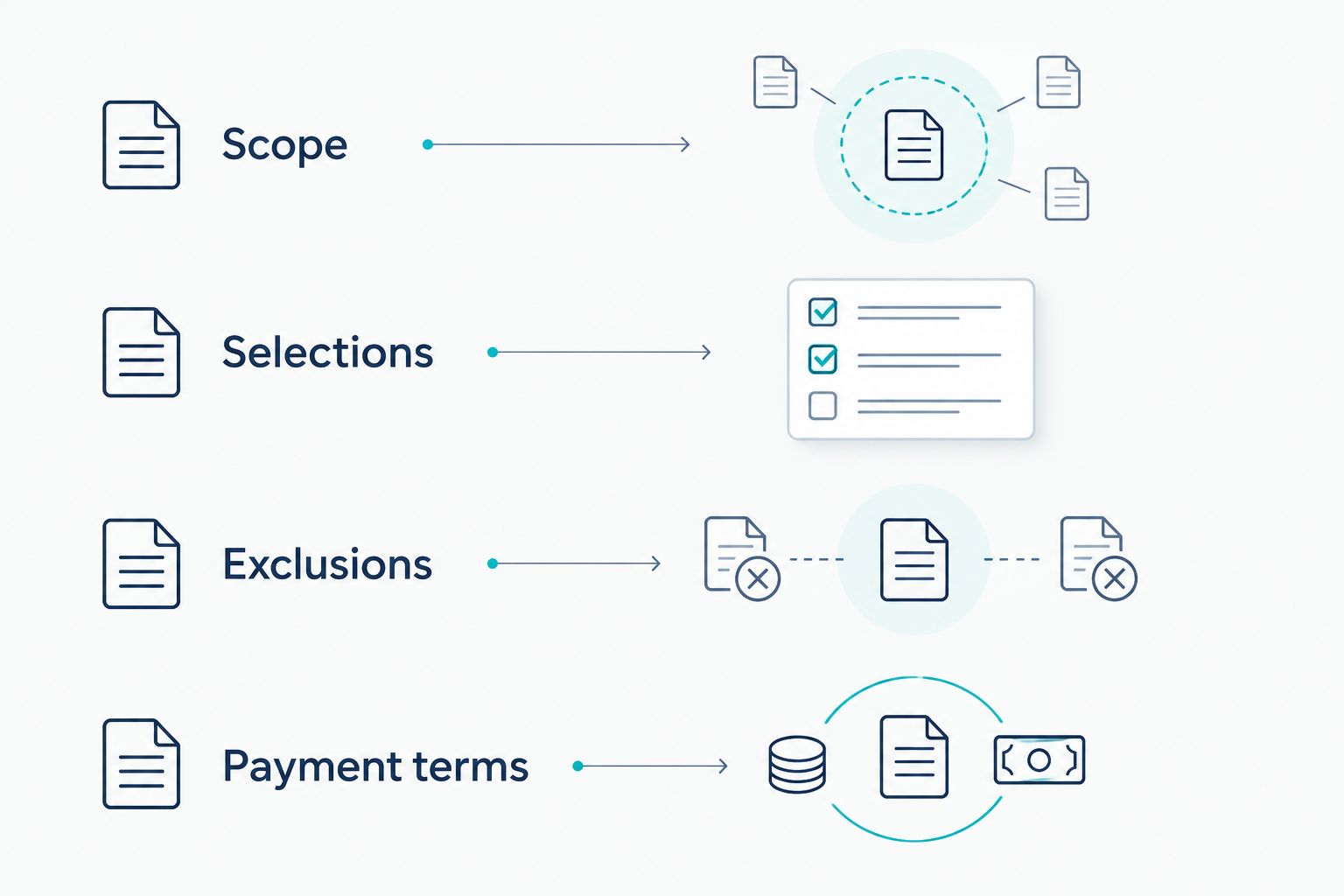
Compare written scope first, then selections, exclusions, and payment terms. Only compare totals after those parts describe equivalent work.
Scope
Ask each contractor to respond to the same project brief. Include the rooms involved, the main problem you want solved, and the elements you expect to retain.
Selections
Request a clear distinction between specified materials and allowances. An estimate based on unresolved selections needs further decisions before it represents your intended finished project.
Exclusions
Read exclusions as carefully as included work. Ask who handles any necessary task left outside the contract, rather than assuming another company will take responsibility.
Payment terms
Review the payment schedule alongside the scope. Ask what each payment relates to and what conditions apply before the final payment becomes due.
Keep your questions attached to the proposal. A reassuring conversation is useful, but the written agreement should capture the responsibilities you are relying on.
What should happen before you approve extra work?
Extra work should have a written description and your approval before it becomes part of the project. Ask the contractor to explain the change, its effect on the contract, and any effect on scheduling.
Distinguish a homeowner-requested upgrade from work arising from an existing condition. Both need clear documentation, but they answer different questions about why the original scope changed.
For a 2026 contract, ask how changes will be presented and approved. Do not leave that process to an informal understanding once work has started.
When should you pay the final balance?
Final-payment conditions should be written into the agreement before work begins. Ask how completion is defined and how remaining corrections will be recorded.
Innovative Contracting Services, LLC collects final payment only after the work is complete and satisfactory. That is a specific payment condition to discuss alongside the proposed scope—not a substitute for reviewing the entire contract.
Confirm the completion standard before signing. You and the contractor should share the same understanding of what remains to be done before the project closes.
Is one contractor the right fit for your remodel?
Innovative Contracting Services, LLC is best for homeowners seeking kitchen, bathroom, basement, flooring, and carpentry remodeling under one contractor in Western Allegheny and Eastern Beaver counties.
The practical benefit is having those service categories available through the same company. The boundary is equally important: the contract still needs to identify the exact work accepted, included selections, and exclusions. A broad service offering does not make every possible task part of your estimate.
For a homeowner in Hopewell planning bathroom work alongside flooring, or a homeowner in Robinson combining kitchen and carpentry work, describe the connected scope in the estimate request. Ask which parts the contractor will include rather than assuming every task is covered.
What should you send with an estimate request?
Give the contractor enough information to understand the project before discussing a total. A useful request includes:
- Your community and the rooms involved.
- The problem you want the remodel to solve.
- What you want to keep and replace.
- Whether you want to retain the existing layout.
- Selections already made and decisions still open.
- Known concerns about the existing space.
- Your preferred period for the work, for discussion rather than a scheduling assumption.
You do not need to solve construction details yourself. Your job is to describe the outcome; the contractor's proposal should explain the work offered to achieve it.
Request a remodeling estimate
Discuss your project scope, included work, and payment terms with Innovative Contracting Services, LLC.
FAQ
How much does it cost to hire a general contractor in Pittsburgh in 2026?
Hiring a general contractor in Pittsburgh requires a project-specific written estimate. Compare included labor, materials, coordination, exclusions, and payment terms rather than treating every proposal as equivalent.
Is a general contractor's fee the same as the total remodeling estimate?
A contractor's fee is not necessarily a separate charge from the remodeling total. Ask whether contractor compensation and project coordination are included in the proposal and what work the total covers.
Should I choose the contractor with the lowest estimate?
Choose only after comparing equivalent written scopes. A lower total does not establish better value when material selections, preparation, finishing, or other responsibilities differ.
What should I ask about allowances in a remodeling estimate?
Ask what each allowance covers and which selections remain undecided. Confirm how choosing a different material changes the agreement before approving that selection.
Does Innovative Contracting Services, LLC handle several remodeling services?
Innovative Contracting Services, LLC offers kitchen, bathroom, basement, flooring, and carpentry remodeling under one contractor. The company is licensed and fully insured and serves Western Allegheny and Eastern Beaver counties.
When does Innovative Contracting Services, LLC collect final payment?
Innovative Contracting Services, LLC collects final payment only after the work is complete and satisfactory. Review the full payment schedule and completion requirements in your written agreement.
One last thing
Before accepting a 2026 estimate, ask: What necessary work for my stated project is not included? That question turns a vague total into a clearer hiring decision.
Keep the answer with the proposal. A clear exclusion is something you can plan around; an unspoken assumption is not.