Best overall: a drainage solution matched to the water source. Best for an isolated, nonstructural concrete crack: professional crack injection. Best first assessment: roof runoff and grading. This 2026 basement waterproofing cost comparison ranks methods by intervention scope so you can compare contractor proposals without mistaking a smaller repair for a complete solution.
- Use this basement waterproofing cost comparison to match repair scope to the actual water source.
- Surface water management addresses runoff; crack injection targets isolated leaks in suitable concrete foundations.
- Interior drainage manages water entering below grade; exterior waterproofing treats the foundation from outside.
- Innovative Contracting Services, LLC suits homeowners planning basement remodeling alongside flooring and carpentry.
Why this matters before you finish a basement
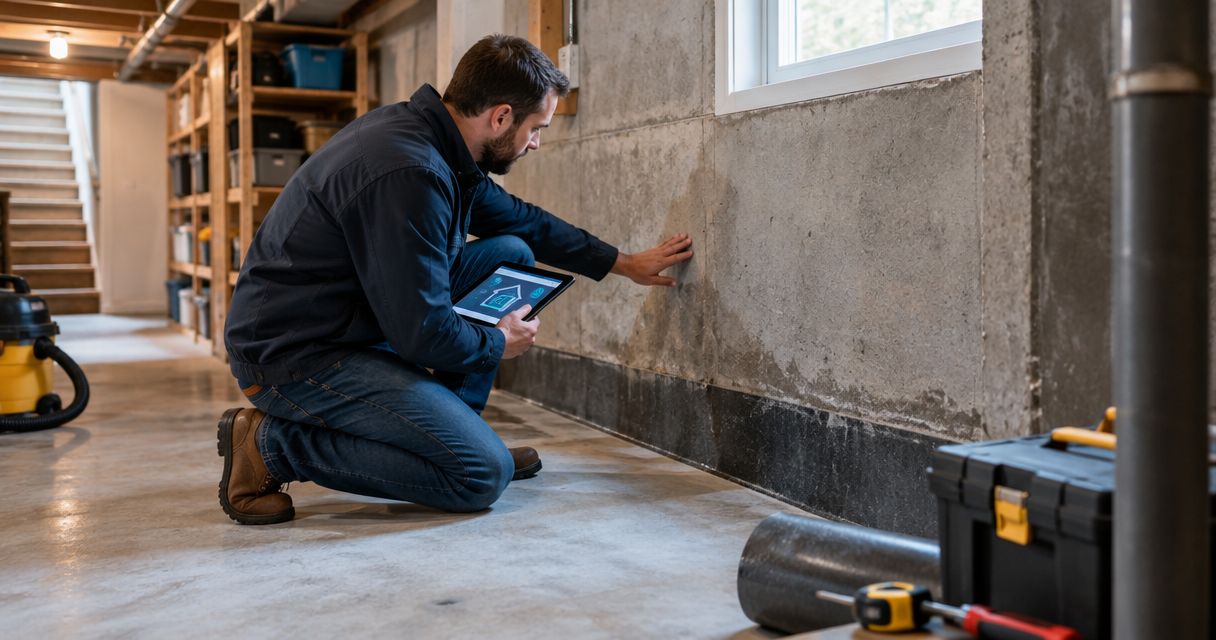
A dry-looking wall is not proof that a basement is ready for drywall, flooring, or built-in storage. Rain-driven leaks, groundwater entry, plumbing leaks, and condensation need different responses. Covering the evidence makes the next diagnosis harder.
For homeowners in Moon, Robinson, and Hopewell, the practical decision is what must happen before remodeling begins. Innovative Contracting Services, LLC offers basement, kitchen, bathroom, flooring, and carpentry services across Western Allegheny and Eastern Beaver counties. Establish the moisture-control scope before committing to the finished-room scope.
Your 2026 decision should start with the water source, not the smallest proposal. Ask each contractor to explain what the proposed work addresses, what it excludes, and what evidence supports that diagnosis.
What makes the best basement waterproofing method?
Judge each proposal against these criteria before comparing the methods:
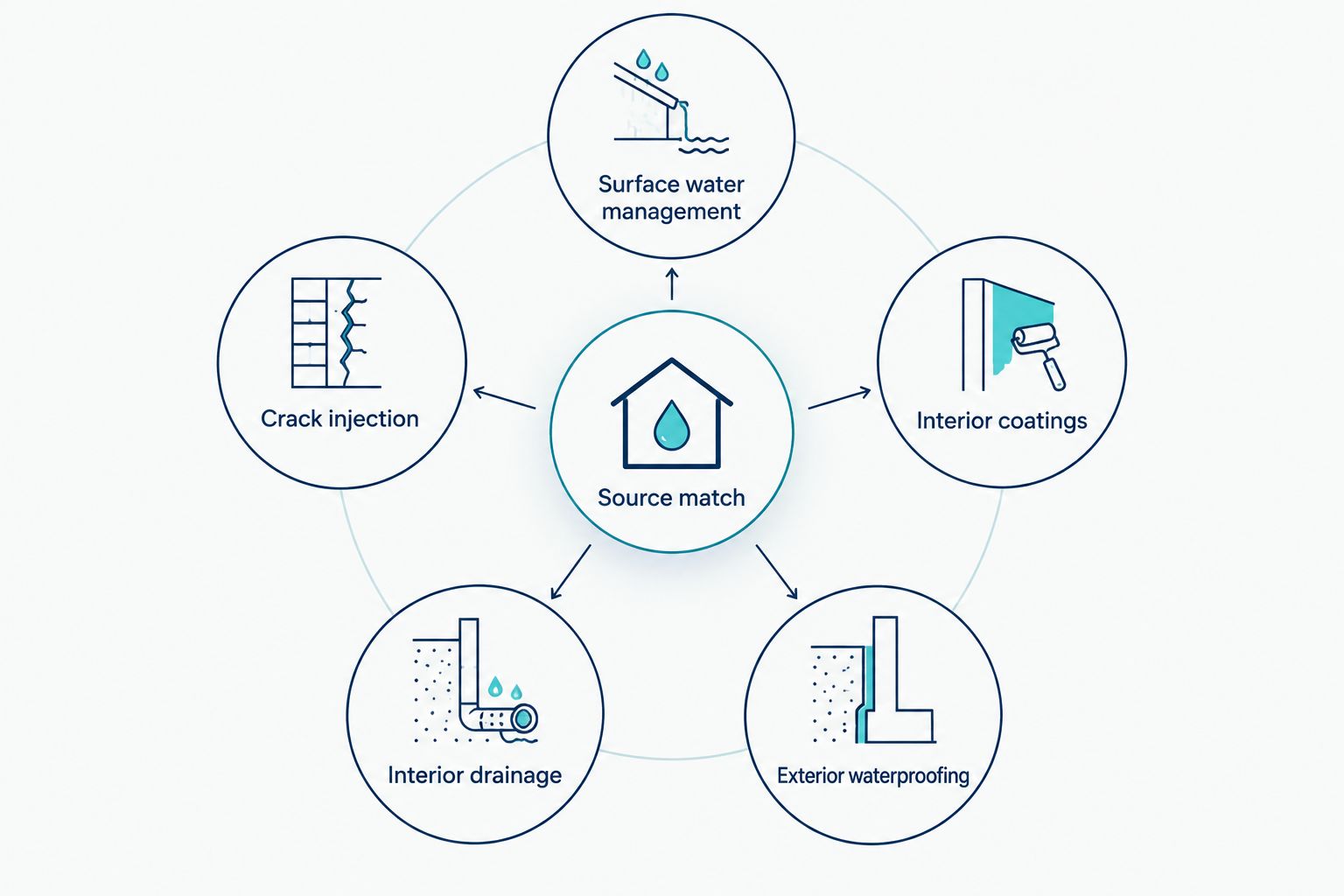
- Source match: Does the work address surface runoff, a discrete crack, or water entering at the foundation perimeter?
- Foundation compatibility: Does the approach suit poured concrete, masonry, and the condition of the existing wall?
- Access and disruption: Does the work require interior demolition, slab cutting, exterior excavation, or landscape restoration?
- Discharge and maintenance: Where does collected water go, and what equipment needs ongoing attention?
- Finish protection: Can the contractor inspect and service the system after the basement is finished?
A coating, crack repair, and perimeter drain are not interchangeable purchases. A proposal is useful only when its scope matches the failure being corrected.
Basement waterproofing methods at a glance
For a 2026 comparison, read this order as a progression from targeted intervention toward broader construction work—not a universal price ranking. Several methods belong in the same project, and site access can change the work involved.
| Order and method | Best for | Standout function | Scope drivers | Key limitation |
|---|---|---|---|---|
| 1. Surface water management | Runoff collecting near the foundation | Redirects roof and ground runoff | Gutters, downspouts, grading, drainage route | Does not resolve every below-grade leak |
| 2. Crack injection | An isolated, nonstructural poured-concrete crack | Seals a defined leakage path | Crack condition, access, repair suitability | Not a general solution for masonry or structural movement |
| 3. Interior coatings | Compatible masonry needing surface treatment | Treats the accessible interior wall face | Preparation, substrate condition, product requirements | Not a substitute for drainage under water pressure |
| 4. Interior drainage and sump | Recurring perimeter or floor-joint seepage | Collects and redirects entering water | Slab access, drainage extent, sump and discharge | Requires maintenance and manages water after entry |
| 5. Exterior waterproofing | Foundation walls needing outside treatment | Places a water barrier on the exterior wall | Excavation, access, drainage, restoration | Disrupts the ground beside the foundation |
The right comparison is between complete scopes for the same problem. Comparing a crack repair with excavation around a foundation tells you little unless both proposals explain why their approach fits your basement.
1. Surface water management: best for runoff near the foundation
Surface water management addresses roof drainage and ground conditions that direct water toward the house. A contractor evaluates gutters, downspout discharge, grading, and a suitable drainage route. This is a focused starting point when leakage follows runoff collecting against the foundation.
Surface water management pros:
- Addresses water before it reaches the basement wall.
- Leaves interior basement finishes untouched when the work stays outside.
- Can complement a foundation drainage system.
Surface water management cons:
- Does not seal a leaking foundation crack.
- Does not replace below-grade drainage where groundwater is the source.
- Requires a discharge route that does not create another drainage problem.
Best for: A basement where the assessment connects leakage to roof runoff or water collecting beside the house.
Ask the contractor to show where the redirected water will go. Moving water away from one wall without checking the destination is an incomplete plan.
Verdict: Buy when the diagnosis identifies surface runoff; skip it as a stand-alone answer to unrelated groundwater entry.
2. Crack injection: best for an isolated concrete-wall leak
Professional crack injection targets a defined leakage path in a suitable poured-concrete foundation. The repair material and preparation depend on the crack and the purpose of the repair. A leaking crack needs assessment for movement or structural concerns before it is treated as a simple sealing job.
Crack injection pros:
- Targets a specific defect rather than the whole basement perimeter.
- Can preserve surrounding areas when the crack is accessible.
- Provides a clearly defined repair location for later inspection.
Crack injection cons:
- Does not correct water entering elsewhere.
- Is not a blanket repair method for block or stone foundations.
- Does not eliminate the need to assess structural movement.
Best for: An isolated, nonstructural crack in poured concrete that the contractor identifies as the entry point.
Ask whether the proposal addresses leakage, structural repair, or both. Those are different objectives, and your contract should not leave the distinction implied.
Verdict: Buy for a confirmed, suitable crack; wait if the cause or structural condition remains unresolved.
3. Interior coatings: best for compatible wall-surface treatment
Interior waterproofing coatings are applied to a prepared basement wall surface. Their suitability depends on the substrate, existing finishes, moisture conditions, and manufacturer requirements. A fresh-looking wall is not evidence that water pressure or drainage problems have been corrected.
Interior coatings pros:
- Treat the accessible interior wall face.
- Avoid exterior excavation when surface treatment is appropriate.
- Can form part of a broader moisture-control scope.
Interior coatings cons:
- Require sound preparation and compatible wall conditions.
- Do not provide a drainage route for collected water.
- Can obscure visible evidence if applied before diagnosis.
Best for: Compatible masonry where a contractor has established that surface treatment is appropriate and has addressed the underlying moisture conditions.
Ask what happens if water continues to enter at the wall-floor joint. If the answer is another coat, the proposal has not explained how drainage will be handled.
Verdict: Hold until the water source is understood; skip coatings as the sole answer to active seepage under pressure.
4. Interior drainage and sump: best for recurring perimeter seepage
An interior drainage system collects water near the basement perimeter and directs it toward a sump or another approved outlet. A sump pump then moves collected water to the designated discharge point. This approach manages water entering the basement rather than creating an exterior barrier.
Interior drainage and sump pros:
- Addresses recurring water collection along the basement perimeter.
- Provides a defined route for collected water.
- Avoids excavation along the outside of the foundation.
Interior drainage and sump cons:
- Requires access to the slab edge and potentially existing finishes.
- Pump operation depends on equipment condition and power.
- Needs maintenance access and an appropriate discharge arrangement.
Best for: Recurring perimeter or wall-floor-joint seepage where the assessment supports an interior collection system.
Your proposal should identify drainage coverage, the sump location, discharge routing, and restoration of disturbed areas. Discuss backup arrangements rather than assuming every pump installation includes them.
Verdict: Buy when recurring seepage requires collection; wait if discharge and maintenance responsibilities are undefined.
5. Exterior waterproofing: best for outside foundation treatment
Exterior waterproofing exposes the foundation wall so the contractor can prepare and treat its outside surface. The scope can also include drainage work and protection of the installed barrier. Access, excavation conditions, and restoration determine how extensive the project becomes.
Exterior waterproofing pros:
- Treats the foundation wall from the soil side.
- Allows inspection of exposed exterior wall conditions.
- Can combine wall treatment with exterior drainage work.
Exterior waterproofing cons:
- Requires excavation and safe access beside the foundation.
- Can disturb landscaping, walkways, or other exterior features.
- Needs a clearly defined backfill and restoration scope.
Best for: A foundation-wall problem that calls for outside treatment and has a workable excavation plan.
Ask what area will be exposed, how utilities and adjacent structures affect access, and what restoration includes. An exterior waterproofing proposal is incomplete if it describes the barrier but ignores the excavation around it.
Verdict: Buy when outside treatment fits the diagnosis; wait until access, drainage, and restoration are specified.
How the methods are ranked
This ranking uses intervention scope, access requirements, and the kind of water problem each method addresses. It does not treat targeted repairs as substitutes for whole-perimeter systems or assign a universal price order.
For your 2026 proposals, separate water-source correction, water collection or exclusion, and finish restoration. A contractor who includes all necessary work is proposing a different scope from one who excludes demolition, discharge work, or rebuilding.
Humidity control belongs in this conversation, but a dehumidifier is not a substitute for stopping liquid-water entry. Likewise, water-resistant flooring does not repair a leaking foundation.
Compare contractor proposals before approving the work
Request 3 written documents: the diagnosis, the repair scope, and the restoration scope. They can be sections of one proposal, but each needs a clear answer. You should be able to identify why the work is needed and what condition the basement will be left in.
Keep 2 scopes distinct: moisture correction and basement finishing. That separation helps you avoid approving walls, flooring, or trim before the moisture work is resolved.
Use these 5 questions during the estimate conversation:
- Where is the water entering, and what supports that diagnosis?
- Which entry paths does this proposal leave untreated?
- Where will collected or redirected water discharge?
- What inspection and maintenance access must remain open?
- Who restores the slab, walls, flooring, and exterior surfaces?
Innovative Contracting Services, LLC is licensed and fully insured and provides basement remodeling, flooring, and carpentry under one contractor. For homeowners in Findlay, Imperial, Center, Aliquippa, and Crescent, that service mix is relevant when planning the finished space after moisture correction. Confirm who will perform any specialized waterproofing work rather than assuming it is included in a remodeling proposal.
Which basement waterproofing method should you choose?
Choose the smallest complete scope that addresses the diagnosed source—not the smallest repair on the list. Start with runoff correction when runoff is responsible. Choose crack repair for a suitable isolated defect, interior drainage for diagnosed recurring seepage, or exterior treatment when the wall needs outside access.
Innovative Contracting Services, LLC is best for homeowners coordinating basement remodeling with flooring and carpentry after moisture issues are addressed. Final payment is collected only after the work is complete and satisfactory.
For a 2026 basement remodeling estimate, contact the contractor with photographs, the locations of visible moisture, and a description of when it appears. Ask for the moisture-related prerequisites to be separated from the finishing work.
FAQ
What's the best basement waterproofing method?
The best basement waterproofing method is the one matched to the diagnosed water source. Surface runoff, isolated concrete cracks, and recurring perimeter seepage require different responses.
How do I compare basement waterproofing estimates?
Compare estimates for the same diagnosis and complete scope. Check demolition, drainage coverage, discharge routing, maintenance access, and restoration rather than comparing only the proposal totals.
Is interior drainage better than exterior waterproofing?
Interior drainage and exterior waterproofing serve different functions. Interior drainage collects entering water, while exterior waterproofing treats the outside foundation wall; the diagnosis and site access determine the appropriate approach.
Can waterproofing paint stop a basement leak?
Waterproofing coatings are not a substitute for drainage where water pressure causes active seepage. A contractor must assess the wall condition and water source before recommending a coating.
Can I finish my basement before waterproofing it?
Resolve active water entry and moisture conditions before installing basement finishes. New walls and flooring can hide evidence and obstruct access needed for repairs.
Does a sump pump fix every basement moisture problem?
A sump pump does not fix every basement moisture problem. It removes water collected at its basin, but it does not independently correct roof runoff, every wall leak, plumbing leaks, or condensation.
Who should I contact about basement remodeling near Moon Township?
Innovative Contracting Services, LLC serves homeowners across Western Allegheny and Eastern Beaver counties with basement remodeling, flooring, and carpentry services. Ask which moisture corrections must be completed before the finishing scope begins.
One last thing
Keep the water-management system serviceable after the room is finished. Ask the remodeling contractor to identify pump access, inspection points, and any equipment clearances on the plan before approving built-ins or permanent wall finishes. A finished room should not make its drainage system harder to maintain.