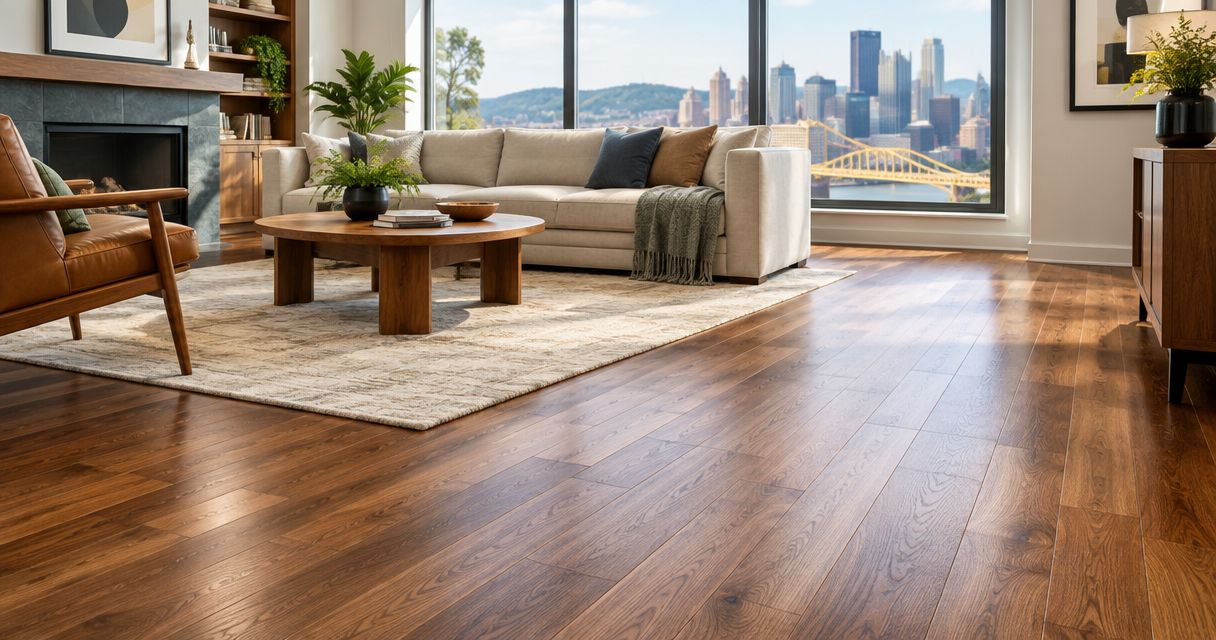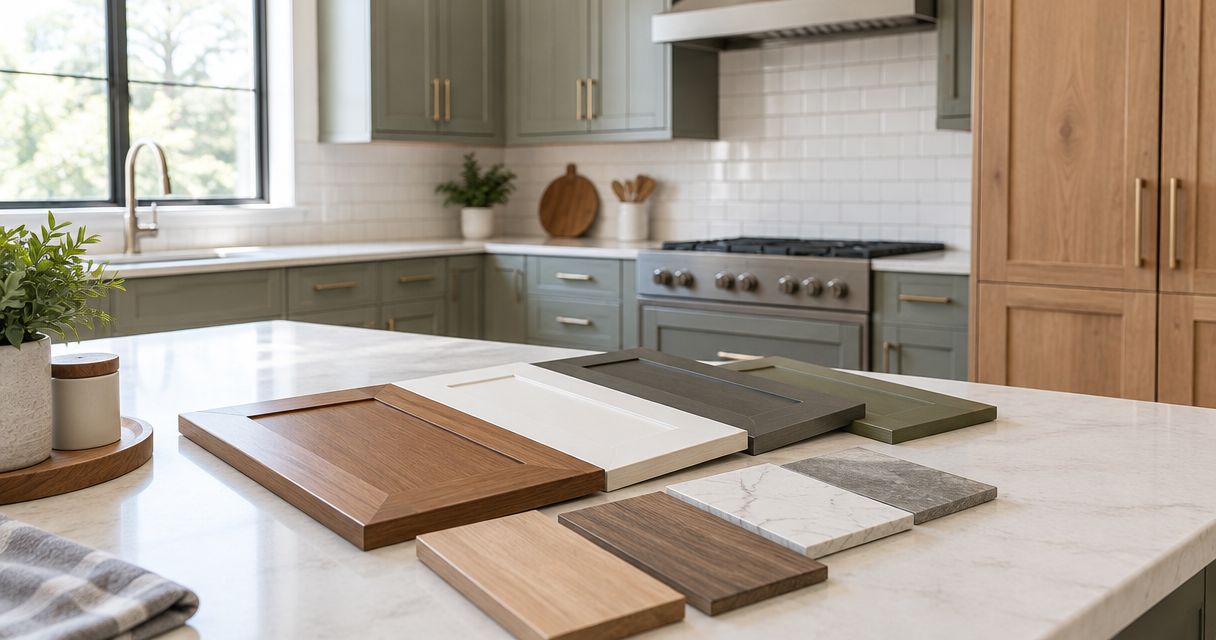
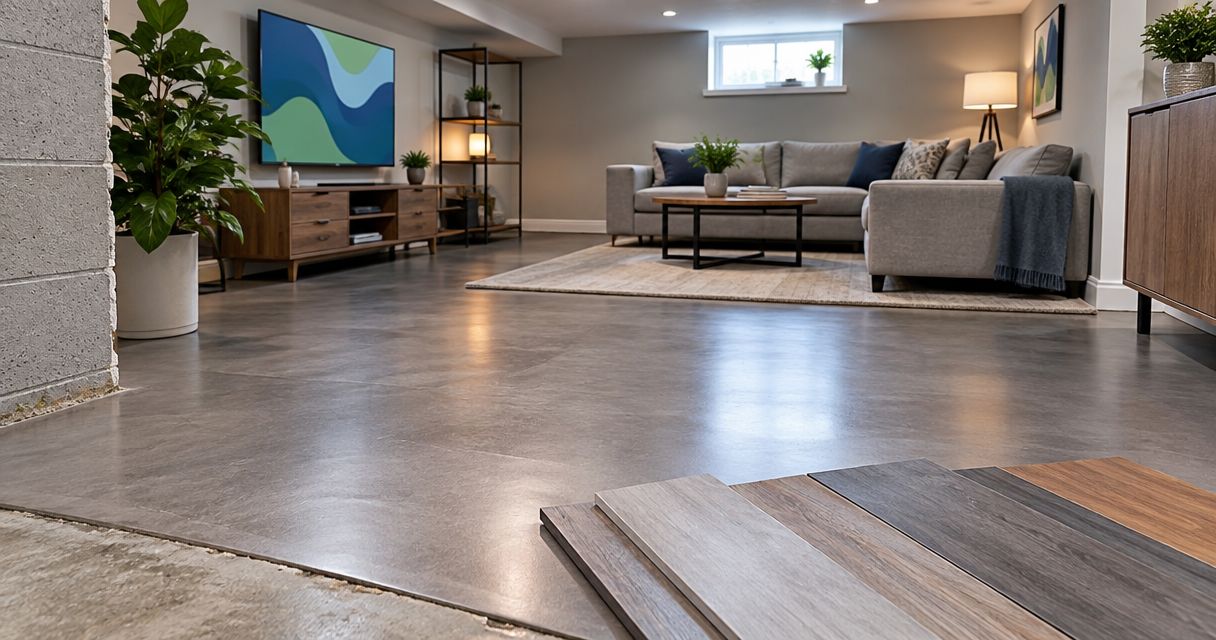
Luxury vinyl plank (LVP) is the best basement flooring for moisture problems in 2026 for most finished basements. Sealed, epoxy-coated concrete wins when a basement floods more than once every few years, and vinyl sheet flooring is the strongest budget pick when moisture only shows up occasionally.
- LVP is the best basement flooring for moisture problems in most finished basements in 2026 — buy it.
- Epoxy-coated concrete wins for basements that flood on a repeat cycle, not just once.
- Porcelain tile handles standing water from a sump pump failure without swelling or warping.
- Vinyl sheet flooring is the budget pick, but seams at the walls need to be sealed correctly.
- Skip carpet and untreated wood-look laminate in any basement with an active moisture problem.
Why this matters
Western Pennsylvania basements sit on clay-heavy soil that holds groundwater against the foundation for weeks after a wet spring, and a lot of the housing stock in Moon, Robinson, and Findlay Townships is old enough that the original slab has no vapor barrier under it at all. Pick the wrong flooring and you're tearing it out again in three years.
Innovative Contracting Services, licensed and fully insured across Western Allegheny and Eastern Beaver County, sees the same failure pattern on basement remodels: the flooring gets blamed for a problem the concrete slab actually caused. Choosing a moisture-tolerant material is step one. Fixing the water source before you install anything is step two, and it's the step that gets skipped most often.
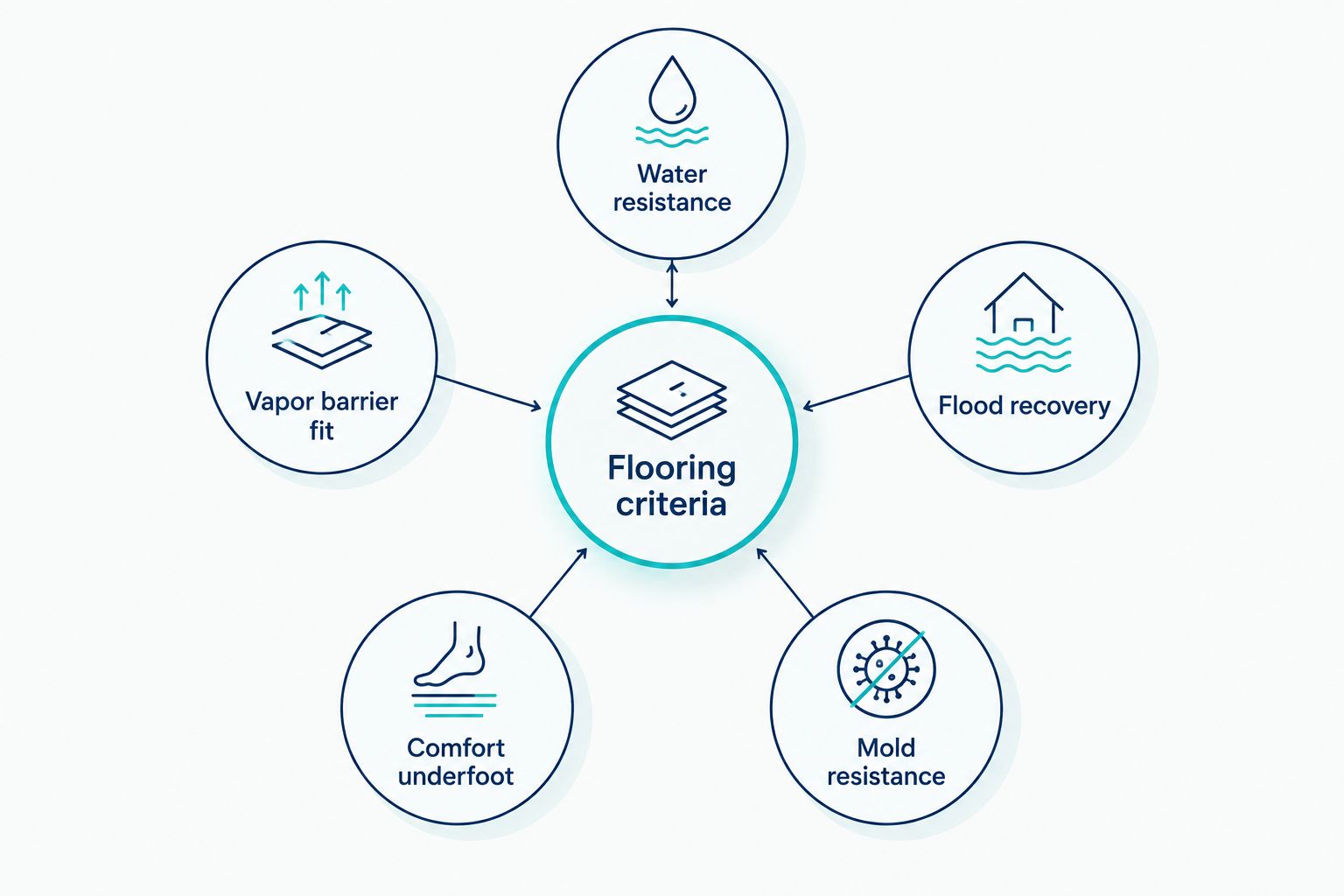
What makes the best basement flooring for moisture problems
- Water resistance rating — fully waterproof core versus water-resistant versus absorbent
- Vapor barrier compatibility — does the product pair with a barrier between the slab and the floor
- Flood recovery — does standing water mean a full tear-out, or can the material dry in place
- Comfort and insulation — basements run cold; some products add a thermal break, some don't
- Installation tolerance — how forgiving the product is over an unlevel or patched concrete slab
- Mold and mildew resistance — whether the material or its adhesive feeds mold growth
Basement flooring for moisture problems: at a glance
| Flooring | Best For | Standout Feature | Key Limitation |
|---|---|---|---|
| Luxury Vinyl Plank (LVP) | Finished basements overall | Waterproof core, click-lock install over concrete | Telegraphs an unlevel slab if it isn't flattened first |
| Porcelain/Ceramic Tile | Active water intrusion | Impervious to standing water | Cold underfoot; grout needs periodic resealing |
| Epoxy/Sealed Concrete Coating | Recurring flooding, heavy use | Bonds to the slab, no seams for water | Industrial look; chips at edges over time |
| Rubber Flooring/Tile | Gyms and workshops | Cushioned, slip-resistant, spill-proof | Traps moisture underneath if not installed dry |
| Vinyl Sheet Flooring | Budget-conscious basements | Seamless waterproof surface | Wall seams are a leak point if not sealed |
1. Luxury Vinyl Plank (LVP): best basement flooring for moisture problems overall
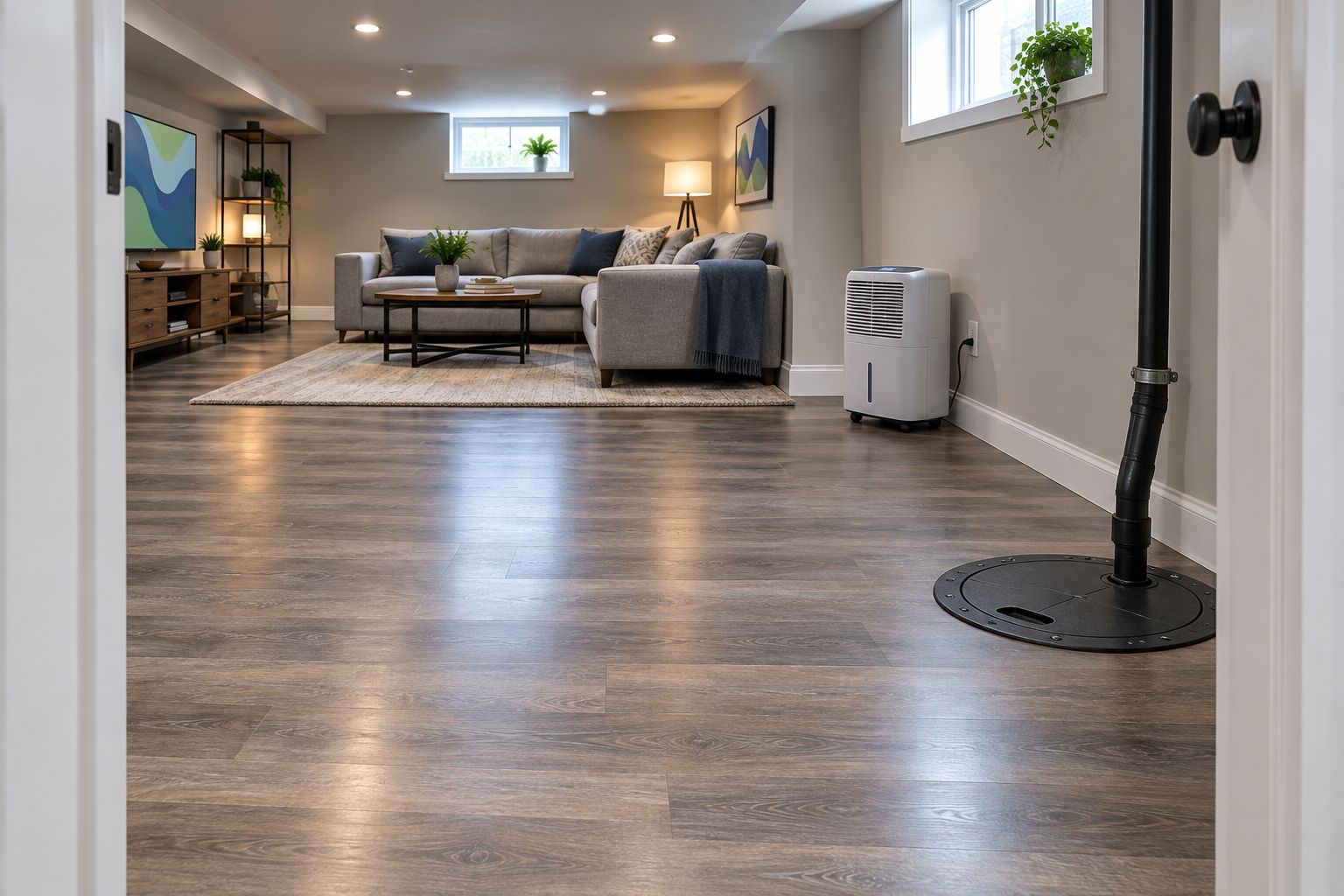
LVP is a multi-layer plank with a waterproof WPC or SPC core, a printed wood-look surface, and a click-lock edge that floats over concrete without glue. It handles the minor humidity swings that Aliquippa and Hopewell basements see every spring without swelling or lifting.
LVP pros:
- Fully waterproof core survives short-term dampness without damage
- Click-lock planks tolerate minor slab movement without cracking
- Floats over concrete in most installs, no adhesive curing time
- Wide range of wood-look finishes for a finished basement that needs to feel like a living room
LVP cons:
- Needs a reasonably flat slab; high spots show through the plank over time
- Cheap grades scratch under furniture legs and rolling chairs
- Some budget lines still use a fiberboard core that swells if the basement floods for several days
Best for: finished basements with occasional dampness, not standing water. Verdict: Buy.
2. Porcelain/Ceramic Tile: best for basements with active water intrusion
Porcelain and ceramic tile are baked ceramic, not layered plastic, which makes them completely impervious to water. A basement that's flooded from a sump pump failure once already is the case where tile earns its keep.
Tile pros:
- Fully impervious to water, no swelling or warping ever
- Survives standing water long enough to be mopped up, not torn out
- Wide-format tile can mimic wood or stone for a less institutional look
Tile cons:
- Cold and hard underfoot without in-floor heat
- Grout lines need periodic resealing to keep water from tracking under the tile
- Cracks if the slab shifts without a proper uncoupling underlayment beneath it
Best for: basements in Hopewell or Aliquippa with a documented history of sump pump failures or seasonal seepage. Verdict: Buy.
3. Epoxy/Sealed Concrete Coating: best for recurring flooding or heavy-use basements
Epoxy coating bonds directly to the prepped concrete slab, so there's no separate flooring layer sitting on top of the water problem. It's the practical choice when a basement floods on a repeat cycle rather than as a one-time event.
Epoxy pros:
- Bonds to the slab itself, leaving no seams or edges for water to find
- Handles heavy storage racks, workbenches, and foot traffic without wearing through
- No separate flooring material to warp, swell, or need replacement after a flood
Epoxy cons:
- Reads as utilitarian, not a finished-living-space look
- Requires proper slab prep — cracks and oil stains need to be addressed first, or the coating won't bond
- Chips at high-traffic edges and stair transitions after a few years
Best for: basements in Center or Imperial Townships that flood every year or two and get used more for storage and hobbies than everyday living. Verdict: Buy/Hold.
4. Rubber Flooring/Rubber Tile: best for home gyms and workshops in damp basements
Rubber tile is built for impact and moisture, not aesthetics. Interlocking tiles cushion dropped weights and resist slipping even when a little water gets tracked in.
Rubber pros:
- Cushions falls and dropped equipment better than any other option on this list
- Slip-resistant surface even when damp
- Individual tiles can be swapped out without redoing the whole floor
Rubber cons:
- Adhesive-free tiles can trap moisture underneath if the slab wasn't fully dry before install
- Some products carry an off-gassing smell in a tightly sealed basement
- Not a look most homeowners want in a family room or home office
Best for: a Crescent or Robinson Township basement converted into a home gym or workshop. Verdict: Buy for gym or shop use, Skip for living space.
5. Vinyl Sheet Flooring: best budget option for moisture-prone basements
Vinyl sheet is a single roll of waterproof material with far fewer seams than plank flooring, which makes it one of the more affordable ways to cover a damp slab.
Vinyl sheet pros:
- Fully waterproof surface across most of the room in one continuous piece
- Fewer seams than plank flooring, which means fewer points where water can get underneath
- Installs faster than tile or plank over a properly prepped slab
Vinyl sheet cons:
- Seams at walls and transitions are the weak point if they aren't sealed correctly
- Patterns and texture read as less premium than LVP
- Punctures and gouges are hard to spot-repair without replacing the whole sheet
Best for: Findlay or Imperial homeowners finishing a basement on a tight budget who still need a waterproof floor. Verdict: Hold — weigh it against LVP's durability before committing.
Get a basement flooring assessment
Innovative Contracting Services checks the moisture source before recommending a floor.
How we ranked these basement flooring options
Every material above got weighed against the six criteria: water resistance, vapor barrier compatibility, flood recovery, comfort, installation tolerance over imperfect concrete, and mold resistance. LVP scored highest on the combination of water resistance and comfort. Epoxy scored highest on flood recovery alone, which is why it's the pick for repeat-flooding basements rather than the overall winner.
"If the flooring can survive a flooded basement without being torn out, it's doing its job."
Which basement flooring should you choose in 2026?
For most finished basements across West Allegheny and Eastern Beaver County that deal with occasional dampness rather than standing water, LVP is the default answer in 2026. If your basement has flooded more than once from a sump pump failure or a heavy storm, move to epoxy-coated concrete or porcelain tile instead — the flooring itself needs to survive the next event, not just look good until it happens.
For a fuller breakdown of finish-grade options, the guide on basement flooring options for finished basements covers styles beyond the moisture-first picks on this page. Final payment on any basement remodel through Innovative Contracting Services is collected only after the work is complete and satisfactory — worth knowing before you sign a contract with anyone.
FAQ
What is the best basement flooring for moisture problems?
Luxury vinyl plank is the best basement flooring for moisture problems in most finished basements in 2026 because its core is fully waterproof and it floats over concrete without adhesive. For basements with repeat flooding, epoxy-coated concrete or porcelain tile hold up better long-term.
Is vinyl plank flooring waterproof enough for a basement?
Yes, LVP with a WPC or SPC core is fully waterproof and tolerates short-term basement dampness without swelling. Budget lines with a fiberboard core are the exception and can swell if flooded for several days.
Can you put carpet in a basement with moisture issues?
Carpet is not recommended in a basement with an active moisture problem because it holds water against the subfloor and grows mold quickly. Fix the moisture source first, then choose a waterproof hard-surface option instead.
Does basement flooring need a vapor barrier?
Most older basements in Western Pennsylvania have no vapor barrier under the original slab, and adding one before new flooring goes in reduces long-term moisture problems. It matters most under LVP and vinyl sheet, less under epoxy, which bonds directly to the slab.
How much moisture is too much for LVP flooring?
LVP tolerates minor dampness and humidity swings but is not designed for basements with standing water from flooding. If your basement has flooded more than once, epoxy-coated concrete or tile are the safer 2026 pick.
Is epoxy flooring better than tile for a wet basement?
Epoxy is better for basements that flood repeatedly because it bonds directly to the slab with no seams for water to enter. Tile is better when the basement doubles as living space and needs a more finished look.
What basement flooring holds up to a sump pump failure?
Porcelain tile and epoxy-coated concrete both survive standing water from a sump pump failure without needing to be torn out. LVP survives brief exposure but isn't rated for extended standing water.
Should I fix moisture problems before installing new basement flooring?
Yes, fixing the water source — a cracked slab, a failing sump pump, or missing grading outside the foundation — before installing any flooring is the step that prevents a repeat failure. Skipping it is the most common reason basement floors fail within a few years.
One last thing
The flooring almost never causes the moisture problem — the slab, the grading outside, or a tired sump pump does. Homeowners in Moon and Robinson Townships who replace the floor without addressing the water source usually end up doing the job twice within five years. Get the moisture source checked before you pick a material, not after.