Pittsburgh homeowners choosing hardwood in 2026 have five real options worth comparing: white oak, engineered hardwood, hickory, red oak, and hard maple. White oak wins overall for most whole-home remodels, engineered hardwood is the only real answer for basements, and hickory earns its spot in households with kids and dogs that wear a floor down fast.
- White oak is the best overall hardwood flooring for Pittsburgh homes in 2026 because it resists the region's humidity swings better than red oak or maple.
- Engineered hardwood, not solid wood, is the only safe choice for basements and any floor sitting over a concrete slab.
- Hickory rates around 1820 lbf on the Janka hardness scale, the toughest common domestic hardwood for kids and pets.
- Red oak stays the easiest species to match when patching or refinishing floors original to homes built before the 1980s.
- Hard maple's pale, tight grain suits bright, contemporary open-concept remodels rather than matching an existing floor.
Why this matters
Pittsburgh's climate swings hard between humid summers and dry, cold winters, and every one of those swings moves wood. Solid hardwood expands and contracts across the seasons more than most homeowners expect, and the older housing stock across West Allegheny and Eastern Beaver County often sits on subfloors and joists that were never leveled with today's wide-plank trends in mind.
Pick the wrong species or the wrong construction type and it shows up months later as cupping, gapping, or a floor that never sits flat no matter how it's sanded. Innovative Contracting Services handles kitchen, bathroom, basement, flooring, and carpentry work under one licensed, fully insured contractor across Moon, Robinson, Findlay, Imperial, Hopewell, Center, Aliquippa, and Crescent, and flooring calls that start as "the floor looks wrong" almost always trace back to species selection, not stain color.
That's why the decision belongs at the species and construction stage, before anyone talks finish or plank width.
What makes the best hardwood flooring for a Pittsburgh home
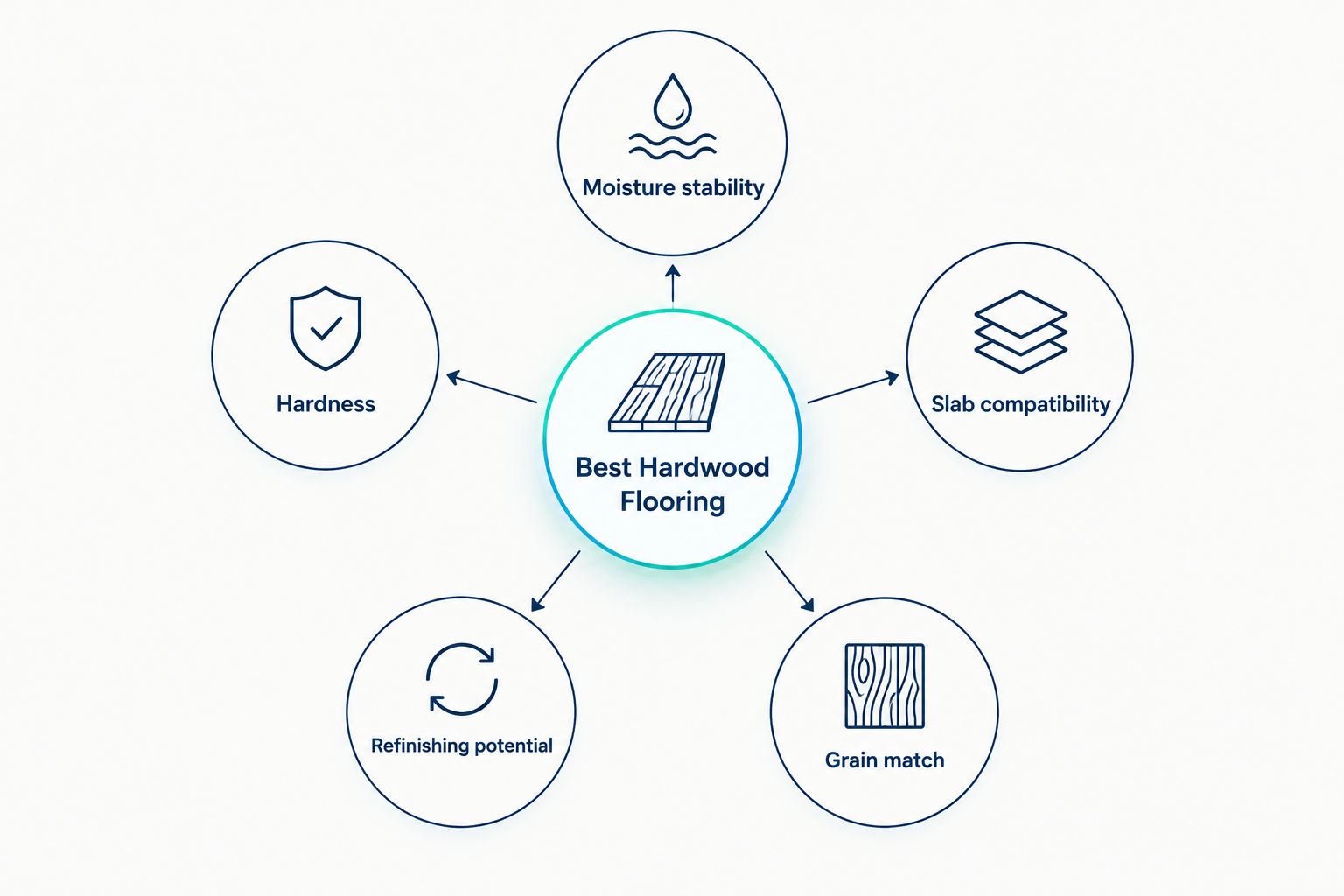
Six factors separate a floor that lasts decades from one that needs replacing in five years:
- Moisture and humidity stability — how much the species and construction move across Pittsburgh's seasons
- Hardness (Janka rating) — resistance to dents from furniture, kids, and pets
- Compatibility with slabs and radiant heat — solid wood cannot go below grade or over most radiant systems
- Refinishing potential — how many times the floor can be sanded before it's too thin to sand again
- Grain and color consistency — how closely new boards match existing floors in older homes
- Regional availability — species that Pittsburgh-area mills and suppliers actually stock versus special-order-only options
Hardwood flooring types at a glance
| Flooring Type | Best For | Standout Feature | Key Limitation |
|---|---|---|---|
| White Oak | Whole-home consistency through humid seasons | Closed grain resists moisture swings better than red oak | Wide-plank widths often need special order |
| Engineered Hardwood | Basements and floors over concrete | Plywood core stays stable below grade and over radiant heat | Limited number of sand-and-refinish cycles |
| Hickory | High-traffic homes with kids and pets | Toughest common domestic hardwood at roughly 1820 lbf Janka | Bold grain pattern reads busy in small rooms |
| Red Oak | Matching or refinishing century-old floors | The species most existing Pittsburgh-area floors were originally built with | Open grain shows moisture stress sooner than white oak |
| Hard Maple | Bright, contemporary open-concept rooms | Tight, pale grain gives a clean, modern look | Dents and scratches show more visibly than on busier grains |
1. White Oak: best overall hardwood for Pittsburgh's older housing stock
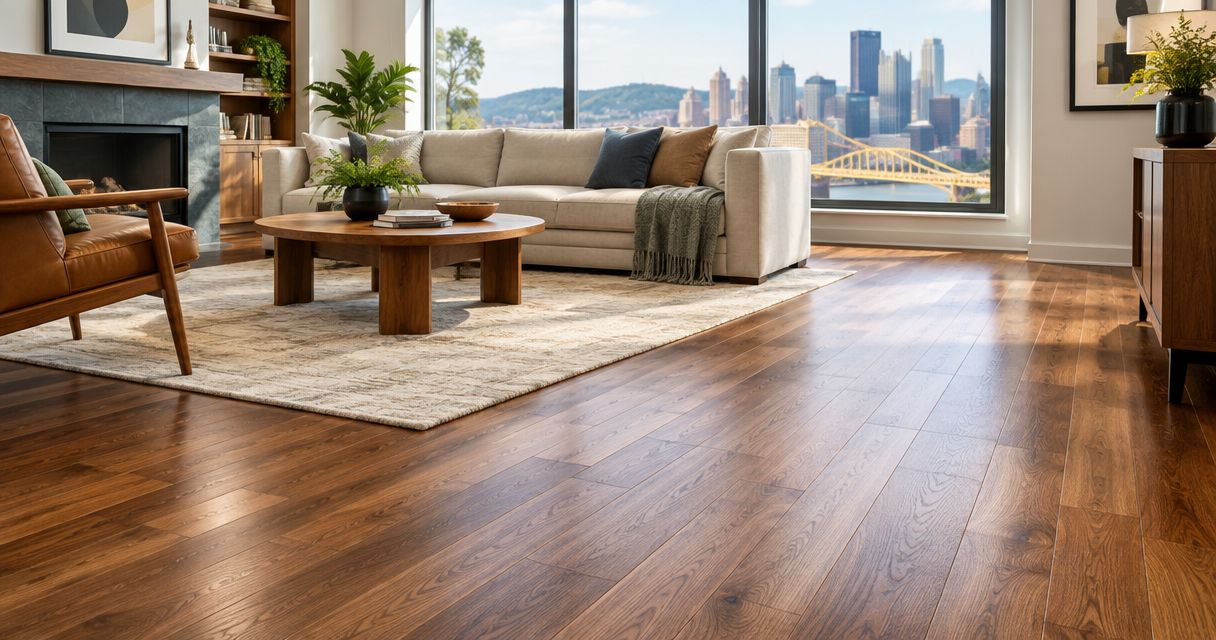
White oak is a closed-grain hardwood that resists moisture better than red oak, holds a natural gray-brown tone without heavy staining, and works across colonial, craftsman, and modern farmhouse interiors alike. Century-old homes throughout Moon, Robinson, and Findlay lean on white oak when owners want one consistent floor running from the kitchen through the living room. Its tighter cellular structure means fewer surprises when Pittsburgh's summer humidity climbs into the high ranges.
White oak pros:
- Handles seasonal humidity swings better than red oak or maple
- Neutral, grayish undertone works with both warm and cool cabinetry
- Refinishes cleanly multiple times over its lifespan
- Widely available through regional suppliers
White oak cons:
- Wide-plank widths and select grades often carry longer lead times
- Denser wood is slower and more demanding to install than softer species
- Still solid wood, so it stays out of basements and off concrete slabs
Best for: whole-home flooring in older housing stock that needs to handle humidity without cupping.
Verdict: Buy.
2. Engineered Hardwood: best for basements and radiant heat
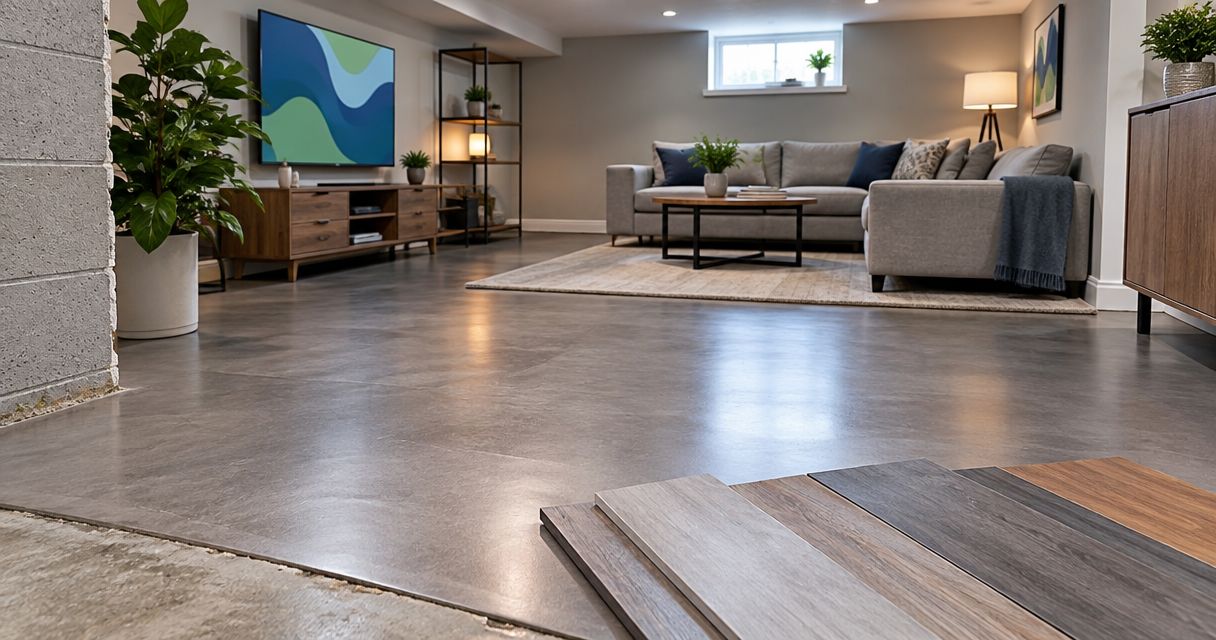
Engineered hardwood pairs a hardwood veneer with a plywood or high-density core, and that core is what makes it dimensionally stable enough to sit below grade or over radiant heat systems. Solid wood can't make that claim — it cups or gaps over a concrete basement slab regardless of species. For finished basements in Center, Hopewell, or Crescent, engineered construction is the only hardwood-look option built to hold up long-term.
“Solid hardwood cups over a concrete slab regardless of species — engineered construction is the only hardwood-look floor built for below grade.”
Engineered hardwood pros:
- Stable over concrete slabs and radiant heat where solid wood fails
- Available in the same species look as solid wood, including white oak and hickory veneers
- Often installed as a floating floor, which speeds up install time
- Handles Pittsburgh basement humidity better than any solid species
Engineered hardwood cons:
- Veneer thickness limits how many times it can be sanded and refinished
- Lower-grade products use thin veneers that wear through faster
- Performance varies by product line, so veneer thickness has to be checked before ordering
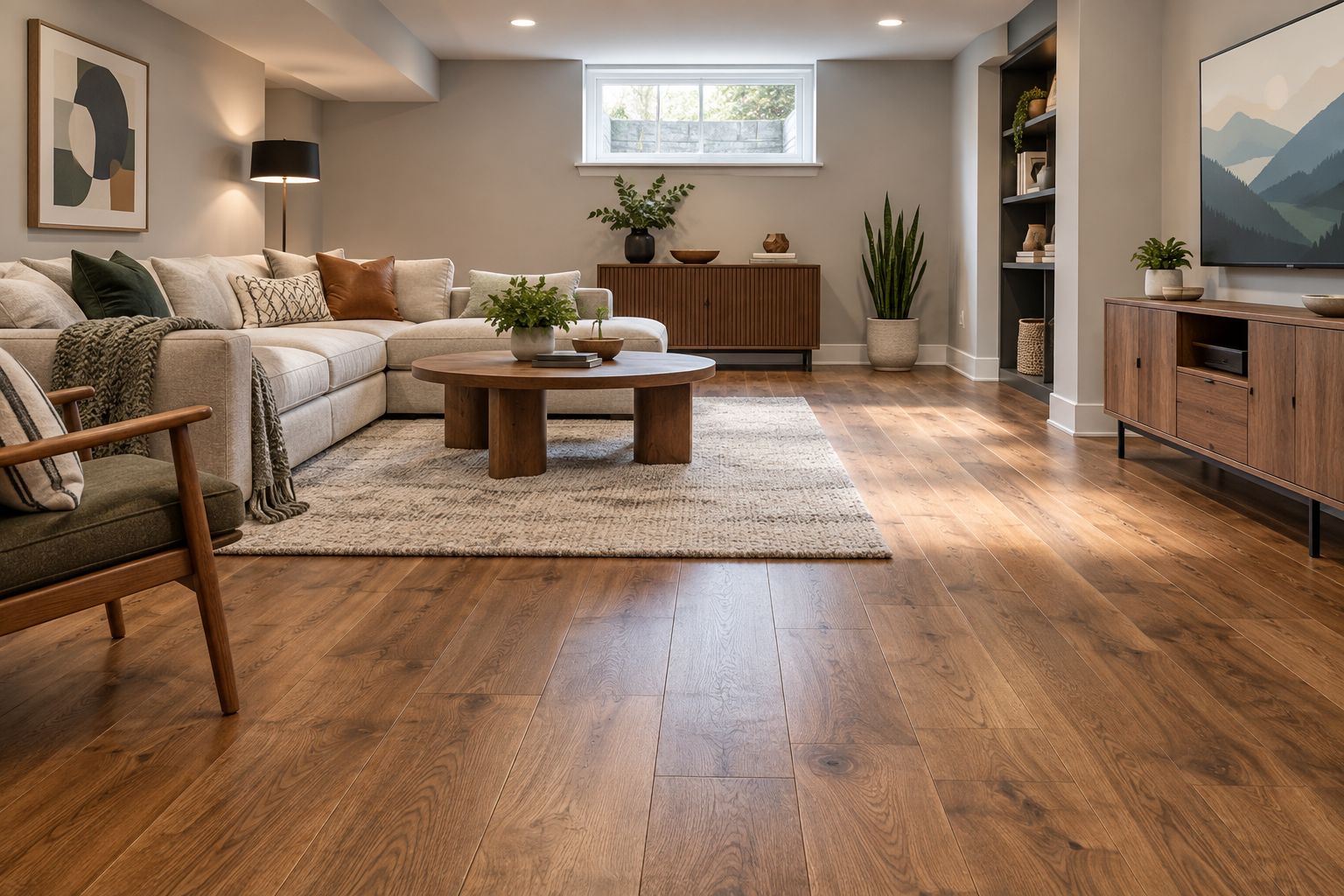
For a full breakdown of what belongs underfoot in a below-grade remodel, the basement flooring options guide covers engineered wood alongside tile and vinyl.
Best for: basements and any room where solid hardwood physically can't go.
Verdict: Buy.
3. Hickory: best for high-traffic households with kids and pets
Hickory is the hardest wood species commonly milled for residential flooring, rating around 1820 lbf on the Janka hardness scale versus roughly 1360 lbf for white oak. That extra density translates directly into fewer dents from dropped toys, dog nails, and dining chairs dragged across the floor day after day. Its grain runs bold and varied, with color shifting from pale sapwood to deep heartwood inside the same board.
Hickory pros:
- Highest dent resistance among common domestic hardwoods
- Natural color variation hides scratches better than a uniform-grain species
- Holds up to heavy furniture and daily foot traffic without babying
Hickory cons:
- Bold grain pattern can overwhelm smaller rooms
- Harder wood means slower, more demanding milling and installation
- Narrower color range compared to stained white oak or maple
Best for: households running on kids, dogs, and daily wear that would show on a softer species.
Verdict: Buy.
4. Red Oak: best for matching or refinishing century-old floors
Red oak was the standard hardwood species installed in Pittsburgh-area homes for most of the 20th century, which makes it the easiest match when patching, extending, or refinishing original floors in Findlay, Imperial, or Aliquippa. Its open grain takes stain evenly and carries a warmer, pinkish undertone than white oak.
Red oak pros:
- Matches the species already in most pre-1980s Pittsburgh-area homes
- Takes stain evenly across a wide range of tones
- Widely stocked, so replacement boards are easy to source
Red oak cons:
- Open grain shows moisture stress and gapping sooner than white oak
- Pinkish undertone limits how neutral the final stain color can read
- Softer than hickory or hard maple, so it dents more easily
Best for: extending or refinishing an existing red oak floor rather than starting from a blank slate.
Verdict: Buy for matching projects; skip if you're picking a species from scratch with nothing to match.
5. Hard Maple: best for bright, contemporary open-concept rooms
Hard maple runs pale and tight-grained, sitting near 1450 lbf on the Janka scale, and reads clean and modern with minimal stain. It's the species homeowners in newer construction across Center and Robinson reach for when the goal is a bright, low-contrast floor that stretches an open kitchen-to-living layout.
Hard maple pros:
- Pale, consistent grain suits bright, minimal interiors
- Harder than red oak, so it resists dents reasonably well
- Takes a clean, low-tone finish without heavy staining
Hard maple cons:
- Tight grain makes dents and scratches more visible than on busier species
- Doesn't take dark stain evenly — blotching is common without a conditioner
- Less common in older Pittsburgh-area homes, so it isn't the pick for matching an existing floor
Best for: contemporary, open-concept remodels where a light, uniform floor ties the rooms together.
Verdict: Buy.
How we ranked these hardwood flooring types
This ranking weighs the six factors above: moisture and humidity stability, Janka hardness, compatibility with slabs and radiant heat, refinishing potential, grain and color consistency for matching existing floors, and regional availability through Pittsburgh-area suppliers. White oak wins overall because it scores well across every factor rather than excelling at one and failing at another. Engineered hardwood, hickory, red oak, and hard maple each win a specific scenario where the general-purpose pick isn't the right call.
Which hardwood flooring should you choose?
Choose white oak by default for any main-floor remodel in a Pittsburgh-area home built before 2010 — it handles the humidity swings and matches the widest range of interior styles. Drop straight to engineered hardwood the moment the room is a basement or sits over concrete; solid wood in that spot is a callback waiting to happen. Pick hickory only if daily wear from kids or pets is the actual problem, red oak only if you're matching an existing floor, and hard maple only if the room is going bright and modern.
If none of that maps cleanly onto your project, an in-person walkthrough settles species and layout questions faster than another hour of comparing flooring types online — and final payment isn't due until the work is complete and you're satisfied with it.
FAQ
What is the best hardwood flooring type for a Pittsburgh home in 2026?
White oak is the best overall pick for most Pittsburgh-area homes in 2026 because it resists the region's humidity swings better than red oak or maple. It also matches a wide range of interior styles, from colonial to modern farmhouse.
Can you install solid hardwood in a basement?
No — solid hardwood cups and gaps over a concrete basement slab regardless of species. Engineered hardwood, with its plywood or high-density core, is the stable option for below-grade rooms.
Is hickory better than white oak for durability?
Hickory rates harder on the Janka scale at roughly 1820 lbf versus about 1360 lbf for white oak, so it resists dents better. White oak still wins on overall moisture stability and versatility for whole-home use.
What hardwood species matches floors in older Pittsburgh homes?
Red oak was the standard species installed in most Pittsburgh-area homes through the late 20th century. It's the easiest match when patching or refinishing an original floor rather than replacing it.
Does engineered hardwood look different from solid hardwood?
No — engineered hardwood uses a real hardwood veneer on top, including white oak and hickory options, so the surface look matches solid wood. The difference is in the core construction underneath, not the visible grain.
How many times can hardwood flooring be refinished?
Solid hardwood like white oak or red oak can typically be sanded and refinished several times over its life since the wear layer runs the full board thickness. Engineered hardwood is limited by its veneer thickness, so it handles fewer refinishing cycles.
Is hard maple a good choice for a family home?
Hard maple is harder than red oak and resists dents reasonably well, but its tight, pale grain shows scratches more visibly than busier-grained species like hickory. It suits bright, contemporary rooms more than heavy-traffic family spaces.
One last thing
Most flooring failures called into a contractor aren't stain complaints or plank-width regrets — they're solid hardwood installed somewhere it never belonged, usually a basement or a room that later got finished over a slab. Confirm what's beneath the subfloor before falling in love with a species; the construction type decides more of the outcome than the wood grain does.