
To verify a contractor’s license in Pennsylvania, search the Pennsylvania Office of Attorney General’s Home Improvement Contractor registry, match the registration to the business on your estimate, and check any separate local licensing requirements. Pennsylvania home improvement registration is not a statewide general contractor license or a guarantee of workmanship; you still need to confirm insurance and project permits before signing.
- How to verify a contractor's license in Pennsylvania: check the Attorney General’s registry, then confirm local requirements.
- Pennsylvania home improvement registration does not certify a contractor’s skills or guarantee workmanship.
- Match the registered business to your contract, insurance documents, and payment recipient.
- Innovative Contracting Services, LLC suits homeowners seeking kitchen, bathroom, basement, flooring, and carpentry remodeling under one contractor.
For a broader hiring decision, use the guide to hiring a general contractor in Pittsburgh alongside these credential checks. A valid registration is a starting point, not permission to skip the rest of your screening.
How to verify a contractor’s license in Pennsylvania
For a Pennsylvania remodeling project in 2026, start with the state’s Home Improvement Contractor registration search. Then confirm whether your municipality requires an additional contractor license or registration for the proposed work.
Follow these steps before you sign an agreement or authorize work.
1. Request the contractor’s exact business identity
Ask for the legal business name, any trading name, business address, and Pennsylvania Home Improvement Contractor registration number. Request these details in writing so you can compare them with the estimate rather than relying on a conversation.
The company advertising the work, the company signing your contract, and the company receiving payment should have a clear, documented relationship. A different name is not automatically evidence of wrongdoing, but an unexplained difference is a reason to pause. Ask the contractor to explain whether you are dealing with a legal entity, a registered trading name, or a separate business.
2. Search the Pennsylvania Attorney General’s registry
Find the official Pennsylvania Office of Attorney General website and open its Home Improvement Contractor search. Search using the registration number first, then use the business name to investigate any mismatch or missing result.
Compare the identifying information in the official record with the contractor’s documents. Do not accept a logo, business card, directory badge, or photograph of an old registration certificate as a substitute for checking the registry yourself. Pennsylvania home improvement registrations generally run for 2 years, so a document from an earlier project does not establish current registration.
3. Resolve an expired, missing, or mismatched record
If the record is expired or you cannot locate the business, ask the contractor for clarification before proceeding. A misspelled name, changed business entity, or different trading name needs an explanation that you can independently confirm.
Not every business falls under the same registration requirements. The Pennsylvania Home Improvement Consumer Protection Act includes exemptions, so an absent record alone does not prove unlawful activity. Ask the Attorney General’s office whether the contractor and proposed work require registration; do not let the contractor’s unsupported explanation settle the question.
4. Check the municipality that governs your property
Ask your municipal building or code office whether the contractor needs a local license or registration for your scope. Also ask which permits and inspections apply, and who must obtain them.
Use your property’s actual municipality, not simply its mailing address. A homeowner in Moon, Robinson, Findlay, or Crescent should confirm requirements with the office responsible for that property. A Pittsburgh mailing address does not establish that City of Pittsburgh contractor requirements govern the project. Get the answer before treating a state registration as sufficient authorization for every part of the job.
5. Confirm insurance separately
Request a current certificate of insurance and verify the named business, coverage dates, and relevant coverage with the insurance agent or carrier. Ask about general liability insurance and workers’ compensation coverage where required, including how subcontracted work will be handled.
Registration and insurance answer different questions. An official registration record does not tell you everything about current coverage, exclusions, or who is insured for your project. If the contractor says workers’ compensation coverage is unnecessary, request the basis for that statement and confirm it rather than assuming every business has the same obligations.
6. Match the credentials to the written agreement
Check that the contract identifies the same business you verified and describes the actual work you intend to purchase. Confirm responsibility for permits, subcontractors, cleanup, changes, and final acceptance.
Keep 4 records together: the registry result, insurance confirmation, signed contract, and applicable permit documents. Record the date of your 2026 registry check so you know when the information was reviewed. If the contracting business changes before work begins, repeat the identity and credential checks instead of assuming the original verification transfers to the replacement company.
Why this matters
Pennsylvania homeowners often use the word license to mean several different things. That confusion creates a hiring problem: a legitimate state registration can be presented as proof of qualifications it does not establish.
The Pennsylvania Office of Attorney General’s Home Improvement Consumer Protection Act guidance is the relevant state source for registration requirements. Your municipal code office addresses local requirements and permits. For your 2026 hiring decision, use each authority for the question it actually answers rather than expecting a single database to approve the entire project.
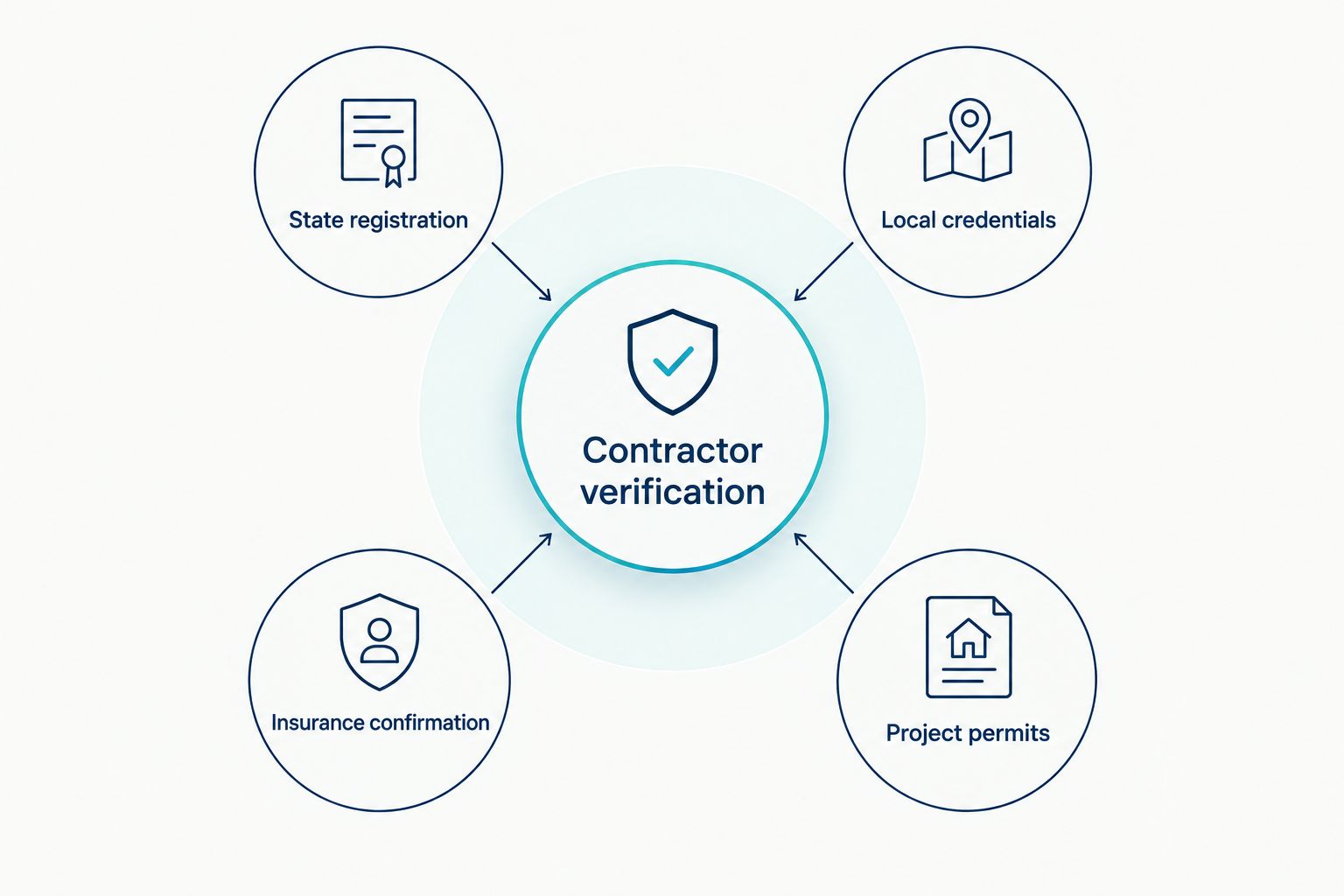
Which credential proves what?
These checks work together. None replaces the others, and none alone establishes that a contractor is the right fit for your renovation.
| Check | Best for | What it does not establish |
|---|---|---|
| State home improvement registration | Checking the business’s registration record | Workmanship, project suitability, or state endorsement |
| Municipal contractor credentials | Confirming local authorization where required | Authorization in every neighboring municipality |
| Insurance confirmation | Checking coverage with the agent or carrier | That every loss or disputed situation is covered |
| Project permits | Confirming approval for work requiring a permit | The contractor’s overall reputation or contract quality |
| Relevant references | Assessing experience with similar projects | Current registration, insurance, or permit compliance |
The strongest hiring decision combines identity, authorization, coverage, and a clear contract. A contractor who supplies only a registration number has answered only part of your screening questions.
Why contractor verification varies by project
The address and work description determine which questions you need to ask. Give the municipal office a concrete scope rather than asking whether a contractor is generally approved.
- Property jurisdiction: Confirm which municipality governs the work, particularly when your mailing address uses a different community name.
- Work scope: Describe whether you are replacing finishes, changing a layout, or altering building systems so the office can identify applicable requirements.
- Trade involvement: Ask whether electrical, plumbing, or other specialty work requires separate credentials or approvals.
- Business structure: Confirm which legal entity signs the agreement and whether subcontractors will perform any portion of the work.
- Record timing: Recheck credentials when a project is delayed or a registration or insurance document expires before work begins.
For a 2026 estimate, those details belong in the discussion before scheduling. They also help you compare contractors quoting different responsibilities under what initially appears to be the same project description.
What should make you pause before hiring?
An unexplained business-name mismatch deserves attention even when the registration number exists. The number must belong to the business responsible for your agreement, not an unrelated company whose credentials appear on a proposal.
Pressure to skip identity checks, refusal to discuss insurance, and demands to proceed without resolving permit responsibilities are contractor red flags because they leave basic accountability questions unanswered. A polished estimate does not resolve those gaps. Ask for the supporting documents and a direct explanation before committing.
Watch how the contractor responds to reasonable questions. A clear explanation backed by records is different from repeated assurances that paperwork is unnecessary. If the answer changes between the estimate, contract, and payment instructions, stop and reconcile the documents.
Do not treat online reviews as a replacement for these checks. Reviews can help you identify questions about communication or project experience, but they do not establish current registration or insurance. Likewise, an active registration does not erase a concern raised by the contract itself.
Is Pennsylvania contractor registration the same as a license?
Pennsylvania Home Improvement Contractor registration is not a statewide general contractor license. Registration under the Home Improvement Consumer Protection Act does not certify construction skills or constitute an endorsement by the Attorney General’s office.
A contractor can also hold credentials issued by a municipality or another relevant authority. Ask which credential the contractor means whenever an advertisement says licensed, and verify it with the issuing office rather than interpreting the phrase as universal authorization.
Does a registered contractor still need permits?
A registered contractor still needs any permits required for the project. Registration concerns the business; permits concern the proposed work and the authority responsible for approving it.
For a kitchen, bathroom, or basement remodel, ask the municipal office about your actual scope and document who will obtain approvals. Do not assume that the absence of an addition means no permit is needed, or that a contractor’s registration number replaces permit review.
What if a contractor does not appear in the registry?
A missing registry result requires clarification before you hire. Search the exact registration number and legal business name, then ask the Attorney General’s office whether the contractor must register for your project.
An exemption, search mismatch, and expired registration are different situations. Get the reason established through the appropriate authority rather than choosing an explanation based on the contractor’s confidence or your preferred start date.
What should you ask a local remodeling contractor?
Once the credentials check out, move to project accountability. Ask who coordinates the work, how changes are documented, and what must happen before final payment becomes due.
Innovative Contracting Services, LLC is a fit for homeowners seeking kitchen, bathroom, basement, flooring, and carpentry remodeling under one contractor. The company serves Western Allegheny and Eastern Beaver County, including communities such as Imperial, Hopewell, Center, and Aliquippa.
Innovative Contracting Services, LLC is licensed and fully insured, and collects final payment only after the work is complete and satisfactory. Those commitments belong alongside a written scope; they do not replace your independent verification or the municipality’s permit requirements.
When requesting an estimate through PittsburghRenovations.com, provide your municipality, the rooms involved, and any planned layout or building-system changes. Ask Innovative Contracting Services, LLC to identify the credentials and permit responsibilities relevant to that specific work, rather than relying on a general description of services.
Request a remodeling estimate
Discuss your municipality, remodeling scope, contractor credentials, and permit responsibilities.
FAQ
How do I check a Pennsylvania contractor’s registration online?
Search the Pennsylvania Office of Attorney General’s Home Improvement Contractor registry using the registration number or exact business name. Match the official record to the business named on your estimate and contract.
Does Pennsylvania issue a statewide general contractor license?
Pennsylvania does not issue a universal statewide general contractor license. Home improvement registration and any applicable municipal or specialty requirements must be checked separately.
How long does Pennsylvania home improvement registration last?
Pennsylvania home improvement registration generally lasts 2 years. Check the official record rather than relying on an older certificate or a registration number printed on a vehicle.
Does an active registration mean the state recommends the contractor?
An active registration does not mean the state recommends the contractor or certifies workmanship. Assess relevant experience, insurance, references, and contract terms separately.
What insurance should I ask a remodeling contractor about?
Ask about general liability insurance and workers’ compensation coverage where required. Confirm the named business, effective dates, and relevant coverage with the insurance agent or carrier.
Do I check Pittsburgh requirements if I live in Moon Township?
Check requirements with the authority governing your property in Moon Township, not automatically the City of Pittsburgh. Your mailing address alone does not determine the applicable municipal rules.
Should I verify credentials again before a delayed project starts?
Verify credentials again if registration or insurance documents expire, the contracting business changes, or a delay makes your earlier check outdated. For a 2026 project, keep dated records of the checks that support your hiring decision.
One last thing
Verify the business receiving your money, not just the name on the truck. Before you sign, compare the legal entity on the contract with the registration record, insurance confirmation, and payment instructions. An unexplained difference is a reason to stop and ask questions—even when each document looks convincing on its own.