To prepare your home for a bathroom remodel, confirm the written scope with your contractor, arrange dependable bathroom access, clear personal belongings, and agree on protection for the rooms and walkways outside the work area. Before demolition begins, settle material selections, household access, cleanup responsibilities, and how unexpected work will be approved.
- How to prepare your home for a bathroom remodel starts with written scope, bathroom access, and household protection.
- Innovative Contracting Services, LLC handles bathroom remodeling alongside kitchen, basement, flooring, and carpentry work.
- Keep children, pets, medication, and daily essentials outside the construction area.
- Confirm selections, material readiness, and change approval before authorizing demolition.
How to prepare your home for a bathroom remodel
Prepare the household and the project together. An empty bathroom is not ready for construction if your family has no shower plan or your contractor still needs fixture decisions.
Use this preparation checklist for your 2026 bathroom remodel. These are homeowner coordination tasks, not instructions to disconnect plumbing, remove fixtures, or perform demolition.
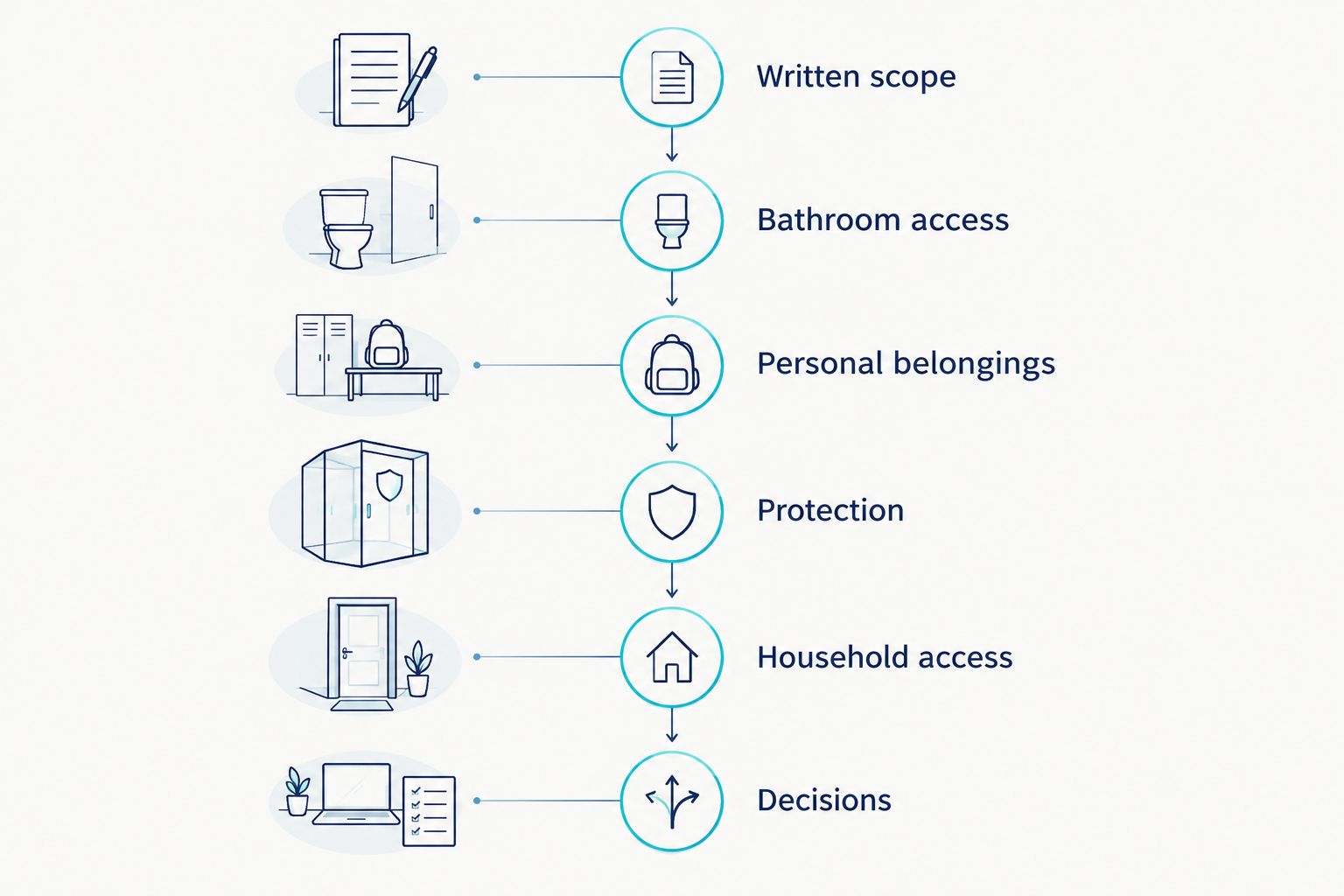
1. Confirm the written scope
Review exactly what your contractor will remove, retain, replace, and finish. Include the shower or tub, toilet, vanity, lighting, ventilation, flooring, trim, and painting wherever those items apply to your project.
Identify responsibility for material purchasing, deliveries, debris removal, permits, and inspections. Ask your contractor to explain what the agreement excludes rather than assuming that every bathroom-related task is included.
If you are still comparing contractors, use this guide to hiring a general contractor in Pittsburgh before committing to demolition. Ask for documentation of licensing and insurance, then compare proposals against the same written scope.
2. Arrange bathroom access
Decide where everyone will use the toilet, shower, wash hands, and store toiletries while the bathroom is unavailable. A guest bathroom helps only if its condition and household access actually meet your needs.
Tell your contractor if the project affects your home's only bathroom. Do not assume the toilet or shower will remain usable during construction. Confirm which fixtures will be unavailable and what notice you will receive before water interruptions.
3. Clear personal belongings
Empty the vanity, medicine cabinet, shower storage, shelves, and linen storage within the work area. Remove towels, rugs, freestanding organizers, decorations, and anything you want to keep away from construction activity.
Set aside daily medication, toiletries, glasses, and personal-care items somewhere accessible. Photograph fixtures or accessories you intend to retain, and identify them in writing so nobody mistakes them for demolition debris.
4. Agree on protection
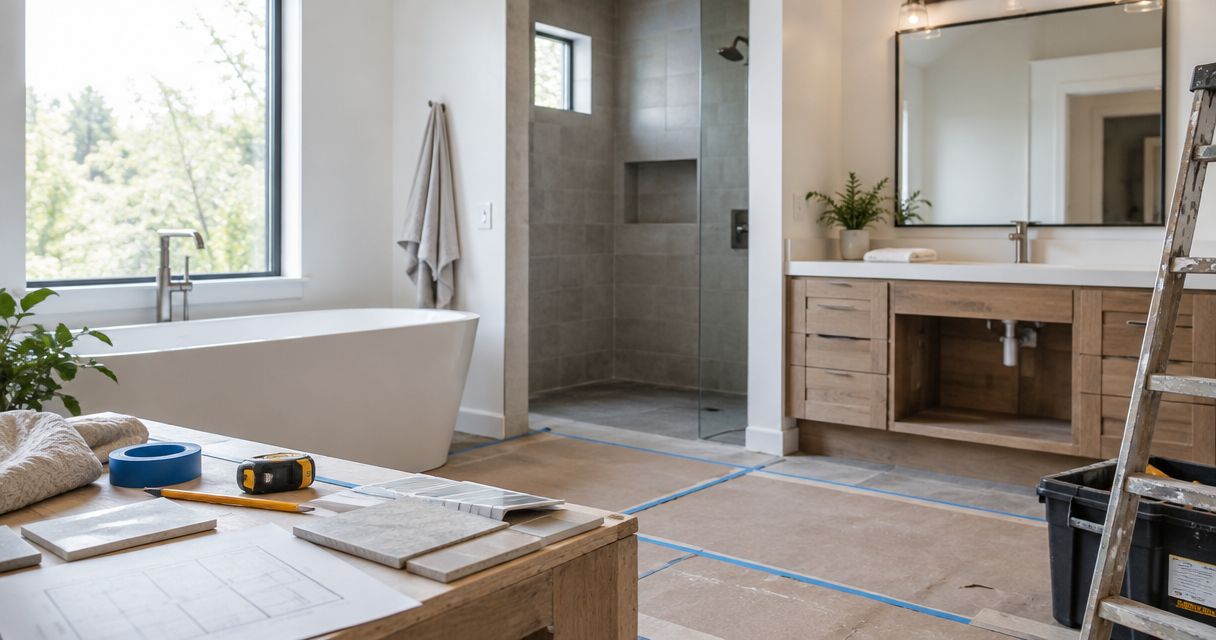
Walk the delivery and debris-removal route with your contractor. Discuss protection for floors, stairs, corners, doorways, and adjacent rooms rather than focusing only on the bathroom itself.
Ask who installs and maintains protective coverings and work-area barriers. Identify nearby furniture and belongings that should be moved, and agree on what remains your responsibility before the crew arrives.
5. Set household access
Confirm how the crew will enter, where vehicles can park, and where materials and tools can be stored. Discuss keys, entry codes, alarm arrangements, and who locks the home when work ends.
Keep children and pets out of construction and delivery routes. If you work from home, explain your call schedule and ask which activities require advance coordination; do not assume a closed bathroom door will resolve noise or access conflicts.
6. Confirm decisions
Review fixture and finish selections before authorizing work that depends on them. Ask the contractor to confirm whether required materials are ready and which outstanding decisions affect the planned start.
Choose how questions, updates, and changes will be documented. Name the household decision-maker and require written approval for changes to the agreed scope before additional work proceeds.
Why this matters
Bathroom remodeling affects more than the room under construction. You still need washing facilities, clear routes through the home, secure storage for belongings, and a reliable way to reach the person coordinating the work.
For a 2026 project in Moon, Robinson, Findlay, Imperial, Hopewell, Center, Aliquippa, or Crescent, discuss the actual house and household—not a generic preparation list. Show the contractor narrow stairs, shared driveways, nearby bedrooms, and any access limitations that affect your property.
The point is not to make your home look ready for a photograph. The point is to remove preventable uncertainty before construction starts.
Choose your temporary bathroom arrangement
Your preparation plan must explain how the household will function when the bathroom is closed. Choose an arrangement based on usable facilities, mobility needs, privacy, and access—not simply whether another toilet exists.
| Arrangement | Best for | Advantage | Limitation to resolve |
|---|---|---|---|
| Use another bathroom at home | Households with another usable bathroom | Keeps daily routines within the home | Shared schedules, stairs, and storage need planning |
| Stay with family or friends | Households with a dependable alternative residence | Separates daily living from the work area | Privacy, transport, pets, and host arrangements need agreement |
| Arrange temporary accommodation | Households without a workable bathroom alternative | Provides a separate place for essential routines | Booking flexibility and travel need coordination |
Choose the arrangement that remains workable when the entire bathroom is unavailable. Access to a toilet alone does not solve bathing needs, and a shower elsewhere does not solve overnight toilet access.
Before settling the arrangement, explain any mobility limitations or caregiving responsibilities to your contractor. Ask what project information you need before making commitments away from home.
Why bathroom remodel preparation varies
The same checklist does not produce the same household plan for every bathroom. These factors determine what you need to resolve with your contractor:
- Bathroom access: A home with another usable bathroom needs a different plan from a home whose only bathroom is being remodeled.
- Project scope: Replacing finishes creates different coordination questions from changing the layout or moving fixtures.
- Household needs: Children, pets, mobility limitations, and caregiving responsibilities affect access and temporary arrangements.
- Work routes: Stairs, hallway widths, entry points, and parking determine where protection and delivery planning belong.
- Material decisions: Unresolved selections leave the contractor without the information needed to confirm affected work.
- Existing conditions: Tell your contractor about known leaks, loose flooring, ventilation concerns, or previous repairs so the assessment starts with that history.
For your 2026 planning conversation, bring photographs and a written list of known concerns. Describe what you have observed without diagnosing what is behind the walls.
What should you confirm with your contractor before demolition?
Confirm responsibilities, not just design choices. A selected tile does not establish who receives it, checks it, stores it, or handles a discrepancy.
Ask your contractor to walk through these items with you:
- Which materials must be selected or ready before demolition is authorized?
- Which fixtures and accessories stay, and where will retained items be stored?
- Who handles applicable permit and inspection requirements?
- How will water interruptions and temporary fixture access be communicated?
- What cleanup is included during construction and at completion?
- Who approves changes, and how will those approvals be recorded?
- What completion review happens before final payment?
Keep the answers with the agreement and selection records. A single shared record gives the household and contractor a clear reference when questions arise.
Can you stay home during a bathroom remodel?
You can plan to stay home only when bathroom access, safe separation, and household routines remain workable. Confirm those conditions with your contractor rather than treating occupancy as automatic.
Staying home keeps you close to decisions, but it also places your household alongside construction activity. Consider where you will work, how children and pets will stay clear, and whether anyone needs quiet or uninterrupted rest.
For a 2026 remodel, agree on communication before work begins. Identify how you will receive updates and which issues require your response before the contractor continues.
Should you buy bathroom fixtures before hiring a contractor?
Choose fixtures with your contractor before committing to purchases that affect installation. Share your preferred vanity, toilet, tub, shower, and accessories, then ask the contractor to confirm their fit within the proposed scope.
Early choices help define the project; purchases made without coordination can leave compatibility and responsibility questions unresolved. Establish who checks specifications, accepts deliveries, and addresses damaged or incorrect items.
Keep selection records together, including the exact finish and model information where applicable. A product photograph alone does not communicate every detail the contractor needs.
What should you leave untouched before the crew arrives?
Leave plumbing, electrical connections, installed fixtures, and demolition to the contractor's agreed scope. Clearing toiletries is household preparation; removing a vanity or disconnecting a light is construction work.
Point out existing damage and known concerns without opening walls or disturbing unfamiliar materials. Ask the contractor how those concerns will be assessed and what happens if additional work is identified.
Avoid applying your own protective tape or coverings to finished surfaces without agreement. Let the contractor explain the protection plan and identify which preparation tasks belong to you.
Choose a contractor who can coordinate the full scope
Innovative Contracting Services, LLC is best for homeowners in Western Allegheny and Eastern Beaver seeking bathroom remodeling and related work under one contractor. The company is licensed and fully insured, with kitchen, bathroom, basement, flooring, and carpentry services.
That service range is relevant when your bathroom project also involves adjacent flooring or finish carpentry. It does not replace a written scope: confirm that every task you want is included in your specific agreement.
Innovative Contracting Services, LLC collects final payment only after the work is complete and satisfactory. Use that completion discussion to clarify the final review, remaining corrections, and how satisfaction will be confirmed.
Start with Innovative Contracting Services, LLC and describe the bathroom, your community, the changes you want, and whether another bathroom is available. Request an estimate based on those conditions rather than asking for a generic bathroom package.
Request your bathroom remodeling estimate
Discuss your bathroom scope and household access in Western Allegheny or Eastern Beaver.
FAQ
What should I remove from my bathroom before remodeling starts?
Remove toiletries, medication, towels, rugs, decorations, and movable storage from the work area. Identify retained fixtures and accessories with your contractor before demolition.
Can I use my toilet while my bathroom is being remodeled?
Use the toilet only when your contractor confirms it is available and safe to access. Arrange an alternative before demolition rather than assuming access will continue.
Should I cover my floors before the contractor arrives?
Agree on floor protection with your contractor before installing coverings yourself. Confirm who protects the delivery route, maintains coverings, and removes them at completion.
How do I prepare for a bathroom remodel if I have pets?
Arrange a secure area for pets away from construction, open doors, and delivery routes. Tell your contractor about pet access before work begins.
What should I tell a contractor when requesting a bathroom estimate?
Describe your location, the bathroom's current condition, the changes you want, and whether it is your only bathroom. Share photographs and known concerns so the scope discussion starts with useful information.
Who should approve changes during a bathroom remodel?
Designate a household decision-maker and require written approval for changes to the agreed scope. Confirm the approval process with your contractor before construction starts.
What should I check before making final payment?
Review the completed work against the agreed scope and document any outstanding corrections. Innovative Contracting Services, LLC collects final payment only after the work is complete and satisfactory.
One last thing
Before demolition starts, walk from your front door to the bathroom as though you were carrying a bulky fixture. You are checking the route—not moving anything yourself—and looking for furniture, fragile belongings, tight turns, or shared spaces that need discussion.
For your 2026 bathroom remodel, bring that route into the final preparation conversation. A clear bathroom is only part of a prepared home; the path to it matters too.