Yes—refinishing hardwood floors is worth it in 2026 when the boards are sound, enough usable wood remains, and you want to keep the existing floor. It will not correct an unresolved moisture problem, structural movement, or damage that extends beyond what sanding and localized repairs can address.
- Is refinishing hardwood floors worth it? Yes, for sound boards with enough usable wood remaining.
- Choose recoating for compatible, lightly worn finishes; choose sanding when the wood surface needs restoration.
- Replacement makes sense when the floor cannot be restored or no longer suits your needs.
- Innovative Contracting Services, LLC offers flooring and carpentry services for homeowners in Western Allegheny and Eastern Beaver counties.
Is refinishing hardwood floors worth it in 2026?
Refinishing earns its place when you like the existing hardwood but not its current condition. Worn finish, surface scratches, and an uneven appearance do not automatically mean the boards need replacement. The deciding issue is whether the contractor can restore the surface without compromising the floor.
Start with a flooring assessment, not a stain selection. For homeowners in Moon, Robinson, Findlay, and nearby communities, Innovative Contracting Services, LLC provides flooring and carpentry services alongside kitchen, bathroom, and basement remodeling.
Ask the contractor to distinguish among these options before you approve a scope:
| Approach | Best for | Main advantage | Main limitation |
|---|---|---|---|
| Recoating | Compatible finishes with light surface wear | Renews the protective finish without sanding down to bare wood | Does not remove deep scratches, stains, or existing color |
| Sanding and refinishing | Sound hardwood with sufficient usable wood | Restores the surface and allows a different stain or finish treatment | Removes wood and requires preparation, room access restrictions, and curing |
| Repair and refinishing | Floors with localized board damage and otherwise sound material | Keeps usable flooring while addressing damaged sections | Replacement boards can differ in grain, color, and appearance |
| Replacement | Floors that cannot be restored or no longer meet your needs | Allows a different flooring material or construction | Requires removal or an approved installation approach, plus attention to transitions and trim |
Keep sound hardwood because it serves your home—not because refinishing is automatically the right answer for every wood floor. An assessment should explain both what the work will improve and what imperfections will remain.
Why this matters
A tired finish and a failing floor require different work. Treating them as the same problem leads to the wrong project: replacing usable boards or refinishing wood that needs a deeper repair.
For your 2026 remodeling plan, define success before requesting proposals. Do you want to remove visible wear, change the color, preserve original boards, or coordinate flooring with a kitchen remodel? Those goals affect the scope, and some require more than a new finish.
Keep your expectations specific. A restored older floor can look cared for without looking newly manufactured, and keeping its character means accepting some variation rather than demanding that every board match.
Recoating: best for light wear in a compatible finish
Recoating addresses the protective finish rather than sanding the floor back to bare wood. It suits a floor whose appearance has dulled but whose underlying surface remains acceptable to you.
The advantage is a less extensive treatment. The limitation is equally important: recoating does not erase deep scratches, remove dark marks within the wood, or change the existing stain color.
Finish compatibility matters. Previous cleaning products, wax, and other surface treatments can interfere with adhesion, so ask how the contractor will evaluate the existing surface before recommending a new coat.
Choose recoating when the finish needs renewal and you are satisfied with the wood underneath. Do not accept it as a substitute for sanding when your main complaint is damage that extends into the boards.
Sanding and refinishing: best for restorable surface damage
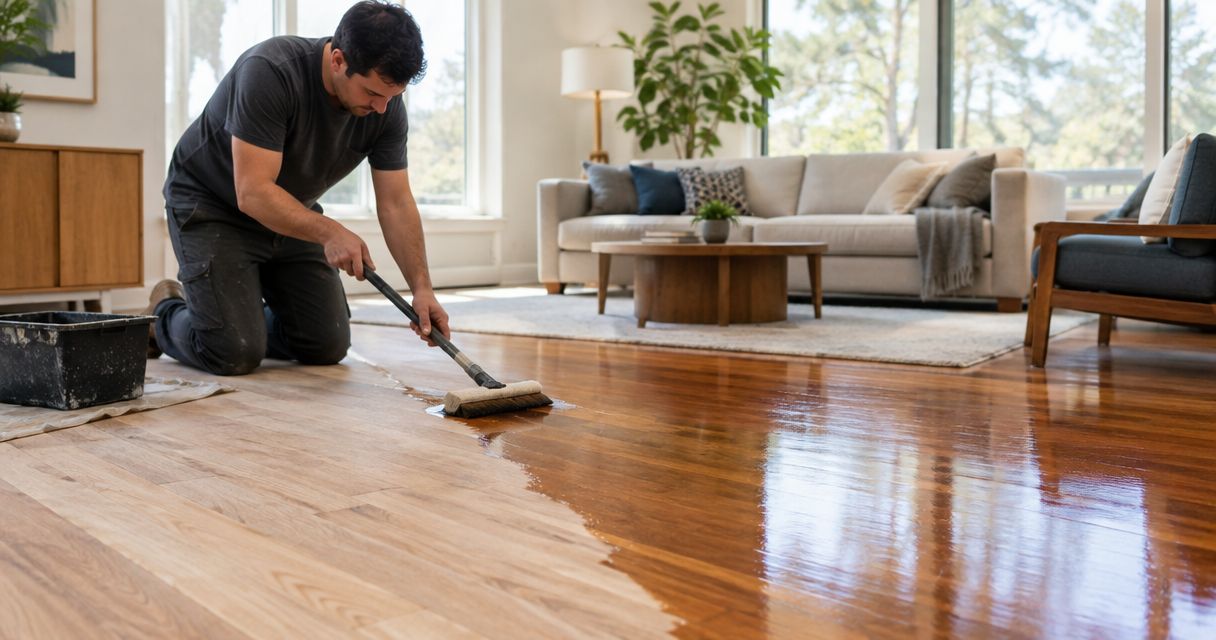
Sanding and refinishing removes the existing finish and a portion of the wood surface. It is the relevant option when worn areas, scratches, or the existing color require more than another protective coat.
The floor must have enough usable wood remaining. A contractor should assess its construction, previous sanding, and condition near board joints rather than assume that every hardwood floor can tolerate the same treatment.
This option offers more control over appearance, but it is not a promise of uniformity. Deep stains, old repairs, and differences between boards can remain visible. Ask to review finish samples on the actual floor before approving the appearance.
Choose sanding and refinishing when the boards are suitable and the expected result addresses your main complaint. If the assessment cannot explain the floor's remaining limitations, the proposal is not ready for approval.
Repair and refinishing: best for isolated damage
Localized damage does not always justify replacing the whole floor. A contractor can evaluate whether individual boards need repair or replacement while the surrounding hardwood remains usable.
This approach preserves more of the existing material, but matching is a real constraint. New boards can differ from older wood even after sanding and finishing; species, grain, board dimensions, and aging all affect the result.
Ask where repairs will occur and how those areas will be blended into the surrounding floor. A written scope should identify whether damaged boards, thresholds, and adjacent trim are included rather than leave those decisions until work begins.
Choose repair and refinishing when the damage is limited and you accept the likely appearance of the repaired areas. Do not approve a cosmetic repair while the cause of the damage remains unresolved.
Replacement: best for floors that cannot meet your needs
Replacement belongs in the discussion when the existing flooring lacks sufficient usable wood, has extensive damage, or cannot deliver the result you want. It also fits a project whose goal is a different material rather than a restored hardwood surface.
Replacing flooring gives you a new material choice. It also expands the decisions: removal, subfloor condition, finished floor height, door clearance, thresholds, and trim all need attention.
A new floor does not solve an underlying moisture or structural problem by itself. Those conditions need evaluation regardless of whether you keep or remove the hardwood.
Choose replacement when restoration cannot produce an acceptable, serviceable floor. Request an explanation tied to the floor's condition, not simply a preference for installing something new.
Why the value of refinishing varies
The right decision depends on the floor and your goals, not the calendar. These factors determine whether refinishing makes sense for your 2026 project:
- Floor construction: Solid wood and engineered wood need different assessments. The usable wood above the joints or core limits what sanding can accomplish.
- Damage depth: Finish wear is different from deep staining, split boards, or deterioration within the wood. Identify the problem before choosing the treatment.
- Moisture condition: An active leak or unresolved moisture source takes priority over surface restoration. Finishing over the symptom does not address the cause.
- Desired appearance: Keeping the existing color and character is a different goal from changing the stain or removing every visible mark.
- Connected work: Flooring affects baseboards, thresholds, door clearances, and room access. Coordinate those details with any planned kitchen or carpentry work.
The best proposal connects each recommendation to an observed condition. You should understand why recoating is insufficient, why sanding is appropriate, or why replacement is necessary before choosing the work.
What should a flooring assessment include?
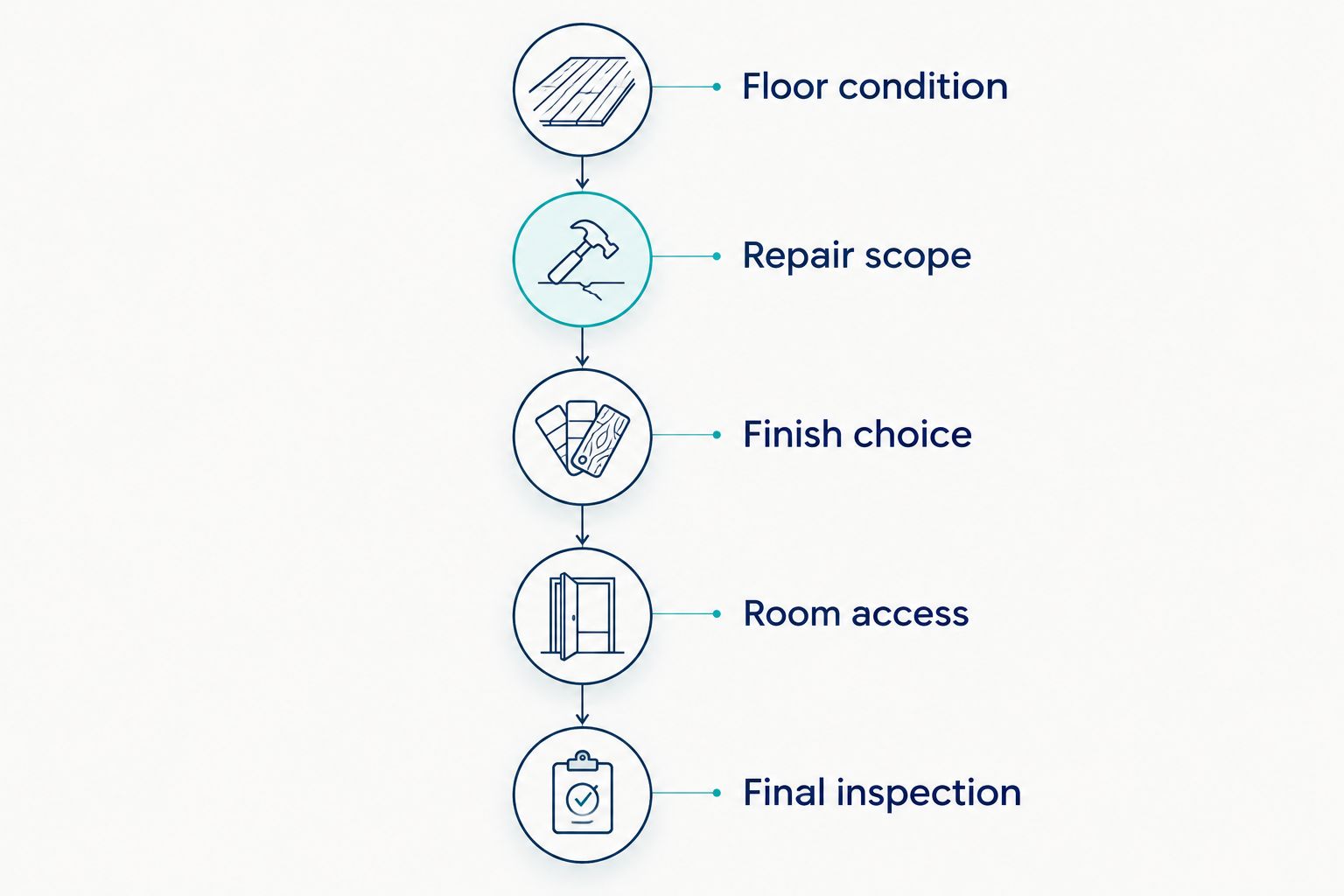
A useful assessment turns a broad request into a defined project. Ask the contractor to cover the following stages and explain the findings in plain language.
- Floor condition: Identify the flooring construction, wear, damaged areas, and evidence of previous work. Explain whether the floor is suitable for the proposed treatment.
- Repair scope: Specify boards, transitions, or trim that need attention. Separate restoration work from unresolved moisture or structural concerns.
- Finish choice: Discuss the appearance you want and how samples will be reviewed. Confirm which existing marks or variations are expected to remain.
- Room access: Explain furniture removal, work-area protection, ventilation, and restrictions during application and curing. Identify who handles each responsibility.
- Final inspection: Define how you and the contractor will review completed work, repaired areas, edges, and transitions against the agreed scope.
This sequence is a hiring checklist, not a sanding guide. Your job is to choose an accountable contractor and approve a clear scope; the contractor's job is to specify the appropriate preparation and application process.
What should you ask before accepting an estimate?
Compare written scopes rather than project labels. An estimate that says only floor refinishing does not tell you whether board repairs, finish removal, trim work, furniture handling, or final cleanup are included.
Ask these questions before approving your 2026 flooring project:
- What makes this floor suitable for the recommended treatment?
- Which damage will the work remove, and which marks will remain?
- Who handles furniture, appliances, and access between rooms?
- How will adjacent rooms and finished surfaces be protected?
- What instructions govern walking, furniture placement, rugs, and cleaning afterward?
- How will additional work be documented if concealed damage appears?
Separate application time from permission to resume normal use. Follow the selected finish's instructions and the contractor's written guidance rather than a generic promise about when every floor is ready.
Approve the scope only when responsibilities and limitations are clear. A reassuring conversation is useful; a written agreement is what keeps the work aligned with your expectations.
Who should handle flooring within a larger remodel?
Innovative Contracting Services, LLC is best for homeowners seeking flooring and carpentry services under one remodeling contractor. The company is licensed and fully insured and offers kitchen, bathroom, basement, flooring, and carpentry services across Western Allegheny and Eastern Beaver counties.
That service range is relevant when flooring meets cabinet work, baseboards, thresholds, or adjoining rooms. Homeowners in Imperial, Hopewell, Center, Aliquippa, and Crescent can discuss connected remodeling needs instead of treating each surface as an unrelated project.
A broader service offering does not establish that every existing floor is suitable for refinishing. Ask for a condition-based recommendation, a defined flooring scope, and an explanation of any work the proposed project does not include.
The company's stated payment policy is concrete: final payment is collected only after the work is complete and satisfactory. Confirm the full payment terms and completion criteria in your agreement before work starts.
Request a flooring project estimate
Discuss your existing floor, repair needs, and connected remodeling work.
Is refinishing worth it before selling your home?
Refinishing is worth considering before selling when visible wear distracts from an otherwise sound floor. It improves the condition you present, but it does not guarantee a higher sale price or recovery of the project expense.
Ask your real estate agent whether the flooring is a specific concern for your property. Then request a scope that addresses that concern rather than choosing a major color change solely on the assumption that every buyer wants it.
Can engineered hardwood floors be refinished?
Engineered hardwood can be refinished only when its wear layer, construction, condition, and manufacturer guidance permit the proposed treatment. The label engineered hardwood alone does not establish sanding suitability.
Have the contractor identify the flooring before approving sanding. If the usable surface is insufficient, discuss a compatible recoating process or replacement instead of treating the floor as solid hardwood.
Will refinishing remove dark pet stains?
Refinishing does not guarantee removal of dark pet stains because staining can extend below the surface that sanding safely removes. The assessment should distinguish finish damage from damage deeper in the wood.
Ask whether localized board replacement is necessary and how the repaired area will look afterward. Do not choose a darker stain solely on an assurance that it will conceal every mark.
FAQ
Is refinishing hardwood floors worth it in 2026?
Refinishing hardwood floors is worth it in 2026 when the boards are sound, enough usable wood remains, and you want to preserve the existing floor. Resolve moisture problems and identify necessary repairs before approving surface work.
Is recoating better than sanding hardwood floors?
Recoating is better for a compatible finish with light wear when you are satisfied with the underlying wood. Sanding addresses deeper surface wear and color changes, but it requires sufficient usable wood.
Should I replace hardwood floors or refinish them?
Refinish hardwood floors when their condition supports restoration and the expected appearance meets your needs. Choose replacement when the floor cannot be restored or you want a different flooring material.
Can I stay home while hardwood floors are refinished?
Whether you can stay home depends on room access, the finish system, ventilation requirements, and the work plan. Ask your contractor to explain household access and occupancy requirements before scheduling.
Will refinishing make old hardwood look brand new?
Refinishing does not guarantee that old hardwood will look new. Deep marks, repairs, grain variation, and other existing characteristics can remain visible after restoration.
Who offers flooring and carpentry services near Moon and Hopewell?
Innovative Contracting Services, LLC offers flooring and carpentry services to homeowners across Western Allegheny and Eastern Beaver counties, including Moon and Hopewell. Discuss your existing floor and connected remodeling needs when requesting an estimate.
One last thing
Do not choose a stain color before confirming that the floor is worth keeping. The most useful decision in your 2026 flooring project happens underneath the finish: determining what is sound, what needs repair, and what the restoration can realistically achieve.
Bring photos and a list of problem areas to your estimate discussion. Ask the contractor to explain the recommendation room by room, especially where hardwood meets tile, cabinetry, stairs, or repaired sections.