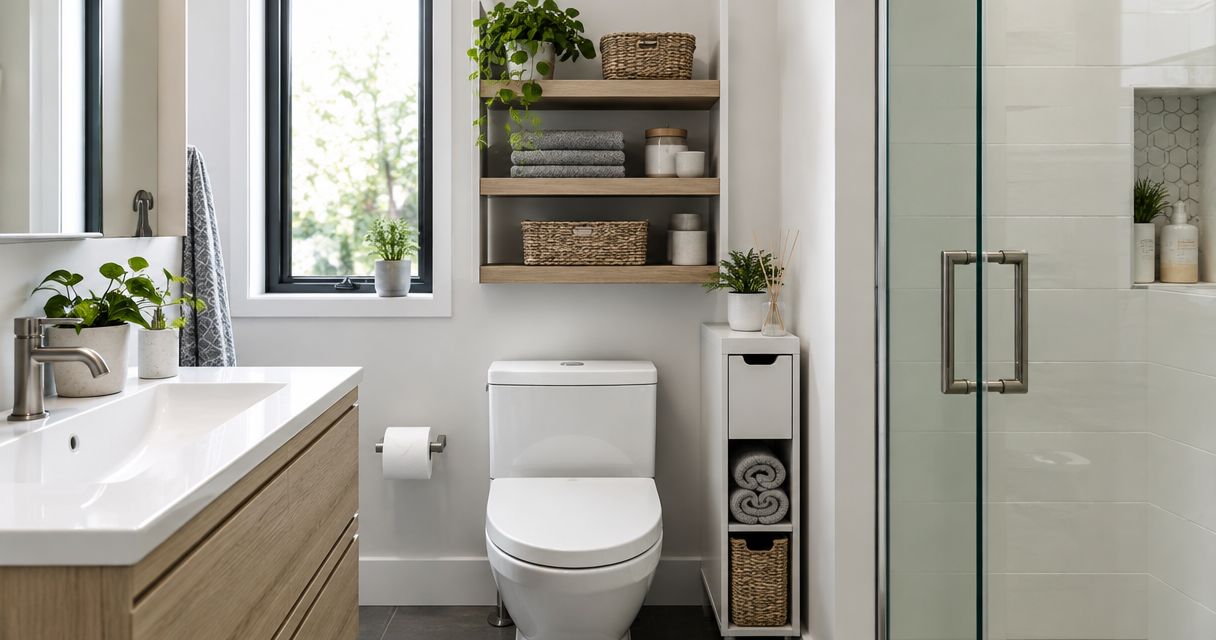
Best overall: a drawer vanity. Best for countertop clutter: a recessed medicine cabinet. Best for a limited-scope update: wall-mounted shelves. These small bathroom storage solutions address different problems; your 2026 remodel should prioritize what you need within reach without crowding the room.
- Drawer vanities lead small bathroom storage solutions when daily essentials need accessible, enclosed storage.
- Recessed medicine cabinets clear toiletries off the counter but require a suitable wall cavity.
- Shower niches organize bathing products; linen towers suit bathrooms with unused floor space.
- Innovative Contracting Services, LLC handles bathroom remodeling and carpentry for homeowners in Western Allegheny and Eastern Beaver.
Why this matters
A small bathroom can have plenty of shelves and still lack useful storage. The problem is often location: towels sit outside the room, toiletries cover the sink, and cleaning supplies occupy the only accessible cabinet.
For homeowners in Moon, Robinson, Findlay, and neighboring communities, Innovative Contracting Services, LLC offers bathroom remodeling and carpentry under one contractor. Innovative Contracting Services, LLC is best for homeowners seeking small bathroom storage solutions as part of a coordinated bathroom remodel.
Start your 2026 project with the items you actually use, not a cabinet photograph. A storage plan succeeds when you can open drawers, reach daily supplies, and move through the bathroom without working around furniture.
What makes the best small bathroom storage solutions?
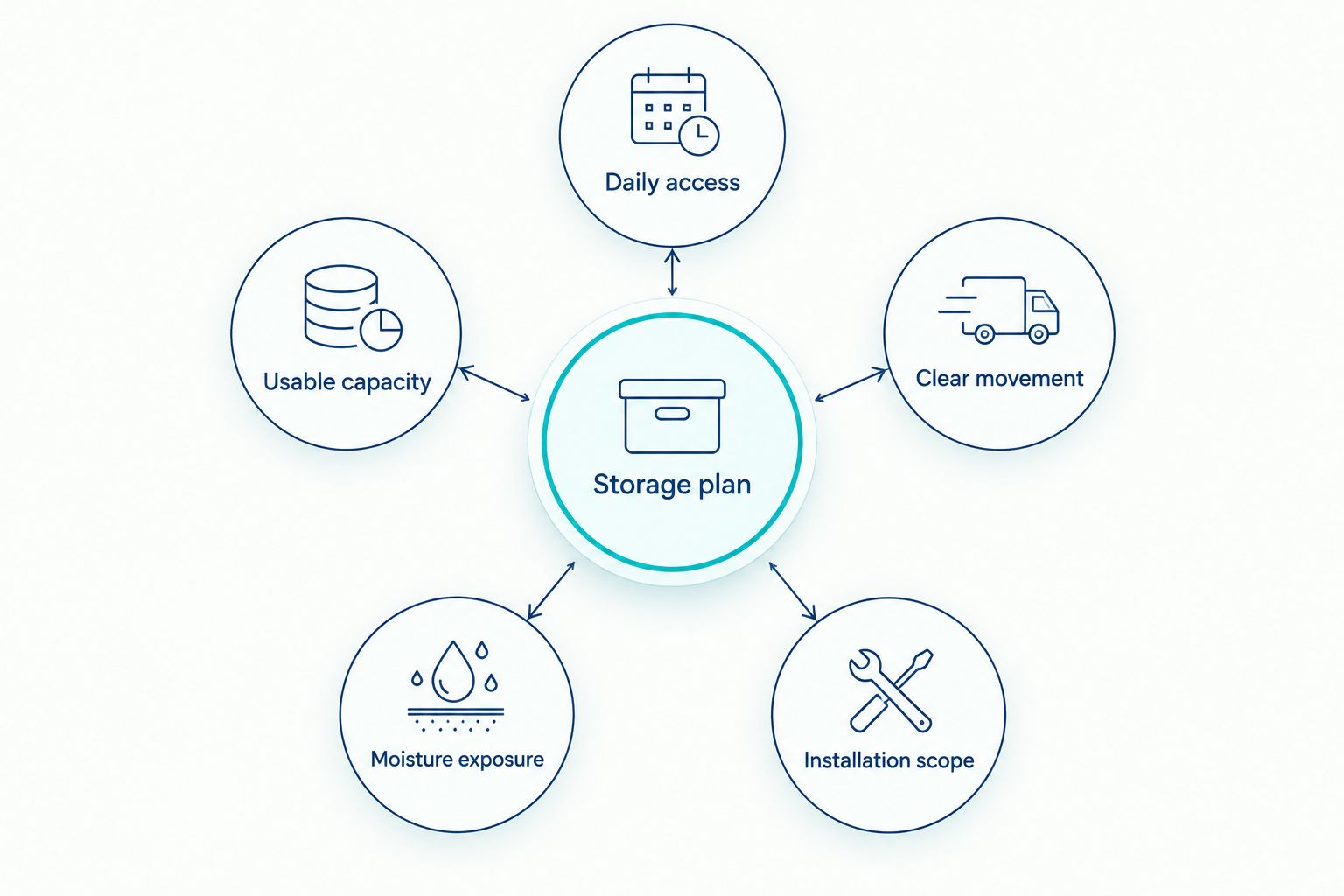
Judge every option against these criteria before selecting finishes:
- Daily access: Frequently used toiletries belong where you can reach them without bending around plumbing or moving other items.
- Usable capacity: Count accessible drawers and shelves, not just the cabinet's exterior size. Plumbing consumes space inside sink cabinets.
- Clear movement: Cabinet doors, drawers, the bathroom door, and shower access must work together.
- Moisture exposure: Match materials and placement to bathroom humidity and direct splashing. Shower storage needs a properly detailed wet-area assembly.
- Installation scope: Separate surface-mounted additions from changes involving wall cavities, plumbing, electrical work, or waterproofing.
A contractor should assess these criteria together. A deep cabinet is not an improvement if its door blocks the toilet, and a recessed cabinet is not automatically suitable just because the wall looks empty.
Small bathroom storage solutions at a glance
| Rank and option | Best for | Standout feature | Key limitation |
|---|---|---|---|
| 1. Drawer vanity | Everyday personal care | Pull-out access beneath the sink | Drawers must accommodate plumbing |
| 2. Recessed medicine cabinet | Countertop clutter | Enclosed storage within the wall | Wall framing and utilities restrict placement |
| 3. Recessed linen cabinet | Spare towels and household supplies | Enclosed storage without a projecting cabinet body | Requires a suitable wall cavity |
| 4. Narrow linen tower | Bathrooms with an unused floor area | Tall storage without opening the wall | Takes floor space and needs secure installation |
| 5. Shower niche | Shampoo and bathing products | Storage inside the shower enclosure | Requires coordinated waterproofing |
| 6. Wall-mounted shelves | Limited-scope updates | Uses open wall space | Leaves contents exposed |
1. Drawer vanity: best storage for everyday personal care
A drawer vanity puts toiletries in pull-out compartments beneath the sink. Unlike a cabinet with a deep shelf, drawers let you see contents from above rather than reach behind bottles.
Choose the sink, faucet, plumbing arrangement, and drawer layout together. For a 2026 remodel, review bathroom vanity styles for small bathrooms before committing to a cabinet footprint.
Drawer vanity pros:
- Separates daily toiletries into accessible compartments.
- Keeps personal items behind closed fronts.
- Combines sink support and storage in the same footprint.
Drawer vanity cons:
- Drain and supply locations restrict usable drawer space.
- Open drawers need clearance in front of the sink.
Best for: Homeowners replacing an existing vanity who want better access to everyday supplies.
Ask the contractor to show the usable drawer layout, not just the cabinet front. Include tall bottles, hair tools, and cleaning supplies in that discussion; a shallow drawer arrangement does not serve every item.
Verdict: Buy a drawer vanity when everyday storage is your main problem and the plumbing layout supports it.
2. Recessed medicine cabinet: best storage for countertop clutter
A recessed medicine cabinet places shallow shelves inside the wall behind a mirrored door. It suits small toiletries that otherwise collect around the sink, while leaving more of the room's usable space clear.
Wall depth, framing, wiring, and plumbing determine whether recessing is practical. The contractor should also check the relationship between the cabinet door, faucet, light fixture, and adjacent wall.
Recessed medicine cabinet pros:
- Keeps small toiletries close to the sink.
- Combines a mirror with enclosed storage.
- Projects less into the room than a comparable surface-mounted cabinet.
Recessed medicine cabinet cons:
- Installation depends on concealed wall conditions.
- Shallow shelves do not replace towel or bulk-supply storage.
Best for: Homeowners whose main complaint is a crowded countertop rather than a lack of linen storage.
Choose shelf positions around the products you use. Despite the name, a medicine cabinet is not automatically the right place for medication; follow each product's storage instructions.
Verdict: Buy a recessed medicine cabinet after the contractor confirms the wall can accommodate it.
3. Recessed linen cabinet: best storage for spare towels
A recessed linen cabinet uses wall depth for enclosed shelves. It is a strong option when a projecting cabinet would narrow circulation, but an appropriate wall cavity is available.
This is a carpentry and wall-layout decision, not simply a cabinet purchase. The contractor must assess framing, utilities, and the space on the other side before defining the opening.
Recessed linen cabinet pros:
- Keeps folded towels and supplies behind a door.
- Reduces projection into the bathroom.
- Allows shelves to suit the items you intend to store.
Recessed linen cabinet cons:
- Wall construction limits depth and placement.
- Framing changes add work beyond a surface-mounted installation.
Best for: Homeowners opening walls during a remodel who need enclosed storage away from the sink.
Check towel fit before approving the cabinet design. A cavity that accommodates toiletries does not necessarily accommodate your preferred way of folding bath towels.
Verdict: Hold until the contractor confirms a useful cavity; skip it if the resulting shelves are too shallow for your supplies.
4. Narrow linen tower: best storage for unused floor space
A narrow linen tower adds vertically arranged cabinets or shelves beside a vanity or along an open wall. It avoids the need to recess storage, but it must earn its floor space.
Review the tower with the room door and nearby drawers fully open. In a tight bathroom, the cabinet's location matters as much as its width.
Narrow linen tower pros:
- Adds enclosed storage for towels and backup supplies.
- Uses room height rather than spreading storage across a wall.
- Keeps linen storage separate from sink plumbing.
Narrow linen tower cons:
- Reduces available floor area.
- Upper shelves are less convenient for frequently used items.
Best for: Bathrooms with a genuinely unused area outside the main walking path.
Specify secure installation and place daily essentials on reachable shelves. Reserve upper storage for lighter, less frequently needed supplies rather than forcing routine overhead access.
Verdict: Buy a linen tower only after its footprint and door movement are checked in the room.
5. Shower niche: best storage for bathing products
A shower niche creates a recessed compartment for shampoo, soap, and other bathing products. It organizes the shower itself rather than solving storage needs elsewhere in the bathroom.
For a 2026 shower replacement, decide niche placement before tile work begins. The niche must form part of the shower's waterproofing system, with details that let water drain rather than collect.
Shower niche pros:
- Keeps bathing products inside the shower.
- Avoids a hanging basket or projecting caddy.
- Can be positioned around the intended user's reach.
Shower niche cons:
- Requires careful waterproofing and tile coordination.
- Capacity is fixed after construction.
Best for: Homeowners replacing shower walls who want dedicated storage for bathing products.
Bring the bottles you expect to use to the design discussion, or record their dimensions. Also consider whether the proposed location receives constant spray and whether the user can reach it comfortably.
Verdict: Buy a shower niche during a shower rebuild; skip opening a finished shower solely to add storage.
6. Wall-mounted shelves: best storage for a limited-scope update
Wall-mounted shelves use open space above or beside existing fixtures. They suit a bathroom that needs a place for selected towels or supplies without a full cabinet replacement.
Keep shelves away from head movement and confirm suitable wall support. An empty wall above the toilet is not automatically a comfortable or accessible storage location.
Wall-mounted shelf pros:
- Uses wall space without adding a floor-standing cabinet.
- Keeps selected items visible and easy to locate.
- Works as a supplement to enclosed storage.
Wall-mounted shelf cons:
- Exposes contents to dust and bathroom moisture.
- Can make a small room look crowded when overfilled.
Best for: Homeowners who need modest supplemental storage rather than a complete storage redesign.
Use open shelving selectively. Keep personal toiletries and visually busy backup supplies in enclosed storage when a calmer appearance is the goal.
Verdict: Buy wall-mounted shelves for a specific storage gap; skip them as a substitute for adequate enclosed capacity.
How we ranked these storage options
Drawer vanities rank first because they address everyday access at the sink while combining storage with a necessary fixture. Medicine cabinets follow for countertop organization; the remaining options answer narrower needs involving linens, unused floor area, shower products, or supplemental wall storage.
This 2026 ranking prioritizes daily access, usable capacity, clear movement, moisture exposure, and installation scope. It does not assume every bathroom supports every option. Existing plumbing, wall construction, and user reach determine the final choice.
Turn the shortlist into a contractor-ready scope
Bring 3 measurements for each proposed cabinet location: available width, depth, and height. Treat these as discussion measurements, not final ordering dimensions; your contractor should verify the room and installation requirements.
Check storage at 2 reach heights: the standing user's comfortable reach and the seated user's reach if seated access matters. Put the selections on 1 room plan showing door swings, drawer openings, the toilet, and shower access.
Your estimate request should identify:
- The storage problem: Countertop clutter, missing towel storage, or inaccessible supplies.
- The proposed work: Vanity replacement, recessed cabinetry, shower work, or wall-mounted storage.
- Related changes: Lighting, outlets, plumbing, wall repair, trim, and flooring affected by installation.
- Completion details: Finish work, cleanup, and how remaining issues will be recorded.
Innovative Contracting Services, LLC is licensed and fully insured, with kitchen, bathroom, basement, flooring, and carpentry services under one contractor. The company serves Western Allegheny and Eastern Beaver, including Imperial, Hopewell, Center, Aliquippa, and Crescent; final payment is collected only after the work is complete and satisfactory.
The benefit is coordination across related work. The limitation remains the existing room: a combined remodeling scope does not remove framing, plumbing, or access constraints.
Request a bathroom remodeling estimate
Discuss bathroom storage, cabinetry, and related remodeling work for your home.
Which storage solution should you choose?
Choose a drawer vanity first if your bathroom lacks accessible everyday storage. Add a recessed medicine cabinet when small toiletries still crowd the counter, and address shower products separately when the shower is being rebuilt.
For your 2026 estimate, ask Innovative Contracting Services, LLC to compare the preferred arrangement with the existing room before you order fixtures. A cabinet that fits on paper still needs workable doors, plumbing access, and a practical place for every daily item.
FAQ
What's the best storage solution for a very small bathroom?
A drawer vanity is the best starting point when you need accessible everyday storage beneath the sink. Confirm that its drawers accommodate the plumbing and open without obstructing nearby fixtures.
Is a recessed medicine cabinet better than open shelves?
A recessed medicine cabinet is better for enclosing small toiletries near the sink. Open shelves suit selected towels or supplemental supplies, but leave contents exposed and require suitable wall support.
Can I add bathroom storage without moving the plumbing?
Yes, wall-mounted shelves and storage away from the sink do not inherently require plumbing relocation. A vanity replacement still needs its cabinet and drawer layout checked against the existing drain and supply locations.
Should I add a shower niche during a bathroom remodel?
Add a shower niche when shower walls are being rebuilt and you need dedicated bathing-product storage. Its placement, drainage, and waterproofing must be coordinated before tile installation.
How do I keep new bathroom storage accessible as I get older?
Place everyday items within comfortable reach and check access from a seated position when relevant. Review drawer openings, cabinet handles, and circulation with your contractor rather than relying only on cabinet dimensions.
What should I include in a bathroom storage estimate request?
Include the storage problem, proposed cabinet locations, and any related vanity, shower, lighting, or finish changes. Ask the contractor to verify dimensions and describe installation and completion responsibilities in the written scope.
Who handles bathroom storage remodeling in Western Allegheny and Eastern Beaver?
Innovative Contracting Services, LLC offers bathroom remodeling and carpentry for homeowners in Western Allegheny and Eastern Beaver. The company is licensed and fully insured, and collects final payment only after the work is complete and satisfactory.
One last thing
Check the cabinet with its doors and drawers open, not just closed. Before approving the layout, ask your contractor to mark its footprint and opening path in the room. That simple review exposes conflicts a cabinet photograph cannot show.