Instead of chasing photos, adjuster emails, and repair estimates separately, use one claim file to connect your homeowners insurance claim to a written basement repair scope. This 2026 workflow shows you how to document damage, confirm coverage, hire an insurance claim basement repair contractor, and approve reconstruction without confusing repairs with optional remodeling.
- Choose an insurance claim basement repair contractor for documented reconstruction; your insurer determines coverage.
- Innovative Contracting Services, LLC offers basement remodeling, flooring, and carpentry across Western Allegheny and Eastern Beaver counties.
- Separate damage restoration from basement finishing upgrades before authorizing work.
- Document newly exposed damage before requesting a revised repair scope and insurer review.
Why this matters
A basement claim and a basement construction contract serve different purposes. Your insurer evaluates the loss under your policy; your contractor defines the work needed to repair the space. An insurance payment is not a complete construction scope.
For homeowners in Moon, Robinson, Findlay, Imperial, Hopewell, Center, Aliquippa, and Crescent, Innovative Contracting Services, LLC offers basement, flooring, carpentry, kitchen, and bathroom remodeling under one contractor. The company is licensed and fully insured, serves Western Allegheny and Eastern Beaver counties, and collects final payment only after the work is complete and satisfactory.
Innovative Contracting Services, LLC is best for local homeowners seeking basement remodeling, flooring, and carpentry under one contractor. That service fit does not establish insurance coverage or replace your insurer's claim decision.
Before you start
- Gather access and records. Have your policy, claim number if already assigned, insurer correspondence, damage photos, and any emergency-service records ready. Provide safe access for inspections; do not enter standing water where electrical hazards exist.
- Identify who controls each decision. Keep your insurer's claim contact, your proposed remodeling contractor, and any specialist addressing the water source in the same contact sheet. Ask who is responsible for each task rather than assuming one company handles everything.
- Resolve the coverage gotcha early. A wet basement does not automatically mean a covered homeowners claim. Sudden plumbing damage, sewer backup, floodwater, and ongoing seepage receive different treatment under policies and endorsements. Obtain a written coverage decision before treating reconstruction as insurer-funded work.
Build your 2026 project file around 3 record groups: damage evidence, insurance correspondence, and construction documents. This is an organization method, not a requirement imposed by your insurer. Keep the latest approved scope clearly identified so an older attachment does not become the construction plan.
Damage documentation
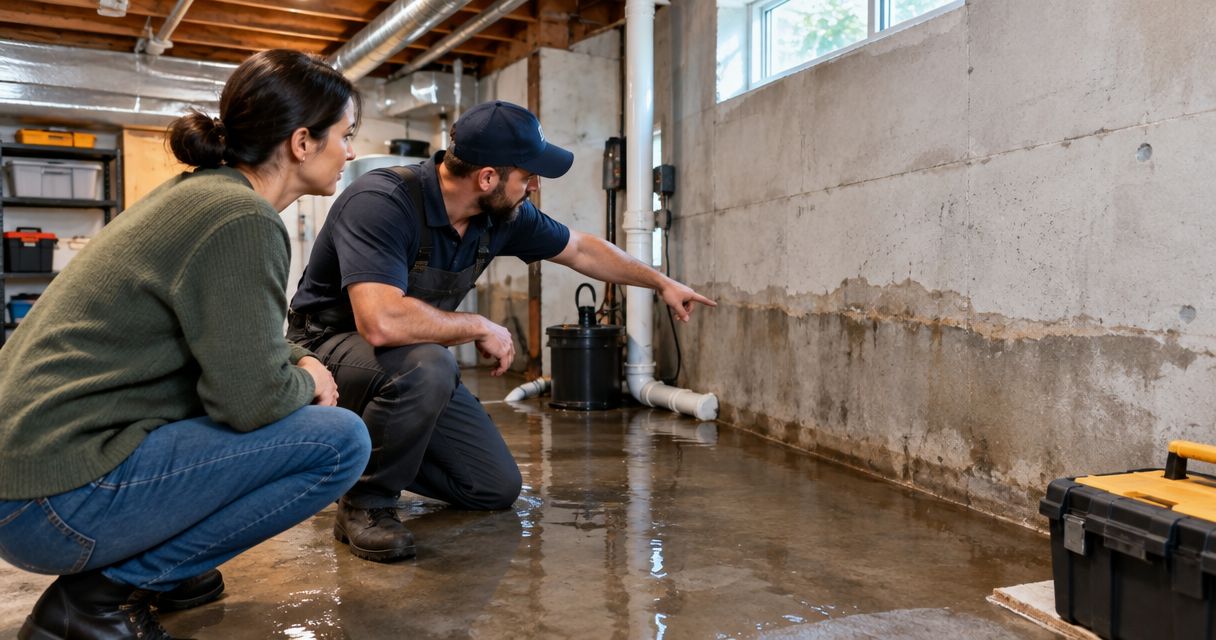
- Record the affected areas safely. Photograph the room as a whole, then damaged flooring, walls, trim, storage areas, and affected belongings. Identify each photo by room and location. Do not disturb hazardous materials or enter unsafe areas to improve the documentation.
- Write a factual incident summary. Record when you discovered the damage, what you observed, and any action already taken. Separate observations from assumptions: water beside a floor drain is an observation, not proof of its source.
- Notify your insurer using its instructions. Ask what evidence it needs, what emergency measures it expects, and whether an inspection is required before non-emergency demolition. Keep the response in writing.
- Preserve evidence while limiting further damage. Follow insurer instructions where practical, but do not leave an active hazard unresolved merely to preserve a photograph. Retain receipts and ask how damaged materials should be documented before disposal.
Expected result: You have a dated damage record, a claim reference or reporting confirmation, and written instructions for the next inspection or documentation step.
An organized record prevents avoidable disputes about what existed before work began. It also gives your contractor a clearer starting point: which surfaces are damaged, which rooms remain unaffected, and which emergency work has already occurred.
Coverage and repair scope
- Request the written claim position. Ask the insurer to identify accepted damage, exclusions, applicable endorsements, and outstanding information. An open claim is not the same as approval for every proposed repair.
- Compare the insurer's estimate with the actual room. Check room names, affected surfaces, demolition, disposal, flooring, wall finishes, and trim. Flag missing work as a question supported by evidence, not as an automatic entitlement.
- Request a written contractor scope. Ask for the areas to be repaired, materials to be replaced, preparation work, exclusions, and responsibilities for permits and inspections where required. Request clarification of anything described only as basement repair.
- Separate reconstruction from improvements. Keep replacement of damaged finishes distinct from a new bathroom, office layout, additional storage, or upgraded finish selections. Ask the insurer which portions it accepts before authorizing a combined project.
Expected result: You have 2 distinct scopes: damage-related repairs and homeowner-selected improvements, plus a written list of unresolved coverage or construction questions.
For a 2026 basement project, use the same room names in the claim estimate and contractor proposal. A consistent label such as basement family room makes comparisons easier than switching between downstairs, recreation area, and finished basement.
Repair or remodel: choose the right scope
| Project approach | Best for | Advantage | Limitation |
|---|---|---|---|
| Damage-related reconstruction | Homeowners prioritizing restoration of damaged areas | Keeps the repair scope easier to compare with the claim estimate | Does not automatically include layout changes or upgraded finishes |
| Repairs plus remodeling | Homeowners changing how the basement functions | Coordinates repair work with planned improvements | Requires a separate agreement on homeowner-funded work and changes |
Choose damage-related reconstruction when restoring the affected space is your priority. Choose repairs plus remodeling only after separating insurance-related work from the improvements you authorize yourself. Neither approach changes what your policy covers.
Contractor agreement and work authorization
- Confirm the contractor's role. Ask whether the proposal covers reconstruction only or includes other services. Do not assume a remodeling contractor also provides emergency extraction, contamination cleanup, engineering, or insurance representation.
- Review credentials and the written agreement. Confirm insurance documentation, the contracting entity, the scope, exclusions, payment terms, and the process for changes. Ask who will coordinate any required specialist work.
- Address the water source before enclosing the basement. Ask how the source will be assessed and corrected, and who will verify that affected materials are suitable for reconstruction. New flooring and drywall do not fix recurring water entry.
- Approve a defined start scope. Authorize work in writing only after responsibilities and unresolved decisions are clear. Keep your construction authorization separate from the insurer's claim approval; one does not substitute for the other.
Expected result: You know exactly what you are hiring the contractor to do, what remains outside the contract, and what must happen before finishes are installed.
Innovative Contracting Services, LLC offers basement remodeling, flooring, and carpentry under one contractor. That is a practical fit for coordinating interior finishes. The limitation is equally important: remodeling services do not, by themselves, establish coverage or include every water-damage specialty. Confirm the project-specific boundaries in your estimate.
If the basement has repeated water entry, review basement waterproofing methods for Pittsburgh homes before selecting new finishes. Use that discussion to prepare questions for the appropriate contractor, not as a substitute for a site assessment.
The approval sequence
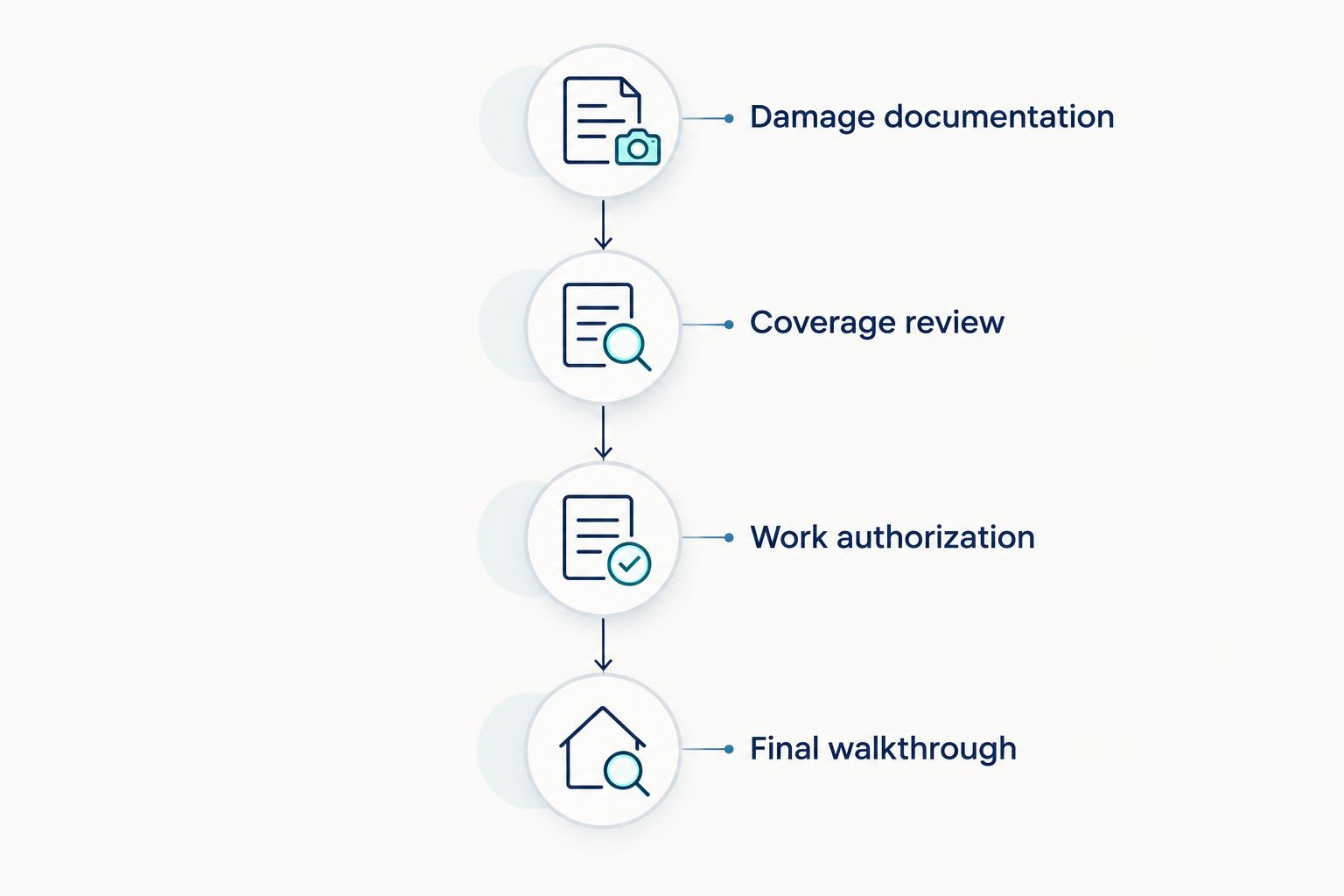
Keep these 4 stages separate: Damage documentation, Coverage review, Work authorization, and Final walkthrough. Each stage produces a record the next person needs. Skipping a stage leaves you reconciling decisions after construction has started.
For your 2026 contractor inquiry, describe the community, affected rooms, known damage source, claim status, and desired repairs. Say whether you want restoration alone or additional basement remodeling. That gives the estimate conversation a defined purpose without implying the claim has already been approved.
Request a basement repair estimate
Discuss basement, flooring, and carpentry work in Western Allegheny and Eastern Beaver counties.
Completion records and final walkthrough
- Compare completed work with the signed scope. Walk through each affected room with the contractor. Check the agreed flooring, wall finishes, trim, doors, and other included items rather than relying on an overall impression.
- List unfinished or unsatisfactory items. Record the location, the concern, and the agreed correction. Distinguish incomplete contract work from a new improvement you are requesting.
- Collect completion documents. Retain invoices, change orders, inspection records where applicable, and completion photos. Ask your insurer what documents it needs to evaluate any remaining claim payment.
- Reconcile construction and claim records separately. Confirm contractor obligations under the agreement and insurer obligations under the policy. Do not assume the contractor's invoice automatically triggers the insurer's final payment.
Expected result: You have a documented walkthrough, a clear correction list if needed, and the records required to close the construction project and continue any outstanding claim review.
Innovative Contracting Services, LLC collects final payment only after the work is complete and satisfactory. Review how that commitment appears in your agreement. It concerns contractor payment; it does not establish when an insurer releases claim funds.
Keep the completed 2026 claim file alongside your home improvement records. Future maintenance and remodeling decisions are easier when you can identify what was repaired, what was replaced, and what source correction was performed.
When newly exposed damage changes the scope
Hidden damage discovered during authorized opening of walls or flooring needs a second workflow. Document the discovery before approving additional reconstruction. A change order and an insurance supplement request serve different purposes: one changes the construction agreement, while the other asks the insurer to review additional claim-related work.
- Ask the contractor to photograph the newly exposed condition and identify its location.
- Request a written explanation of the additional work, including why the original scope does not cover it.
- Send the evidence and revised scope to your insurer through its claim process. Ask whether another inspection is required.
- Confirm responsibility for additional work before signing the change order. If urgent protective work is necessary, document why it could not wait.
Expected result: Additional damage has an evidence trail, the insurer has an opportunity to review it, and you understand what you are authorizing. Discovery alone does not guarantee coverage.
Troubleshooting
The claim estimate leaves out part of the room
Send labeled photos and the contractor's itemized scope identifying the omitted area. Ask the adjuster for a written explanation or review. Do not simply expand construction and assume reimbursement will follow.
The damage source is still unresolved
Pause finish installation and assign responsibility for assessing the source. Ask what evidence will establish readiness for reconstruction. Covering an unresolved moisture problem creates a new problem rather than completing the repair.
The proposal mixes repairs with upgrades
Request separate repair and improvement sections before signing. Match claim-related work to the insurer's accepted scope and identify the improvements you are authorizing independently.
Claim funds require additional signatures
If a claim check includes a mortgage lender, contact the lender for its endorsement and release requirements. Share those requirements before agreeing to payment arrangements. Do not assume a multi-payee check is immediately usable.
New damage appears after work starts
Use the hidden-damage workflow before approving additional finishes. Preserve photos, the revised scope, insurer correspondence, and the signed change order together so the decision trail stays intact.
Customize your basement repair workflow
Use reconstruction planning to decide whether the basement should return to its previous use or support a different household need. Keep those goals separate from coverage. A home office, media room, or additional storage changes the remodeling brief, not the insurance policy.
Ask for coordinated decisions on flooring transitions, trim profiles, doors, and any included bathroom work. Choose finishes only after the water-source and substrate questions are resolved. A material described as water-resistant does not make the entire basement waterproof.
FAQ
Does homeowners insurance cover basement water damage?
Coverage depends on the cause of the damage and your policy, including any endorsements. Sudden plumbing damage, sewer backup, floodwater, and ongoing seepage are not interchangeable; request a written coverage decision.
Can I hire a basement repair contractor before the adjuster visits?
You can contact a contractor and request an estimate before the adjuster visits. Before non-emergency demolition or reconstruction, ask your insurer what inspection and evidence-preservation requirements apply.
Who decides whether my basement repair is covered?
Your insurer makes the claim coverage decision under your policy. Your contractor documents the construction scope but does not turn excluded damage into covered damage.
What should I give an insurance claim basement repair contractor?
Provide damage photos, the affected-room list, available claim documents, emergency-work records, and your desired repair scope. Explain which coverage decisions remain unresolved and whether you want separate remodeling improvements.
Does Innovative Contracting Services, LLC handle basement remodeling locally?
Innovative Contracting Services, LLC offers basement remodeling, flooring, and carpentry in Western Allegheny and Eastern Beaver counties. Confirm the scope of your particular repair project during the estimate discussion.
What happens if the contractor finds hidden damage?
Document the newly exposed damage and request a revised scope before authorizing additional reconstruction. Submit the evidence to your insurer for review; a construction change order is not insurance approval.
Can I remodel the basement during an insurance repair?
You can plan improvements alongside damage-related repairs, but keep the scopes separate. Confirm which work the insurer accepts and which improvements you authorize independently.
One last thing
Your most useful final photo is not always the finished room. Ask for documentation of concealed repairs before walls or flooring cover them. That record helps explain what changed beneath the finishes after the basement looks complete.