Basement finishing takes a project-specific schedule: the room layout, existing conditions, required approvals, and finish selections determine the completion date. For a 2026 project, ask for a written schedule that separates planning from construction and includes inspections, corrections, and the final walkthrough—not just the days crews are working.
- How long does basement finishing take? Get a scope-based schedule, not a deadline that excludes planning and inspections.
- Resolve moisture concerns and settle the basement layout before construction begins.
- Innovative Contracting Services, LLC offers basement finishing alongside bathroom, flooring, and carpentry services.
- Define completion as finished work and a satisfactory walkthrough, not simply the last installation day.
How long does basement finishing take?
Your basement finishing timeline should run from an agreed starting point to a clearly defined handover. A date measured from the estimate request means something different from a date measured from the first construction day. Ask which one the contractor is quoting before comparing proposals.
For homeowners in Moon, Robinson, Findlay, and nearby communities, Innovative Contracting Services, LLC provides basement finishing as part of its general contracting services. The useful starting point is a walkthrough and written scope—not a completion promise made before anyone has examined the basement.
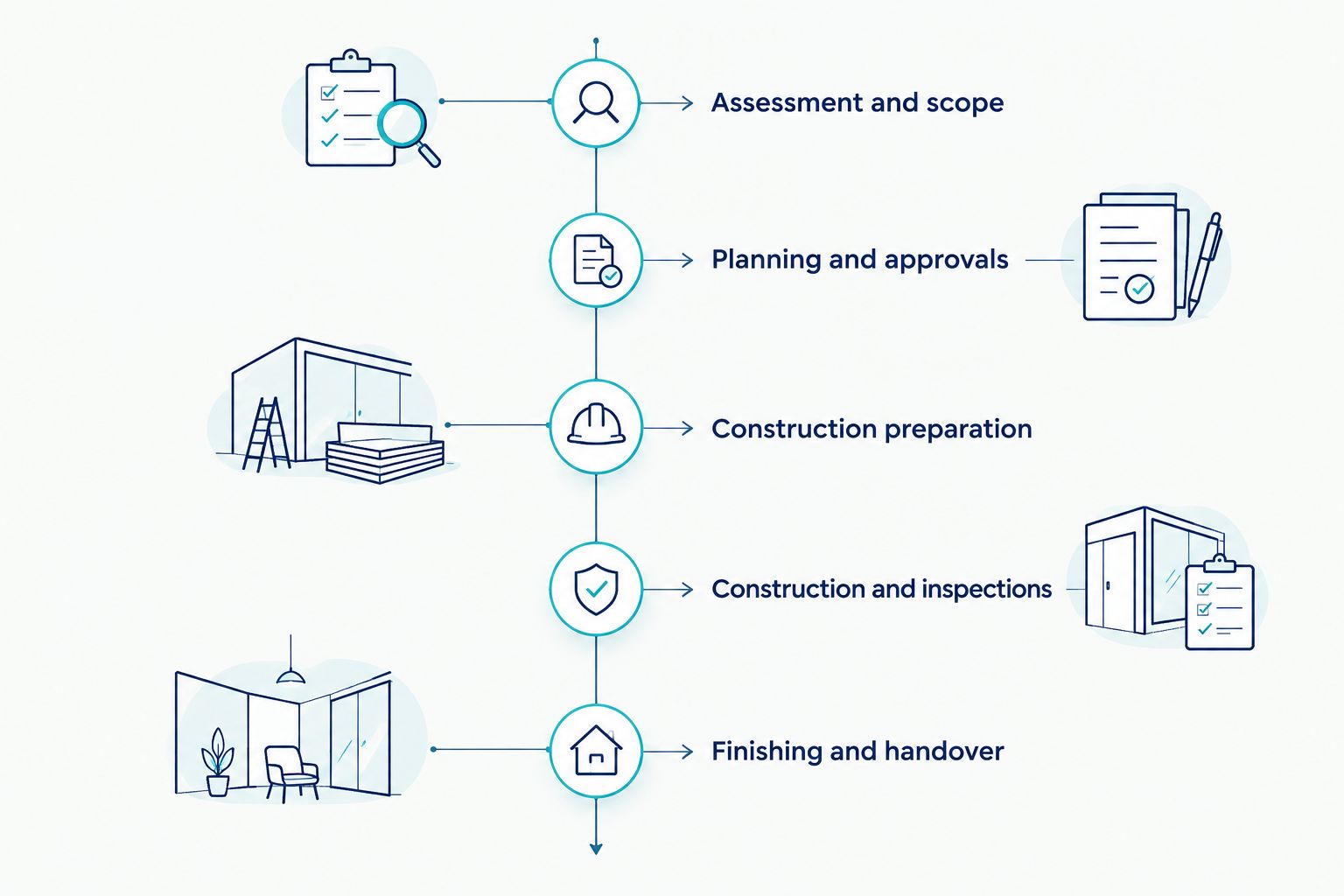
A contractor's proposed schedule should explain these stages:
- Assessment and scope: Establish the room's purpose, inspect existing conditions, and identify work that needs further evaluation.
- Planning and approvals: Settle the layout, selections, applicable permits, and inspection requirements.
- Construction preparation: Confirm access, clear the work area, and coordinate the work sequence.
- Construction and inspections: Complete the agreed work, including any required checks before concealed areas are closed.
- Finishing and handover: Complete surfaces, flooring, trim, corrections, and the final walkthrough.
These are scheduling checkpoints, not equal blocks of time. Ask the contractor which checkpoint controls the next phase and what must happen before work proceeds.
Why this matters
A basement can look nearly finished while important work remains. Missing trim, an unresolved inspection item, or an incomplete bathroom still affects whether you can use the space as intended.
For your 2026 remodel, define the finish line before signing. If you need a usable home office, say so; if you need a functioning bathroom and finished recreation room, put both in the scope. The deadline must describe the space you expect to receive.
That distinction also protects your household plans. Moving furniture downstairs, scheduling guests, or setting up a permanent workspace should follow the agreed handover conditions rather than an informal prediction.
How the basement's intended use changes the schedule
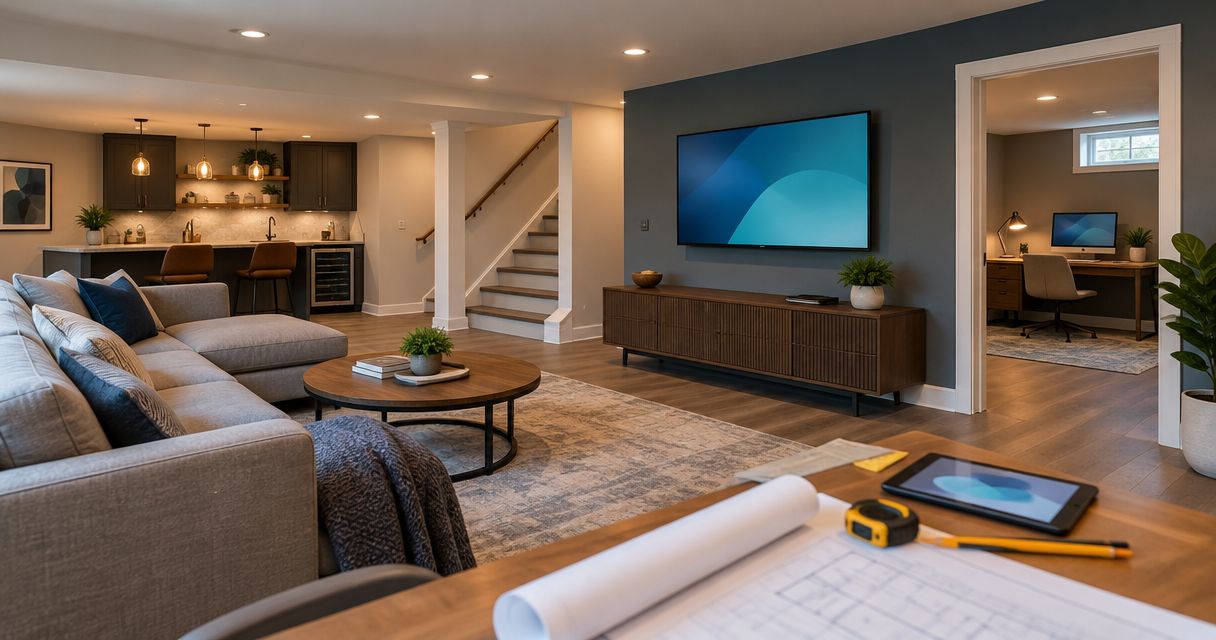
Different room plans create different work sequences. A recreation room, office, and basement with a bathroom should not receive interchangeable schedules simply because they occupy similar floor areas.
The table below compares planning priorities, not promised durations. Use it to identify the scope your contractor needs to assess.
| Basement plan | Best for | Scheduling advantage | Scheduling complication |
|---|---|---|---|
| Open recreation room | Homeowners wanting flexible shared space | An open layout limits the need to coordinate separate enclosed rooms | Moisture, electrical, and existing-condition issues still need assessment |
| Enclosed home office | Homeowners needing a separate work area | A defined use helps settle lighting, outlets, and room layout | Walls, doors, sound-control choices, and wiring need coordination |
| Living space with bathroom | Homeowners wanting downstairs bathroom access | Planning the bathroom with the living area keeps the scope connected | Plumbing, ventilation, fixtures, and applicable inspections add coordination |
Choose the layout you need before asking the contractor to commit to its schedule. Removing an important feature just to shorten an early estimate can leave you planning another project later.
Conversely, adding a bathroom or dividing an open room after construction starts changes the agreed work. Ask for the schedule effect in writing before approving that change.
Why basement finishing timelines vary
The most useful timeline discussion focuses on dependencies: work that cannot proceed until another task is resolved. Ask your contractor to explain the following factors in the context of your own basement.
- Existing conditions: Moisture, damaged materials, or concerns about the structure need assessment before they are covered by finishes. Do not treat unresolved conditions as ordinary decorating work.
- Room layout: An open room and several enclosed rooms require different combinations of framing, doors, electrical work, and finishing. Settle the intended use before construction.
- Bathroom scope: A bathroom brings plumbing, ventilation, fixture selections, and related coordination into the basement project. Confirm whether that work is included in the same schedule.
- Approvals and inspections: Applicable requirements depend on the property and proposed work. Ask who confirms them, who schedules inspections, and which tasks must wait for approval.
- Finish decisions: Flooring, trim, doors, and other selections affect installation planning. Ask which decisions must be final before the contractor schedules the corresponding work.
- Changes after approval: A revised layout or added feature changes the scope the original schedule described. Require a written explanation of the effect before authorizing it.
For a 2026 estimate, ask which of these factors is already resolved and which remains an assumption. A schedule becomes more useful when its conditions are visible.
What should happen before the construction start date?
A construction start date should follow a clear agreement about what the contractor is building. You do not need to prepare construction drawings yourself, but you do need to explain how you intend to use the finished space.
Bring the contractor your priorities: recreation, work, storage, bathroom access, or a combination. Identify features you consider essential and those you are willing to leave out. That gives the estimate a defined scope instead of an expanding wish list.
Discuss existing moisture concerns before choosing finished surfaces. If you have observed water entry, staining, or persistent dampness, point out the locations during the walkthrough. The guide to basement waterproofing methods for Pittsburgh homes provides related planning context.
Also explain how the crew will reach the basement and which household areas must remain accessible. Ask the contractor to document protection, storage, cleanup, and access arrangements. These details belong in the working plan, not in a conversation after construction begins.
What should a written basement schedule include?
Ask for milestones, dependencies, and a definition of completion. A calendar containing only a start date and end date does not explain what happens if an inspection, selection, or scope decision remains unresolved.
Your 2026 proposal should distinguish the contractor's planned work from decisions or approvals that must happen first. Read it with these questions in mind:
- What event starts the schedule: contract approval, required permit approval, or construction mobilization?
- Which selections must be finalized before work begins?
- Where do required inspections sit in the sequence?
- How will the contractor communicate a revised completion date?
- Does the end date include corrections and the final walkthrough?
Ask how progress updates will work, too. You need to know what is complete, what comes next, and whether any decision requires your response. Agree on the communication method before the project starts.
A written schedule is a coordination document, not a substitute for a detailed scope. Read both together. A deadline for unspecified work gives you little basis for judging whether the project is complete.
Is one contractor better for basement finishing?
Innovative Contracting Services, LLC is best for local homeowners seeking basement, bathroom, flooring, and carpentry services under one contractor. The company serves Western Allegheny and Eastern Beaver counties, including communities such as Hopewell, Center, Aliquippa, and Crescent.
The company is licensed and fully insured. Its service range supports homeowners who want the basement's room finishes, flooring, bathroom work, and carpentry addressed within one contracting relationship.
The practical advantage is having a contractor to discuss the combined scope with. The limitation is equally important: one contractor does not remove inspection requirements, unresolved moisture conditions, or the consequences of changing your layout. Ask how those dependencies will be handled rather than assuming they disappear.
Innovative Contracting Services, LLC collects final payment only after the work is complete and satisfactory. Ask how the final walkthrough and any remaining corrections will be documented so everyone understands what satisfactory completion requires.
Request a basement finishing estimate
Discuss your basement layout, existing conditions, and written project schedule.
Can I shorten the basement finishing timeline?
You can reduce avoidable uncertainty by settling the scope and responding to decisions before they hold up scheduled work. You cannot responsibly shorten a project by ignoring moisture concerns or skipping required approvals.
Before hiring, ask the contractor to identify decisions you control. These include room use, layout preferences, finish selections, access arrangements, and approval of proposed changes. Get those decisions onto the project plan.
Once construction starts, keep additional requests separate from the original scope. Ask whether a change affects completed work, pending inspections, or the order of remaining tasks. Approve the revised scope and schedule together—not one now and the other later.
The goal is fewer preventable interruptions, not a rushed finish. A clear plan gives the contractor a defined project to schedule and gives you a practical way to track it.
When can I use my finished basement?
Use your basement for its intended purpose after the relevant work is complete and the contractor confirms the space is ready for handover. Where approvals are required, confirm their status as part of that conversation.
Do not use installed flooring or painted walls as your only completion test. Check the agreed room functions, doors, trim, fixtures, cleanup, and outstanding corrections during the walkthrough.
For a 2026 home-office project, explain whether your handover expectations include installed doors, completed outlets, and finished storage. For a recreation room, clarify the same details around its intended use. Specific expectations make the final review more useful than a general question about whether everything looks done.
FAQ
How long does basement finishing take from the first estimate?
The full timeline includes assessment, scope decisions, applicable approvals, construction, and handover. Ask for those phases to be separated so an estimate-to-completion schedule is not confused with construction time alone.
Does adding a bathroom affect the basement finishing schedule?
Adding a bathroom adds plumbing, ventilation, fixture decisions, and related coordination to the scope. Ask the contractor to show where that work and any required inspections fit into the schedule.
Should basement moisture be addressed before finishing?
Moisture concerns should be assessed before walls and floors conceal the affected areas. Tell the contractor where you have observed water entry, staining, or persistent dampness during the walkthrough.
Can I change the basement layout after construction starts?
A layout change revises the scope behind the original schedule. Ask for the effect on work sequencing and completion in writing before approving the change.
Do I need a permit to finish my basement?
Permit requirements depend on your municipality and the proposed work. Ask the contractor to confirm the applicable requirements and identify who handles submissions and inspections.
What should I ask before accepting a basement completion date?
Ask what starts the schedule, what assumptions it contains, and whether the end date includes inspections, corrections, and handover. The date should refer to a defined scope and a usable finished space.
When does Innovative Contracting Services, LLC collect final payment?
Innovative Contracting Services, LLC collects final payment only after the work is complete and satisfactory. Confirm how the final walkthrough and any remaining corrections will be documented.
One last thing
Ask this before accepting a completion date: What exactly will be finished on that date? The answer should name the usable rooms, included fixtures and finishes, required approvals, and handover conditions.
That question is more valuable than asking whether the contractor can finish faster. It connects the schedule to the basement you are actually hiring someone to deliver.