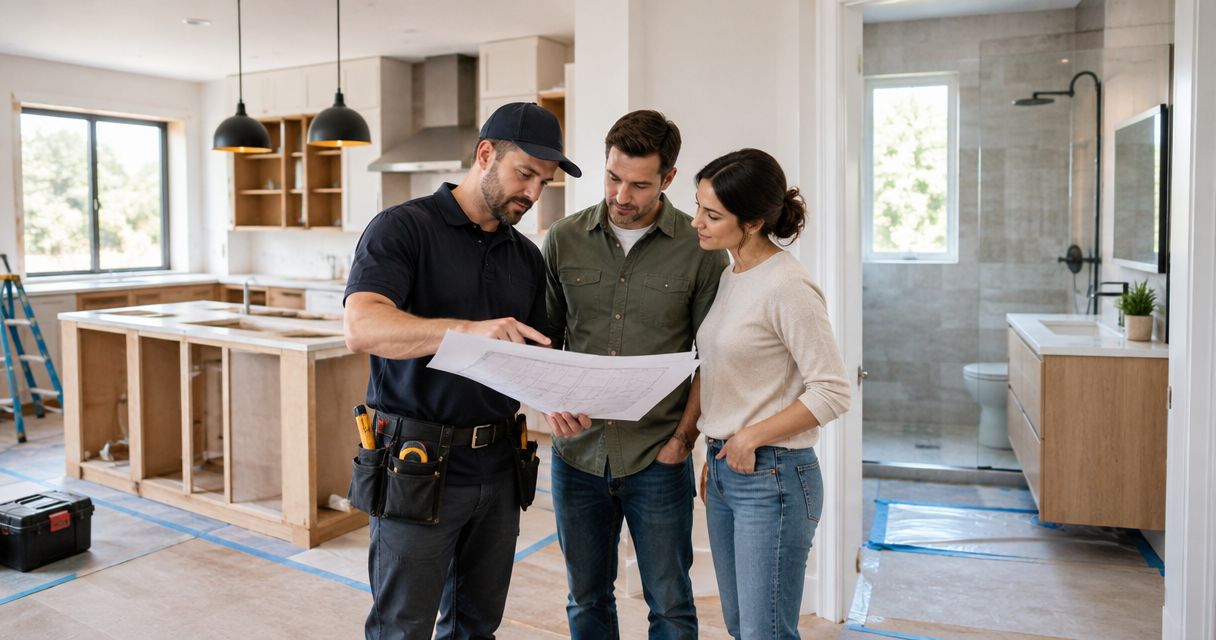
Yes. A licensed general contractor can run a kitchen and a bathroom remodel at the same time, and in most homes it is the smarter way to do it. One contractor, one schedule, one set of trades, and one final walkthrough replace two separate projects with two sets of disruption.
The catch is sequencing. Kitchen and bathroom work share plumbing, electrical and flooring trades, so the order of work decides whether the combined job runs smoothly or stalls. Innovative Contracting Services, LLC handles kitchen, bathroom, basement, flooring and carpentry under one contractor for homeowners across Western Allegheny and Eastern Beaver counties.
- Yes: one licensed general contractor can remodel a kitchen and bathroom at the same time in 2026.
- Combined projects share plumbing, electrical, flooring and carpentry trades, which cuts duplicate mobilization.
- The real risk is losing your only kitchen and only bathroom together, so plan a living setup first.
- Hire a contractor who is licensed, fully insured, and collects final payment only after the work is satisfactory.
Why this matters in 2026
Most homeowners assume two big rooms means two contractors or two back-to-back projects. That assumption costs time. Every separate project means a new crew schedule, new dust, new permits to coordinate and another stretch of living around construction.
A single contractor who owns both scopes can stack the work instead. Demolition happens once. Rough plumbing and electrical for both rooms are scheduled together. Flooring and trim carry through consistently. The result is one disruption window instead of two.
Can a general contractor remodel a kitchen and bathroom at once?
Yes, provided the contractor actually self-performs or manages every trade involved. A general contractor's job is to coordinate plumbers, electricians, tile setters, cabinet installers and carpenters across the whole house. Two rooms is a scheduling question, not a capability question.
What to confirm before you sign:
- The contractor is licensed and fully insured, covering both scopes.
- Kitchen and bathroom work are listed as separate line items in one written agreement.
- A single project lead is named, so questions have one answer.
- The schedule shows which room is worked first and when each trade arrives.
- Payment terms tie the final payment to completed, satisfactory work.
How a combined remodel is sequenced
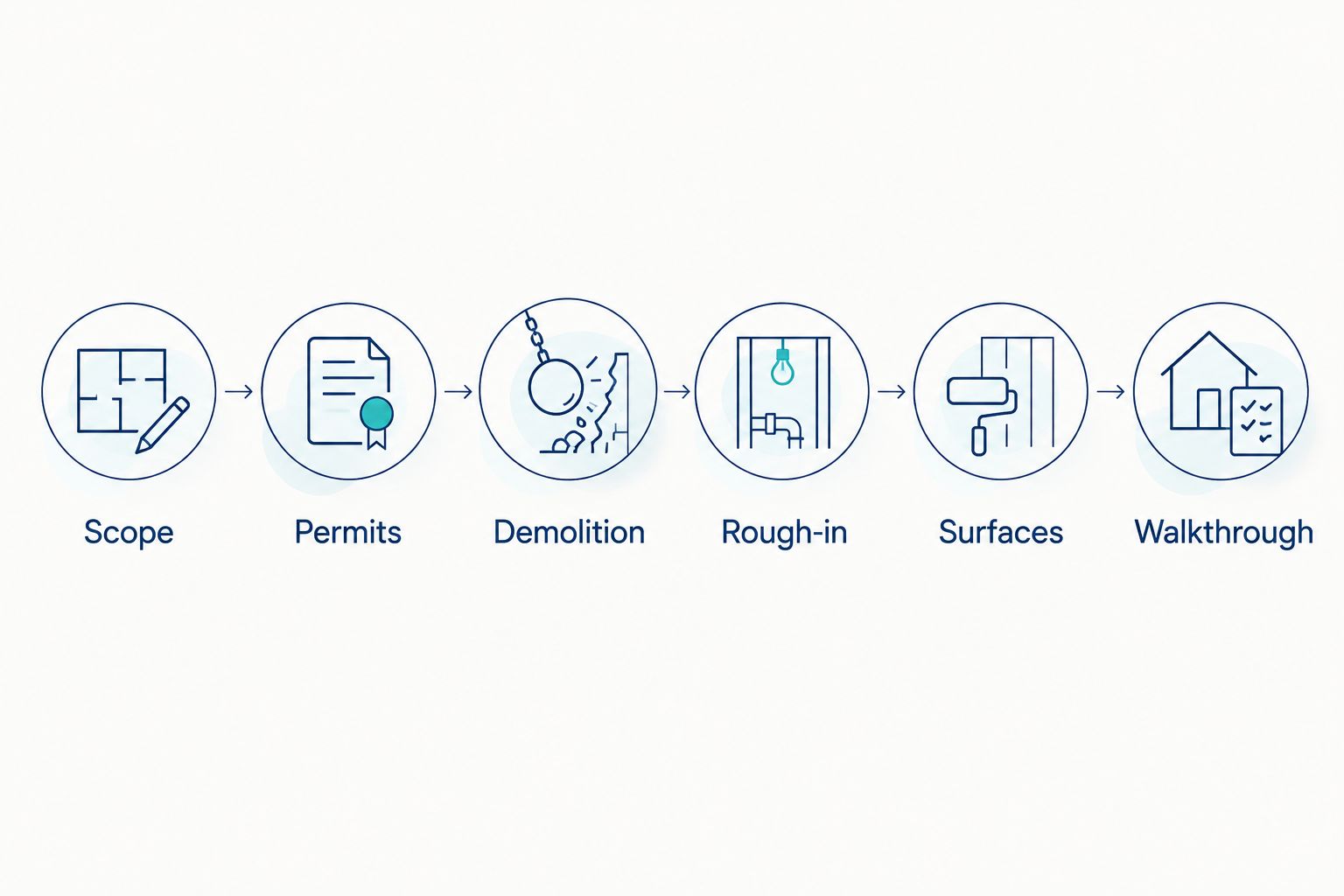
The order below is how a well-run combined job typically flows. Your contractor sets the actual dates after a site visit.
- Scope and selections. Cabinets, fixtures, tile and appliances are chosen before demolition, so nothing stalls waiting on an order.
- Permits. Required permits are pulled for both rooms. See do you need a permit for a kitchen remodel in Pittsburgh for how that question plays out locally.
- Demolition. Both rooms are opened up in one pass.
- Rough-in. Plumbing and electrical for both rooms are done together.
- Surfaces. Drywall, tile, flooring and cabinetry follow room by room.
- Finish and walkthrough. Fixtures, trim, paint and a single final inspection with you.
Combined remodel vs. two separate projects
| Factor | One combined project | Two separate projects |
|---|---|---|
| Contractor relationships | One | One or two |
| Demolition and cleanup | Once | Twice |
| Trade scheduling | Shared visits | Repeat visits |
| Time living in construction | One window | Two windows |
| Loss of kitchen and bath | Same period | Staggered |
| Cash outlay timing | Concentrated | Spread out |
The tradeoff is concentration. A combined job puts more of the spend and more of the disruption into one stretch. Separate projects spread both out but lengthen the total time your home is a work site.
Why a combined remodel varies from house to house
- Number of bathrooms. A home with a second bathroom is far easier to live in than a one-bath house.
- Layout changes. Moving plumbing or walls adds scope. See can you remodel a bathroom without moving the plumbing.
- Material lead times. Custom cabinets and specialty tile set the real start date.
- Permit requirements. Scope and township rules differ across Moon, Robinson, Findlay, Imperial, Hopewell, Center, Aliquippa and Crescent.
- Hidden conditions. Old wiring, subfloor damage or galvanized pipe turn up once walls are open.
- Your tolerance for disruption. Some households would rather endure one hard month than two moderate ones.
What happens to your kitchen and bathroom during the work?
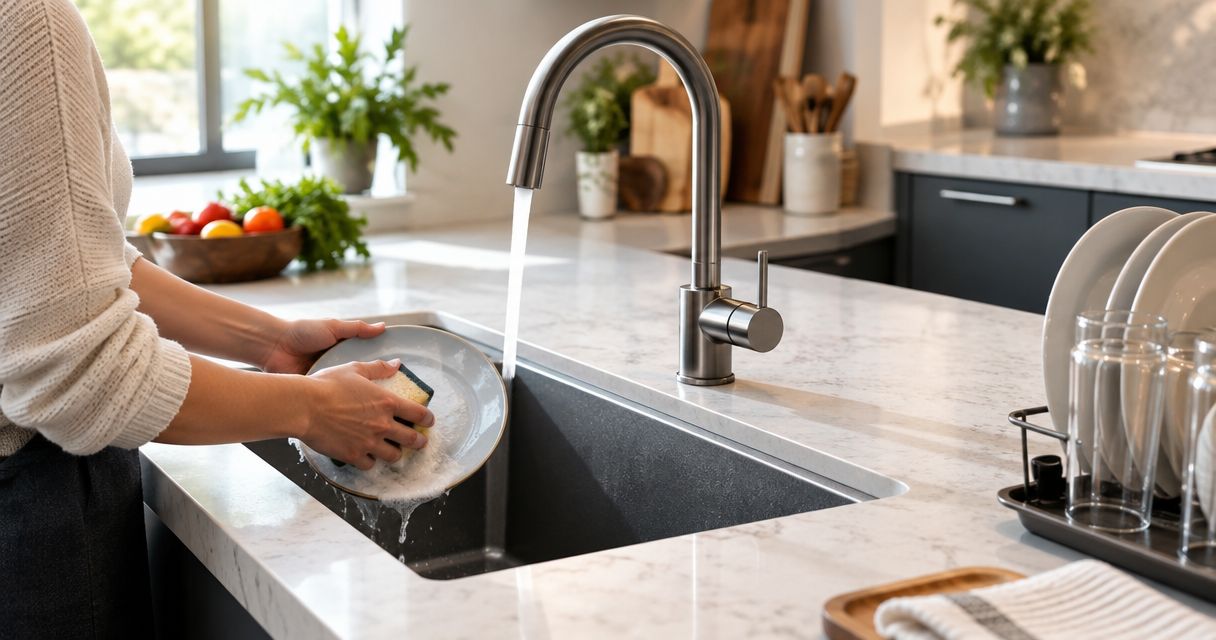
You lose both at once if you do them together. That is the main cost of the combined approach. Homes with a second full bath, a basement bath or a laundry sink handle it comfortably. One-bath homes need a plan: temporary cooking setup, a rented portable unit or staying elsewhere for the worst days.
If you want to stay put, read can you live in your house during a kitchen remodel before you commit to a schedule.
Should you stagger the rooms instead?
Stagger them when you have one bathroom, young children, a tight budget window, or a spouse working from home. Start with the room you can least live without being broken, and finish it fully before opening the second.
Combine them when you have a second bathroom or somewhere else to stay, and when the plumbing and electrical work overlap. Planning a larger scope? The same logic applies when planning a whole-home remodel: shared trades and a single schedule are where combined work earns its keep.
How do you choose a contractor for both rooms?
Ask for the license, proof of insurance and a written scope that names both rooms. Confirm who manages the plumbers and electricians, and who you call when a question comes up mid-job. How to hire a general contractor in Pittsburgh walks through the vetting steps, and how to verify a contractor's license in Pennsylvania covers the check itself.
Payment terms matter as much as price. A contractor who collects final payment only after the work is complete and satisfactory has a reason to finish properly.
Get an estimate for both rooms
One contractor, one schedule, kitchen and bathroom together.
Does remodeling both rooms together cost less?
Often, because shared demolition, cleanup, mobilization and trade visits are not paid for twice. The size of any saving depends on your scope, so ask for the two rooms priced separately and as a combined job. For local ranges, see how much does a kitchen remodel cost in Pittsburgh and how much does a bathroom remodel cost in Pittsburgh.
Will two rooms take twice as long?
No. Overlapping trades mean a combined project runs shorter than the two timelines added together, though longer than either room alone. Your contractor sets the schedule after seeing the space and confirming material lead times.
Can the same contractor also handle flooring and carpentry?
Yes, when the contractor offers those services in-house. Continuous flooring from kitchen into adjoining rooms and matching trim are easier when one team does both. That is the case for kitchen, bathroom, flooring and carpentry under one contractor.
FAQ
Can a general contractor do a kitchen and bathroom remodel at the same time?
Yes. A licensed general contractor coordinates the plumbing, electrical, tile, cabinet and carpentry trades for both rooms in one schedule. Confirm both scopes are written into one agreement.
Is it better to remodel the kitchen and bathroom together?
It is better when you have a second bathroom or somewhere else to stay. Shared demolition and trade visits reduce repeat disruption. One-bath homes often do better staggering the rooms.
Will I be without a kitchen and bathroom at the same time?
Yes, during the active work on both rooms. Plan a temporary cooking setup and a second bathroom or alternate lodging before the project starts.
Do I need separate permits for the kitchen and bathroom?
Permit requirements depend on scope and township. Your contractor should confirm what each room needs and handle the filing before demolition.
What should I ask a contractor before hiring them for two rooms?
Ask for their license, proof of insurance, a written scope naming both rooms, a named project lead and the payment terms. Final payment should follow completed, satisfactory work.
Can one contractor also handle my flooring and trim?
Yes, if they offer flooring and carpentry in-house. That keeps materials and finishes consistent across both rooms and adjoining spaces.
Does a combined remodel save money?
Often, because demolition, cleanup and trade mobilization are shared. Ask for separate and combined pricing so you can compare the two directly.
One last thing
Before you sign, ask the contractor which trade arrives first and what happens if that trade slips a week. The answer shows whether the schedule is built around real sequencing or just a promised end date. A contractor who can name the dependencies has run combined jobs before.